

© GP3 Media Services.
Experienced Formula Three racers Jimmy Eriksson and David Fumanelli have signed on for full campaigns in this year’s GP3 Series.
Eriksson has joined Status Grand Prix following his championship season in the ATS Formula Three Cup, beating the likes of Lucas Auer, Tom Blomqvist and René Binder.
This marks a key step for the 21-year-old Swede, who over the years has undoubtedly been quick, but also prone to error.
In Status Grand Prix, Eriksson will enjoy a stable environment with experienced staff who know how to deliver a race winning package {note 1}. Thus far, the Swede is the only driver announced by the Irish squad, but with another three-and-a-half months to go before the opening round, there is still plenty of time.
With a new car and engine package set to go this year, Eriksson is understandably excited ahead of a season that may see the competitive order alter in the series.
“Engine output for GP3 this year will increase from 280 to 400bhp, and the move away from turbo’s will necessitate a brand-new driving style – and that can only be a positive for any rookie,” said Eriksson. “Still, I obviously have a lot to learn, and the competition will be absolutely fierce; but who said it should be easy? I’m extremely motivated to get going!”
Now with Trident Racing, Fumanelli is already something of a veteran of the GP3 Series, having débuted with MW Arden in 2012. The Italian scored a single podium on his way to 11th in the points standings, just shy of Marlon Stöckinger and Kevin Ceccon.
Stung by inconsistent performances, Fumanelli will need to step up should he wish to progress up the order – but this is a junior formula, stepping up is what is supposed to happen.
In these difficult economic times, pulling a budget together has not been the easiest of tasks, something that Fumanelli knows full well. “It hasn’t been an easy winter because I struggled to put the strings together for a 2013 programme. I’ve been very impressed by the facilities and met highly motivated staff. In addition to that, the investment made in terms of developing the new car has been huge.”
The Italian added, “I already started to work on the simulator, luckily I live very close to the team’s base and I’m sure that we’ll be performing great this season. I want to be a contender in all races and reap the benefits at the end of the season in order to be at the front end of the results.”
Fumanelli has enjoyed three campaigns in European F3 Open with RP Motorsport from 2009, assuming 2nd and 3rd overall in 2011 and 2010 respectively.
He will be partnering Formula Abarth Europe graduate {note 2} and San Marino native Emanuele Zonzini at Trident; however a driver for the team’s third seat is still to be announced. For Zonzini, the move up to the bigger cars and the Grand Prix support slot may prove to be a big leap, but the 18-year-old is convinced he is ready. “2013 is going to be the most important in my entire career. I will be on-track in a very demanding championship, and I will face some very talented drivers with previous GP3 experience. I’ll need to familiarise myself fast with the category’s environment, the car, the tracks and I hope to have a great season with Trident in terms of my professional growth and results”.
Meanwhile, the remaining seats at MW Arden alongside Robert Visoiu have been filled by Red Bull junior development driver Daniil Kvyat and Carlos Sainz Jr.
Kvyat enjoyed a relatively successful 2012, with the Russian charging to the title in Formula Renault ALPS, while also taking runner-up spot in the Eurocup Formula Renault Series.
For his part, Sainz Jr showed some very strong drives amidst pools of inconsistency in Formula 3 last year; however when the toughest conditions emerged, Sainz Jr often drew to the top of the order. Should he strike a good balance in regular condition – and improve his qualifying form, he could very well be a challenger.
That the GP3 Series enters the 2013 season with a new car and significantly altered engine package may shuffle the playing field somewhat, ensuring the best prepared will become quickly apparent.
With testing kicking off at Estoril in a few short weeks, watch out for a flurry of driver announcements soon.
{note 1}
Of the twelve teams that have competed in the GP3 Series since its inception in 2010, Status Grand Prix are only one of four teams who have won races in every season thus far; the others being Lotus (Art Grand Prix), Jenzer Motorsport and Marussia Manor. Newly entered Koiranen Motorsport bring the number of teams since inception up to thirteen.
{note 2}
Zonzini finished in the top five in Formula Abarth Europe last year losing out on 4th spot in the final race to Santiago Urrutia. Although Zonzini only picked up a single victory (in the 6th round sprint race at Imola), the Sammarinese pilot drove a competitive campaign, finishing another thirteen races in the top four.
2013 GP3 Series Grid (as of January 27th)
Lotus GP       – Jack Harvey; two seats remaining.
MW Arden       – Carlos Sainz Jr, Daniil Kvyat, Robert Visoiu.
Carlin         – Eric Lichtenstein; two seats remaining.
Jenzer         – Samin Gomez Briceno; two seats remaining.
Marussia Manor – no confirmed drivers.
Status GP      – Jimmy Eriksson; two seats remaining.
Atech CRS      – no confirmed drivers.
Trident        – David Fumanelli, Emanuele Zonzini; one seat remaining.
Koiranen       – no confirmed drivers.

With the 1982 Argentine Grand Prix lost due to lingering uncertainties within the sport, Formula One finally arrived in South America for the Brazilian Grand Prix in mid-March.
Although two months had passed since the infamous South African Grand Prix, ill feeling remained within the paddock and the outer reaches of Formula One itself.
Kyalami’s striking drivers had received US$ 5,000 fines and a single race ban, suspended {note 1}, but where drivers had taken issue with FISA in South Africa, the next fight would concern several prominent teams.
Previous chapter – “Reflections: ‘Prost from the Brink – 1982 South African Grand Prix (Rd 1)’”
The Turbo Takes Hold
Renault had introduced the first turbo powerplant in 1977, with Ferrari and Alfa Romeo following later with their own investment, ensuring the turbo was a hold of the FISA-supportive manufacturers.
Despite the massive power advantage held by the three teams, poor handling and dire reliability gave the normally aspirated Cosworth-powered teams an opportunity to grasp success. By 1982, the turbo had only claimed nine race wins, but unreliability was becoming less of a factor and the manufacturer threat was suddenly very real.
At the same time, the generally FOCA-backed Cosworth teams had been stung by the removal of flexible side skirts in effort to reduce downforce and curb cornering speeds. In one foul swoop, the FOCA teams had been hammered by the regulatory body – a fix was urgently needed.
Loopholes
Finding a loophole in the regulations, several of the normally aspirated teams began running water-cooled brakes, with excess water tanks built into the chassis to bring the car up to the minimum weight requirement.
However these tanks would be emptied early in the running as the water quickly evaporated, effectively making the non-turbo entrants 55kg underweight for a majority of the proceedings. In a prime example of poorly written regulations, teams could legally refill their tanks prior to post-race scrutineering as cars had to be weighed in what was considered to be “normal running conditions”.
The normally aspirated entrants, which should have been eaten alive down Jacarepaguá’s long back straight by their turbo counterparts, ran their cars underweight for much of the race, allowing them to keep in touch with turbo-engined entrants. Indeed, it was because of this the Cosworth-powered Nelson Piquet (Brabham) {note 2} and Keke Rosberg (Williams) held so close to the Ferrari Gilles Villeneuve in the opening half of the Grand Prix.
Once Villeneuve’s challenge had been rendered inert in a fit of Piquet induced panic, the only thing that stood in the Brazilian’s way was Rio’s sweltering heat. Rosberg was happy just to take what would have been his second podium finish – a welcome booster following a disastrous 1981 season {note 3}.
Protests and Dirty Politics
Despite the practice of running underweight being explicitly illegal in all other FIA-sanctioned championships, the restriction of this act was – incredibly – never written into the Formula One regulations, giving the FOCA teams ammunition to press against the spirit of the rules.
As far as the FOCA teams were concerned, if an action was not written into the regulations, then it was as good as legal. The scrutineers disagreed.
It was an intriguing – and clever – reading of the regulations, but one that simply could not stand up over time. Incensed by the subversive manner in which the regulations had been massaged, Renault feverishly protested only Piquet and Rosberg, but none of the other “water-cooled” finishers.
The top two were thrown out and Prost was handed a second victory and a healthy lead over McLaren’s John Watson. Both Brabham and Williams appealed, however this would not be heard until after the US Grand Prix West at Long Beach.
When the appeal was eventually heard, it would light the catalyst for one of the most infamous Grand Prix of them all.
Meanwhile, the dirty politics from both FISA and FOCA had taken their toll on at least one driver. Sickened by the constant wrangling, Carlos Reutemann announced his retirement from Grand Prix racing five days after the event {note 4}.
The Race (March 21st, 1982)
On the surface, it seemed as if Brabham had hit back hard at the manufacturers following their failings at Kyalami two months earlier, but the revelation of their near empty water tanks did put some perspective on their pace.
However there is no doubt that Piquet’s harrying of Villeneuve forced the French-Canadian into a clumsy race-ending mistake at the Norte corner come the half way point – such was the habit of Villeneuve on occasion.
Yet whereas Villeneuve guided his Ferrari into an early lead – taking advantage of a sluggish start by polesitter Prost, Piquet bided his time. Initially content to sit in 6th place behind teammate Patrese, Piquet would take Rosberg (lap 5) before profiting from a mistake by Prost two tours later.
By the one-sixth mark Piquet had also disposed of Patrese, eventually drawing to the rear of Rene Arnoux. In a Renault blessed with supreme top speed, the Frenchman held his Brazilian rival at bay for several laps, before finally succumbing to the pressures of the Brabham pilot on lap 17.
Despite a relatively healthy lead over the squabbling pack (three seconds up by lap 20) Villeneuve was quickly reeled in by the determined Piquet, who was on the tail of the French-Canadian within a few short tours.
Amidst this, Rosberg had also cleared the Prost, Patrese and Arnoux gaggle and had closed to the top two, leading to an eight-lap dust-up, only resolved when Villeneuve ditched his Ferrari into the fence.
The lead settled in his favour, Piquet eased away from Rosberg (very gently), although as the race aged and the heat grew in intensity, the Brazilian native began to rest his head on the inside cushion of his cockpit.
Rosberg, meanwhile, had cleverly strapped on a primitive version of an ice vest, keeping the Finn cooler for just a touch longer. His Williams, however, simply did not have the outright pace of Piquet’s Brabham. On the other hand, exhaustion claimed the numb Patrese – dazed from the overbearing heat, the Italian spun on lap 33 and immediately darted to the pits where he had to be pulled out the car.
Behind them, Prost recovered from his early contretemps to finish the day 3rd on the road; however the stewards would soon ensure the first of his six Brazilian Grand Prix victories would be granted.
Meanwhile Watson, Nigel Mansell and Michele Alboreto all drove without fuss from the midpack to take 4th, 5th and 6th respectively, prior to their post-race promotions, while Marcos Winkelhock – originally 7th in the classifications – would later grab his one and only points finish. After spinning away a top six position on the third lap, Didier Pironi climbed back up the order to finish 8th on the road, which later became 6th, guaranteeing the Frenchman his first point of the season.
Sour notes
The embittered Reutemann endured a torrid final Grand Prix. Running outside the points at the one-third stage, the Argentine tried a tricky move on Niki Lauda in final corner, damaging the Austrian’s suspension. On the following lap, Reutemann tried the same move on Arnoux, this time taking both of them out of the race.
While one long Grand Prix was ending, another – very brief one was just getting started. Rocking up during practice in a Ford-powered Osella was the bespectacled Riccardo Paletti, who despite his best efforts failed to pre-qualify. Thrown in at the deep end, the inexperienced Italian failed to get a grasp of his difficult FA1C chassis, rendering his efforts null and void early in the weekend.
On the podium, an exhausted Piquet collapsed as exhaustion finally took its toll. To his right, Rosberg stepped aside as race personnel doused the World Champion with water, giving enough life to Piquet to limply spray champagne to the delight of his adoring crowd.
Bemused by the scene around him, Prost sat down on the podium steps and looked on impassively.
With the next Grand Prix at Long Beach only two weeks away, a feeling of dismay and mistrust hung around the air and things were not about to get friendlier.
{note 1}
The original punishment handed out by FISA was US$ 10,000 per driver in addition to a five Grand Prix ban, suspended for five races.
{note 2}
Brabham had initially run with the BMW M12 turbo engine in their BT50 chassis at Kyalami, but switched to the normally aspirated Cosworth motor for the next round at Rio after some difficulties. The team also reverted an update of their previous chassis, the BT49C/D.
{note 3}
Following a positive 1980 season that saw Keke Rosberg take 10th in the Drivers’ Championship, including his first podium in Argentina, the Finn failed to score a single point in 1981. In fact, of the fourteen World Championship races he entered, Rosberg only finished on three occasions and failed to qualify for five others.
So far Rosberg is the only one of two drivers in the history of the world championship to take the title having not scored a point or other significant result in the previous year’s competition – the other being Alain Prost who did not compete anywhere during 1992 prior to his fourth title.
As an aside, the inaugural World Champion, Giuseppe Farina, won the 1949 Lausanne Grand Prix ahead of Alberto Ascari and Emmanuel de Graffenried. It was Farina’s sole significant result in a season blighted by mechanical failures.
{note 4}
Following his defection from Formula One, Reutemann spent several years in the wilderness, although he did accept a drive in the 1985 Rally Argentina, finishing 3rd behind the wheel of Peugeot 205.
It is not without a touch of irony that Reutemann ended up in career politics a decade later, joining the neoliberal Peron-influenced Justicialist Party in 1991. Two spells as Governor of Santa Fe followed with Reutemann’s second stint (1999-2003) proving popular amongst voters.
In that time, the former racer pushed through a number of social-economic policies that kept the province from falling into deep recession, while numerous surrounding territories collapsed. Reutemann has twice since declined to run for governor of Santa Fe again and also turned down option to run for the presidential seat on a number of occasions.
Full results and points standings.
1982 Brazilian Grand Prix (Rd 2, 63 laps, March 21st)
Pos Driver                 Team                     Time / Gap
    Nelson Piquet          Brabham-Ford BT49D       1:43:53.760s (DSQ)
    Keke Rosberg           Williams-Ford FW07C      1:44:05.737s (DSQ)
 1. Alain Prost            Renault RE30B            1:44:33.134s
 2. John Watson            McLaren-Ford MP4B             +2.990
 3. Nigel Mansell          Lotus-Ford 91                +36.859
 4. Michele Alboreto       Tyrrell-Ford 011             +50.762
 5. Manfred Winkelhock     ATS-Ford D5                   +1 lap
 6. Didier Pironi          Ferrari 126C2                 +1 lap
Selected Retirements:
    Riccardo Patrese       Brabham-Ford BT49C          +29 laps (Exhaustion)
    Gilles Villeneuve      Ferrari 126C2               +34 laps (Accident)
    René Arnoux            Renault RE30B               +42 laps (Accident)
    Niki Lauda             McLaren-Ford MP4B           +42 laps (Accident)
    Carlos Reutemann       Williams-Ford FW07C         +42 laps (Accident)

1982 Drivers’ Championship (Rd 2)
Pos Driver / Team     Points
 1. Alain Prost       18
 2. John Watson        7
 3. Carlos Reutemann   6
 4. Rene Arnoux        4
 5. Nigel Mansell      4

1982 Constructors’ Championship (Rd 2)
 1. Renault          22
 3. McLaren          10
 2. Williams          8
 4. Lotus             4
 5. Tyrrell           3
FIA World Rally Championship
Citroen’s Sebastien Loeb began his final WRC season in style at the Rally Monte Carlo. The nine-time WRC champion led from stage 2 onward, heading former teammate Sebastien Ogier by just under 100 seconds at the end of the rally. Ogier’s drive was a spectacular one, demonstrating in only their first event, just how serious Volkswagen are about the WRC programme.
Dani Sordo assumed 3rd in his Abu Dhabi Citroën entry, but only after Evgeny Novikov went off in his M-Sport Ford on stage 14, which also claimed Jari-Matti Latvala (Volkswagen) and the impressive Juho Hanninen (M-Sport Ford).
Mikko Hirvonen (Citroen) picked up 4th, while Bryan Bouffier finished 5th, despite losing several minutes on Friday. Mads Ostberg came home 6th after a tough rally peppered with incidents and mechanical issues. Thierry Neuville was running 4th when he retired on stage 4. Sepp Wiegand won the WRC2 class (taking 8th overall), while Sébastien Chardonnet won the WRC3 category (13th overall).
With torrential rain mixing in with freezing conditions and drifting snow, the final two stages were cancelled for safety reasons. The rally was also hit by multiple timing snafu’s throughout the event.
Full results and points standings.
Toyota Racing Series
Lucas Auer jumped to the head of the Toyota Racing Series championship following a profitable weekend at Timaru Circuit on New Zealand’s south island. The Austrian took a win, a podium and a 5th place to jump ahead of Puerto Rican rival Felix Serralles by a mere six points – precious little at this early stage.
In race one, Auer led from pole ahead of Nick Cassidy, despite starting on dirty side of the track, eventually building a four second gap come the chequered flag. Cassidy, meanwhile, busied himself by holding a charging Bruno Bonifacio at bay to round out the podium. Steijn Schothorst ended the short race two seconds shy of Bonifacio, with Damon Leitch a further two seconds adrift. Serralles started and finished 6th, but claimed pole for the second race of the weekend in the process.
Serralles struck back to win the Sunday morning follow-up. Another slick start ensured a solid early lead, although Leitch drew toward the Puerto Rican as the race aged. An off by Spike Goddard saw the race end under safety car conditions locking Cassidy into 3rd, Bonifacio 4th, Auer 5th and Alex Lynn 6th.
Lynn took the Sunday afternoon feature and the Timaru Herald Trophy after jumping Auer as the lights dimmed. The Austrian stayed close throughout, but had no answer for the speedy Essex racer. Serralles ran 3rd early on, only to be passed by Bonifacio; however the latter’s race concluded prematurely due to an engine failure, promoting Serralles back to the podium. Following an off in race two, Schothorst redeemed his weekend with 4th, just ahead of Leitch and Nicholas Latifi.
Once again Jann Mardenborough was the top rookie, taking two 9th’s and 10th spot in the course of the three races.
At a time when Formula One teams are readying their launch efforts for the season ahead, Williams, Marussia, McLaren and Mercedes have made significant changes to their personnel.
Since Sunday afternoon, German newspaper Bild have unveiled several early season moves that appear to have taken the Formula One fraternity by surprise.
From the point of view of this outsider, what has been most impressive is how the people and teams involved managed to keep these moves on the low down until just before the announce date.
First up was there revelation that Williams executive director Toto Wolff was on the move to Mercedes Motorsport (not Mercedes F1 as some mistakenly believe, although one of his positions will be executive director of the German marque).
A few hours later, they broke a story that Timo Glock was about to leave Marussia, which was confirmed yesterday, before revealing that McLaren Technical Director Paddy Lowe was on his way from McLaren to Mercedes, courtesy of Wolff. If that is the case, then McLaren are taking yet another significant hit prior to the 2013 season.
Bild, it would seem, are on a roll.
For quite obvious reasons, Wolff is no longer in his position at Williams, but has retained his 19% stake in the English team. At the same time, he has reportedly assumed significant shares in Mercedes F1.
Admittedly, I originally thought that Wolff’s move to the German company may have been the repositioning of HWA AG to take over management of the Mercedes’ F1 wing in the same way the DTM programme is run.
Alas that is not the case – for now.
The loss of Wolff comes just over a week after Williams won Business of the Year at the MIA Business Excellence Awards at the NEC in Birmingham. In addition to that, Williams Hybrid Power also announced last Thursday that they have partnered with French energy and transport multinational Alstom Transport.
The partnership sees the two companies work together to produce energy storage units for trams and endeavours to “…adapt and develop an energy storage solution that has the potential to reduce the greenhouse emissions of Alstom’s rolling stock. After several years of research into energy storage, Alstom has teamed up with Williams Hybrid Power to trial its composite MLC flywheel energy storage technology which offers potential fuel savings of 15% when installed in public transport applications.
“Originally developed for the 2009 Williams Formula One car, Williams Hybrid Power’s energy storage technology has since been introduced into applications such as London buses and the Le Mans winning Audi R18 e-tron quattro. The technology offers fuel savings and emissions reductions by harvesting the energy that is normally lost as heat when braking and turning it into additional power. It is ideally suited to trams because of their stop-start nature and high mass. Furthermore, the flywheel’s rotor is made of composite material which is inherently safe because there is no metallic structure travelling at very high speed” {note 1}.
Amidst all the Wolff to Mercedes rambling, news began to filter through that Timo Glock’s career in Formula One was about to come to a sudden halt.
Three seasons with Marussia had seen the German racer become a bit of a fixture at the rear of the grid and although never a star, Glock is a well-respected driver who speciality appeared to be staying power in a race.
Three podiums in an F1 career that spanned six seasons may not sound emphatic by any stretch, but Timo regularly delivered where necessary; however results have been difficult to come by in his time at Manor Grand Prix / Virgin / Marussia Virgin / Marussia F1, with a solitary 12th place finish at Singapore being the highlight.
Following the withdrawal of Toyota from Formula One, Glock spoke with Renault, before being contacted by John Booth at Manor, leading to the German racer to join the then new team.
With Marussia effectively dropping Glock for “commercial reasons” (a roundabout way of saying they probably could no longer pay him), one wonders how much steam is left in that project. While there will always be pay-drivers in motorsport, one wonders if the top category of single seater racing is pricing itself out of top talent.
With less than two weeks before teams start unveiling their 2013 chargers, there are still plenty of seats available (two at Force India, one at Caterham, one at Marussia) and – Jules Bianchi aside – sadly the talk is not who best deserves those drives, but rather how much can one bring.
Of Bruno Senna, Luiz Razia, Vitaly Petrov, et al, they are still respectable talents; however their names are still being linked to seats for reasons other pure natural talent.
Recent seasons have seen Heikki Kovalainen, Jaime Alguersuari, Lucas di Grassi, Sebastien Buemi and Kamui Kobayashi amongst others get lost in the shuffle, although they – like Glock – are respectable talents, but not world beaters.
Things are not going to get as bad as the 1994 season any time soon (Jean-Denis Deletraz, please don’t come back), but it is still a worrying trend.
As for Glock, there is little doubt that he will land on his feet. The 30-year-old is due a DTM test this week – apparently for BMW – and should all things go well, will be joining Ralf Schumacher on the grid later this season.
Former Formula One driver Robert Kubica will also be testing, albeit for Mercedes. Should both land drives, they will most likely spend a season or two toying with customer entries, before moving up to the premier teams – proving things go their way.
We shall see.
{note 1}
Williams Hybrid Power press release, January 17th 2012.
On a brief sombre note, today (January 18th) marks the 60th anniversary of the Argentine Grand Prix disaster.
For the opening race of the year, spectators were allowed into the old Buenos Aires circuit free of charge, ensuring the crowd swelled well beyond capacity.
At numerous spots around the circuit, pushes formed and pockets of spectators broke ranks, lining the side of the track as cars sped past.
Eventually some fans took to standing on the road itself, gesticulating and cheering drivers on as the flew close to the mixed rules machinery. Some even took to waving clothes at the passing racers in a vain similar to bullfighters.
The madness would not last and on lap 31, something finally gave way. After a number of tours dodging the daredevil fans, 3rd placed man Giuseppe Farina had to make an emergency change of direction to avoid some wandering fans.
Robbed of control, Farina sped down an embankment and into a pool of spectators. Seven were killed instantly with another six passing away in the following hours and days.
The race carried on, of course, with Alberto Ascari continuing his winning ways in his Ferrari 500.
After 97 laps, the famed Italian enjoyed a one lap advantage over Luigi Villoresi (2nd, Ferrari) and José Froilán González (3rd, Maserati).
How times have changed so, so utterly in those sixty years.
Toyota Racing Series
Felix Serralles heads the Toyota Racing Series after the opening round at Teretonga Park Raceway. The Puerto Rican leaves the Invercargill circuit with a five point lead over Austrian racer Lucas Auer. Both Auer and Serralles won a race each, with the pair also grabbing a pole each, although Auer blotted his copybook by going off in the damp second session.
Auer won the first race with relative ease, breaking the Toyota Racing series lap record in the process. Racing for Giles Motorsport, the 18-year-old set the pace, eventually clearing reigning champion Nick Cassidy by over two seconds. Alex Lynn – initially 2nd until passed by Cassidy – wrapped up the podium, while Serralles finished off the top four.
Pipo Derani won Sunday morning’s reverse grid race, despite a sluggish getaway. The Brazilian recovered to win ahead of a feisty Serralles; however Derani did have to contend with a late safety car period following an off for Andrew Tang. Original 3rd placed man, Bruno Bonifacio, was dropped to 7th place for lining up incorrectly on the starting grid, promoting Lynn to the podium. Cassidy (4th), Auer (5th) and Steijn Schothorst (6th) filled out the top half-dozen.
Serralles claimed the 20-lap Spirit of Nations feature on Sunday afternoon, giving the Giles Motorsport racer a five-point lead in the standings. The Puerto Rican led off the line from Lynn, although the race was quickly placed under a safety car due to several spinners. Lynn’s challenge ended with a violent smash on the third lap, bringing out a brief red flag – he was fine – after which Auer climbed to 2nd from 4th ahead of Schothorst. Bonifacio made amends for his race two error to finish 4th, less than one second up on Derani (5th) and Damon Leitch (6th). Nissan GT Academy winner Jann Mardenborough was the top rookie in all three races.
Full results and standings. The Toyota Racing Series will be broadcast in Europe on MotorsTV from next week.

© Jakob Ebrey Photography.
Following several difficult seasons, the Dunlop MSA Formula Ford Championship of Great Britain is hoping 2013 will deliver an upturn in fortunes.
The series, which ran as few as a dozen entries last year as it struggled for relevance, recently announced a return to the TOCA package, supporting the BTCC.
It represented only one move in what has been a winter of change for Formula Ford. Most significantly, the series has ditched its long celebrated no-wings-and-threaded-tyres premise for slicks and a light aero configuration.
In a nod back to the Formula Ford 2000 category of old, the revisions to the technical regulations came from the teams, manufacturers and competitors, while recent developments of the 1.6 litre EcoBoost engines have ensured the power unit will run just shy of 200bhp
At the rear of the car, the gearbox has also been upgraded to manage a six-speed sequential shift for the first time in the series’ history. It has been reconfigured to match the units currently in use by FIA-regulated Formula 3 championships.
In a recent sample session at Silverstone, twenty-two drivers tested the latest EcoBoost chassis, with two entrants having signed up so far. Feedback from the test proved to be positive with both new car racers and several returning drivers heaping praise upon the 1.6 litre turbocharged machines.
Amongst those who tested at the Northamptonshire / Buckinghamshire circuit was reigning Formula Renault 2.0 NEC champion, Jake Dennis who noted that the updated car was “very different to the cars I am used to (…). Nevertheless, I think the wings are a big improvement and it’s really nice to drive, and great fun.”
So far, American pilot Camren Kaminsky has signed to drive for reigning champions JTR, while James Abbott has confirmed a place with new Formula Ford squad Radical, who will be preparing their own cars. Nick Tandy’s JTR team are looking to eventually field three full-season candidates, while BARC Formula Renault team SWB Motorsport are pursuing two drivers to run in their Sinter chassis.
As far as SWB team chief Simon Baldry is concerned, Formula Ford’s new tie-up with the BTCC has certainly helped raise the series profile somewhat.
“We are in discussion with several potential drivers; there certainly seems to be a lot of interest out there in Formula Ford for 2013, especially due to being on the TOCA package, which is a great opportunity for sponsors to get the best value from their investment. Two cars is our current target.
“For us, Formula Ford is a logical progression from what we have been doing in BARC Formula Renault, and the ‘development formula’ nature of the series will allow the team and I to give much more input into chassis development; it’s a very interesting opportunity for us.”
Competitors will fight it out to test the next generation Ford Focus British Touring Car, courtesy of Motorbase Performance.
Whether that is enough to entice more talent to the series obviously remains to be seen; however those competing will be looking to take advantage of the extended TV coverage on offer in 2013. In a three-year deal, the series has secured live coverage on ITV4 of at least one race at each of its ten rounds – a significant upgrade on previous dealings.
Despite this positive movement, Formula Ford GB faces a challenge in the entry level market thanks to the recent launch of BRDC Formula 4.
From next year, both championships will be running at relatively similar budgets, as well as competing within near identical power and technological bandwidths. If nothing else, the battle between the two categories should make for an interesting spectacle.
Formula Ford’s move back to the TOCA package is the first time since Formula Renault UK’s 2011 collapse that a single-seater category will appear as a regular support slot for the BTCC.
2013 British Formula Ford Championship (*provisional)
March 30-31      Brands Hatch
April 20-21      Donington Park
May 4-5          Thruxton
June 8-9         Oulton Park
June 22-23       Croft
August 3-4       Snetterton
August 24-25     Knockhill
September 14-15  Rokingham
September 28-29  Silverstone
October 12-13    Brands Hatch
And so following the briefest of breaks, it all kicks off again – who said the motor racing season starts in Melbourne in March?
This weekend saw the FIA European Rally Championship {note 1} and the Dakar Rally start in Austria and Peru respectively, while the Roar Before the 24 got the green light at Daytona International Speedway.
Back in the UK, things roll into gear with Autosport International beginning on Thursday and opening for the public on Saturday and Sunday {note 2}.
On Thursday, the first endurance race of the year begins with a GT spectacular for the Dubai 24 Hour Race at Dubai Autodrome. The twice around the clock event has steadily grown in stature in recent years and is becoming a signature event for the early weeks of the year.
In nine days time, the WRC season commences with the famous Monte Carlo Rally, although worryingly there does not yet appear to be a television deal in place for the WRC in the UK, parts of Europe, USA or Australia.
Eyes will be on Red Bull and FIA to see what their rebuild plans are for the WRC; however one must realistic – this is going to be a very slow build.
By the way, there were some stories floating around on Friday and Saturday regarding a possible move for Nico Hulkenberg to Red Bull for the 2014 Formula One season. That’s a nice thought and theoretically could be a good move; however the story is most likely garbage {note 3}.
It appears to have stemmed from comments by Helmut Marko, where he spoke of approaching Nico Hulkenberg to join the Red Bull junior team; however the young racer had by that stage already solidified plans with his own sponsor Dekra.
With Webber on a one-year contract – an arrangement he has apparently preferred for several years – someone has decided to add two and two. We may never know what answer that person came up with, but it was concluded that Hulkenberg must be Webber’s replacement.
Dr Marko has recently made stinging comments about Webber, but this really is not that unusual and besides Webber does not do his deals with Marko; he does them with Red Bull Dietrich Mateschitz and his staff.
I have never claimed to be an expert on these matters, nor do I work in Formula One, but I do know bullshit when I see it and am very familiar with the exponents of such nonsense.
This isn’t to say that it might not happen, but claiming that it’s a done deal based on Marko looking at Hulkenberg in 2007 is frankly silly. In other words, it was a very slow news day.
Meanwhile, one of the chaps serving coffee in Dublin Airport looks scarily like James Calado. There will not be a picture, but if you want, here’s a shot of some hot chocolate {note 4}.
Off season? What off season?
{note 1}
In a fabulous late burst, Jan Kopecký saw off Bryan Bouffier in the final two stages of the Jänner Rally. Kopecký was some 25 seconds adrift of Bouffier with just over 50km’s remaining; however treacherous conditions and a top level drive saw Kopecký take the victory by 0.5 seconds at the line. Fabulous stuff.
{note 2}
There will be more coming up on the upcoming Autosport International Show during the week.
{note 3}
Some Formula One news distributors are just full of sh*t.
{note 4}

© Leigh O’Gorman
And thus 2012 finally ground to a beautiful halt.
One can’t let the end of the year pass without relaying a highly appreciative “thank you” to all those who have helped out during a brilliant and busy year.
Whether it be those who dropped well learned pieces of advice, those who have been a deep well of excitement and enthusiasm and those who were perpetually bright, you’ve all been rather mega.
To those who have read TheMotorsportArchive.com and put up with my nonsensical ramblings on a regular basis, you are extraordinary.
Things have been interesting; things have been really good; things have been a relative success, so why bother complaining about the salad when the dessert is tasty?
Let’s do this again next year, shall we?
Good stuff.
Have fun and frolics at just the right speed,
Leigh
{note 1}
My favourite moment of the 2012 season?
Possibly when a taxi driver gave me a high speed lap of the Pau street circuit after Thursday practice or when hearing the sound of Formula One machinery at Spa, as they pummelled down the hill exiting La Source, before swinging up toward Eau Rouge.
That look of sheer unabated delight on Daniel Abt’s face as his GP3 Series season really pulled together so magically toward the end of the season.
Or probably when I watched a trio of very plastered DTM fans trying and failing to steal a set tyres at Hockenheim. Excellent and very funny.
Maybe all three of them.
Dear NBC Sports,
I realise Formula 1 is a relatively new product to your televised inventory, but it would be most beneficial if you would please pay more attention to the products that are being advertising.
Yours sincerely,
Leigh

Courtesy of Tony DiZinno (@tonydizinno)
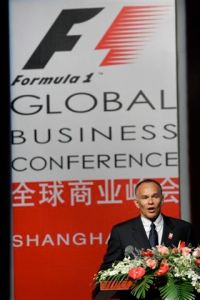
© peterwindsor.com
The Parc Ferme returns for the first time in fourteen months (!) for this end of year special.
Guesting in this show are noted Formula 1 journalist Peter Windsor and up-and-coming Formula 3 racer Alex Lynn.
With Windsor, I’ll be chatting about the most recent Formula 1 World Championship season as well as indulging in a few glances toward the future.
Meanwhile, I had a brief chat with Lynn to learn more about this potential superstar in the making.
—-
Peter Windsor has a wealth of experience in the top category of single-seater racing. After stints as the press officer for the Australian Automobile Racing Club, Peter began writing for various magazines around the world, including Australian Motoring News and Autosport during which time he won several awards for his writing.
Peter has also been editor of F1 Racing Magazine is a regular columnist for the world’s largest on-line racing magazine, GPWeek.
From there Peter diversified into F1 driver and team management, working with Frank Williams drivers Carlos Reutemann and Nigel Mansell, before becoming the team’s Manager of Sponsorship and Public Affairs. A spell with Ferrari followed, before moving back to Williams in 1991.
Peter later turned to television; initially with Sky Sports, before joining what would become Speed TV in 1998 as their F1 specialist and pitlane reporter.
He currently hosts the weekly webcast chat show, The Flying Lap; and is a regular contributor to SpeedTV.com. In 2011 Peter was ranked the world’s number one F1 journalist by TwitterAllStars.
Check out peterwindsor.com for more of his writing and look out for “The Flying Lap” on YouTube.
Alex Lynn is a 19-year-old Formula 3 racer who is about to enter his second year in the category. After competing in the British F3 Series in 2012, the Essex man is moving out to the continent for next season where he will running in the FIA European F3 Championship with Prema Powerteam.
Lynn took one F3 win alongside numerous podiums in 2012; however the then Fortec racer made some big headlines in 2011 when he stormed to Formula Renault UK success, setting 14 pole positions, 10 fastest laps, 12 wins, one 2nd and a 3rd place from 20 races.
Lynn has also been the recipient of the Autosport National Driver of the Year and the McLaren Autosport British Club Driver of the Year.
In 2011, he was nominated for the McLaren Autosport Award and was selected to be a member of the FIA Academy. He was also selected as a Team UK driver and is a BRDC SuperStar driver.
Previous episodes of The Parc Ferme Podcast can be found here.
So the engines stopped, the crowds peeled away, the tools took to the ground and the roar long since faded.
Stationed inside away from cool air, televisions flickered and blipped. And then things slowed down and it was quiet. How nice.
Until a later date, Merry Christmas.
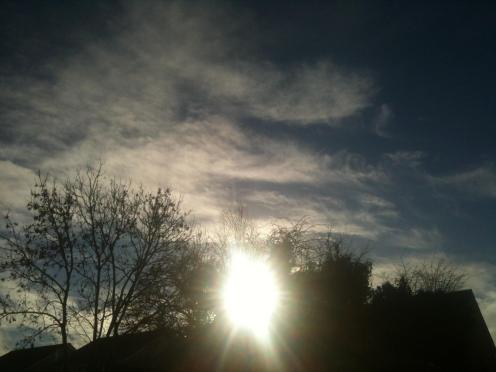
“Christmas Day; Co Kildare, Republic of Ireland.” © Leigh O’Gorman
Once again while having a little dig around the web, I came across a classic clip from the mid-80s.
In 1985, the International Formula 3000 replaced the defunct European F2 Series as the final stepping stone before Formula 1, although things were a little different back then.
Whereas F1’s current final step, GP2, trails the Grand Prix ladder around Europe and parts of Asia and Middle East, F3000 generally ran independently.
Although the series would on occasion visit Grand Prix circuits, it was rarely part of the F1 weekend package. Other parts of the calendar were made up of treks to the likes of Thruxton (!!), Pau, Vallelunga, Enna and Donington.
Come the end of ’85, Christian Danner emerged as champion, quickly embarking on an often pointless stint in F1, followed by a patchy career in CART.
As 1986 dawned, F3000 altered its schedule slightly to include races at Imola, Bugatti Le Mans and Jarama; however the destination that stood out like a sore thumb was “Birmingham”.
Indeed, the Birmingham Superprix – the first street race on mainland Britain – was dressed around Birmingham’s city centre.
The race was initially proposed in 1966 and following a push from Sir Stirling Moss looked like it may finally happen in the early 70s; however even then politics got in the way. Even a demonstration through the city by Patrick Nève in the Brabham BT45 in 1976 failed to persuade the powers that be to accommodate a street race.
That all changed at the tail end of 1985 when Parliament passed the the Birmingham Road Race Bill after a year of debate, allowing a race to held on the streets of the city. Course developments began almost immediately, ensuring the city would be ready for its first F3000 by the following August Bank Holiday.
When it did finally come around, Birmingham would play host to the likes of Ivan Capelli, Pierluigi Martini, Emanuele Pirro, Luis Perez-Sala, Gabriele Tarquini, Roberto Moreno, Satoru Nakajima and Mauricio Gugelmin amongst others on a wet, wet, wet afternoon in the midlands.
The Superprix did not last long – only five years in fact and (legalised) street racing has not returned Britain in the time since.
There was much talk earlier this year about the possibility of a London Grand Prix. It was bullshit, of course, designed to deflect bad news raining on the head of Bernie Ecclestone — and it worked, sadly for the media.
Alas the Birmingham Road Race Bill was rescinded several years ago, ensuring a London Grand Prix would be a difficult endeavour at the very least. But if we cannot have a London Grand Prix, let’s at least enjoy the 1986 Birmingham Superprix. It’s probably far more entertaining anyway.

© GP3 Media Services.
The GP3 Series have released a provisional 2013 calendar this week with the category announcing an eight round schedule, including its first non-European event.
As with the past few seasons, the GP3 Series is set to commence in Barcelona in mid-May as part of the Spanish Grand Prix weekend; however the series will not be returning to Monaco.
The loss of Monaco alongside the demise of the Grand Prix of Valencia has left a seven-week gap to the next round in Silverstone; however this is set to be plugged by an event in mid-June. No venue has yet been confirmed to fill that slot.
From there, the GP3 Series hits destination Europe hard, with trips to the Nurburgring, Budapest, Spa-Francorchamps and Monza following the middle-England contest.
An unwieldy eight-week gap follows, where the GP3 Series will make its début at the Yas Marina circuit in Abu Dhabi. While the Middle Eastern round is certainly welcome, a near two-month gap between the final two rounds is far from ideal, with the season running the risk of deflating in the wait.
There are set to be three two-day tests and one three-day test next year, with GP3 running around Estoril (Portugal) in February, Barcelona in March, Silverstone in April, before taking on an in season test at the Hungaroring at the beginning of June.
Bruno Michel, GP3 Series CEO remarked that: “Since the Series’ inception, the calendar has always consisted of eight race weekends and it will be the case again in 2013. Seven of them will be held during a Formula One Grand Prix which is a fantastic opportunity for all our young drivers.
“The fact that the season will end in Abu Dhabi marks GP3 history with the first race weekend that will take place outside of Europe. It moves the Series in yet another positive direction. It will be a thrilling challenge to the drivers as well as providing a spectacular conclusion for the fans at the Yas Marina Circuit.”
It is a shame that Monaco is off the calendar, but I would be surprised if its removal had much to do with the infamous accident between Dmitri Suranovich and Conor Daly this year.
That kind of accident could happen with any car at Monaco. The street circuit around Monte Carlo is, by its very nature, quite a dangerous artefact. According to responses from the likes of Twitter, drivers are going to miss the visit to the principality.
Aside from that, this represents another solid calendar from the series, from is slowly building a positive reputation.
With its first two champions – Esteban Gutierrez and Valtteri Bottas – due to make their Formula One débuts this year and new champion Mitch Evans set to move to either GP2 or Formula Renault 3.5, GP3 is being served relatively well by its graduates.
Michel also recently commented that: “we wanted to create a clear path for young drivers towards GP2 and F1. We carefully crafted the best tools to prepare them for the next steps and we have seen for the past three seasons that not only did GP3 attract some of the greatest and most promising talents in motorsport, but it’s become a real platform for them to make it to the ultimate step as Gutierrez and Bottas have proven. Having two of our Champions already in F1 after such a short period of time is beyond our expectations and talks volume of the quality of our Series.”
Maybe so, but the two chaps also have several bags of talent. Beyond the champions, Robert Visoiu announced via his website that he has signed for MW Arden.
Visoiu’s post also mentioned that he will be driving alongside Carlos Sainz Jr and Daniil Kvyat; however neither Sainz Jr nor Kvyat have confirmed the move and the GP3 Series have also been silent.
2013 GP3 Series calendar (provisional)
Test calendar
February 20-22  Estoril, Portugal
March 12-13     Barcelona, Spain
April 3-4       Silverstone, UK
June 5-6        Hungaroring, Hungary
Race calendar
May 10-12       Barcelona, Spain
June 14-16      TBA
June 28-30      Silverstone, UK
July 5-7        Nurburgring, Germany
July 26-28      Hungaroring, Hungary
August 23-25    Spa-Francorchamps, Belgium
September 6-8   Monza, Italy
November 1-3    Yas Marina, Abu Dhabi
Next year’s European and British Formula 3 calendars appear to have been finalised following the rejigging of several events.
DTM, who headline several rounds of the FIA European F3 Championship, have moved their mid-season event at the Norisring one week to July 14th to avoid a clash with the German Grand Prix.
Their round at Zandvoort has also been moved from its July slot, this time to late September in effort to detangle a number of logistical issues.
An early season visit to the Hungaroring in support of the WTCC has now been moved to the DTM round at the Hockenheimring.
The championship’s second visit to the Hockenheimring, originally booked for September, has now been moved to the third weekend in October, while the final round – previously TBA – will take place the following week at Paul Ricard, in support of the FFSA GT Tour.
In a spec of good news, it was reported in Autosport a few days ago that Signature Racing are considering a return to the European F3 fold for the 2013 season
Meanwhile the British F3 Series has also introduced minor calendar modifications, as well as National Invitation Trophy in an attempt to increase grids at certain events.
Twenty-six races are planned over nine rounds, starting at the often-wet Oulton Park in Cheshire, with each event holding three thirty-minute races, bar Pau which runs only two feature races. Visits to both Rockingham and Monza have dropped, while this year’s season closer at Donington has been reinstated.
Silverstone has been pushed back one week, while Snetterton has been moved forward and the Brands Hatch round – originally the October finale – will now run in mid-August.
Both calendar alterations also – thankfully from my perspective – ensure there are relatively few clashes during the season, although one or two were unavoidable.
The British F3 round at Pau falls on the same weekend the European Championship visits Brands Hatch, while the Norisring round of the European Championship now falls on the same weekend as the Zandvoort F3 Masters; however there have been rumours that the latter may also move to entice higher entry and better calibre potential.
In quite a positive initiative, five rounds have been opened up for older specification cars from other Formula 3 championships.
Entries from European F3 Open, German F3, the MSV F3 Cup and the recently departed Italian F3 Series will now be allowed to compete at Pau, Silverstone, Paul Ricard, Spa-Francorchamps and the Nurburgring in an attempt to boost grids.
During the 2012 season, only two drivers entered the National Championship full-time, with three drivers entering very limited schedules later in the year.
Meanwhile, the British F3 reverse grid race has been touched up slightly. The winning driver from race one will still need to choose his starting position from a hat {note 1}, potentially dropping to either 8th, 9th or 10th for the Sunday morning event.
The points for race two have also been altered. Rather than maximum race points been awarded, the system has been pushed back downward and will register as 12-9-8-6-5-4-3-2-1-0.5 points. Alongside that, points for fastest laps have been abolished.
Finally, three drivers have thus far been confirmed for next years British F3 Series, with formula Pilota China champion Antonio Giovinazzi and series race winner Sean Gelael sealing drives with Double R Racing.
The 19-year-old Giovinazzi is set to compete in the International Class, while Gelael is entering the National Class. This year’s National Class champion Spike Goddard is – apparently – as good as signed with T-Sport for the International Class.
{note 1}
May not be an actual hat, but rather a velvet bag of some sort.
2013 FIA European F3 Championship calendar
March 23-24       Monza, Italy
April 13-14       Silverstone, UK
May 4-5           Hockenheim, Germany
May 18-19         Brands Hatch, UK
June 1-2          Red Bull Ring, Austria
July 13-14        Norisring, Germany
August 17-18      Nurburgring, Germany
September 28-29   Zandvoort, Netherlands
October 19-20     Hockenheim, Germany
October 26-27     Paul Ricard, France
2013 British F3 Series calendar
March 30-April 1  Oulton Park, UK
May 18-19         Pau, France (with NIT)
May 25-26         Silverstone, UK (with NIT)
June 15-16        Snetterton, UK
June 29-30        Paul Ricard, France (with NIT)
July 25-27        Spa-Francorchamps, Belgium (with NIT)
August 10-11      Brands Hatch, UK
September 21-22   Nurburgring, Germany (with NIT)
October 5-6       Donington Park, UK
Non-Championship events
July 13-14        Zandvoort, Netherlands (Zandvoort F3 Masters)

© GP2 Media Services.
The GP2 Series this week finalised the championship’s 2013 calendar and while it is generally the same as this year’s schedule, there remain minor alterations.
As with the 2012 calendar, GP2 open their season at Sepang (Malaysia) in March, before visiting Bahrain’s Sakhir circuit four weeks later; however unlike this year, the Middle Eastern territory will be hosting a second standalone event.
GP2’s European stint begins in mid-May as Formula One’s Spanish Grand Prix support at Barcelona’s Circuit de Catalunya.
Following the Spanish adventure, there will be trips to Monaco (May 23-25), Silverstone (June 28-30), the Nurburgring (July 5-7) and the Hungaroring (July 26-28), before the four-week summer break kicks in.
The series returns toward the tail end of August with a move to the historic Spa-Francorchamps circuit in Belgium, with the European leg concluding at Monza on September 8th.
There will be a second visit to the Singapore’s Marina Bay street circuit (September 20-22); however unlike his season, the series does not end there, but rather returns to the Yas Marina circuit in Abu Dhabi at the beginning of November.
Two pre-season tests have also been announced. Come the very end of February, the series will take advantage of three days of running at Jerez, before moving to Barcelona for a further three days over the following week.
All in all, this represents a fairly positive calendar for the series, although it is unfortunate that there is a six-week gap between the final two rounds. Such a lengthy gap could go some way to extinguishing momentum should the championship go down to the wire.
The last time the series visited Abu Dhabi (at the end of 2011), the race was a non-championship event for rookie GP2 drivers, forward looking GP3 and Formula Renault 3.5 competitors, as well as few randomers.
The loss of the standalone at Bahrain is probably no great worry; however with the Grand Prix of Valencia also off the calendar, it does leave a couple of rather noticeable gaps during the mid-point of the season.
According to GP2 Series CEO Bruno Michel: “2013 will be another strong season for GP2. We have decided to keep the prestigious tracks outside of Europe, starting with Sepang and Sakhir, two venues which provided some heart-stopping action last season. We are also returning to Singapore in September for the second time of the Series’ history. I am very pleased to be closing the season in Abu Dhabi: we have been to that track several times with GP2 Asia and raced there last time in November 2011 with our latest generation car.
“Added to these four overseas events, we will be racing alongside F1 in all seven European rounds which brings a total of eleven F1 tracks on our calendar again next season. Since the Series started in 2005, we have always provided the drivers with a car close to F1 in performance and used the same tyres. This package guarantees the GP2 drivers to gain the ultimate and most-needed experience to graduate to the next category. Our sole goal has always been and will continue to remain to prepare the next generation of F1 drivers. I believe that’s exactly what we will see again in 2013 and I am really looking forward to next season.”
Outside of the calendar, nine drivers have also been confirmed for the 2013 GP2 Series thus far, with three teams fully solidifying their line-ups early on.
Reigning champions DAMS have an entirely new driver pairing for next season with Marcus Ericsson moving from iSport and Stéphane Richelmi transferring from Trident, while Felipe Nasr and Jolyon Palmer take up the mantle at Carlin.
Lotus GP have a very strong line-up in James Calado and GP3 graduate Daniel Abt – an impressive duo that may well be challenging for the title. Rio Haryanto, Stefano Coletti and Daniël de Jong are returning to GP2 with Barwa Addax, Rapax and MP Motorsport respectively.
Tests
26-28 February   Jerez de la Frontera, Spain
5-7 March        Barcelona, Spain
Race Calendar
22-24 March      Sepang, Malaysia
19-21 April      Sakhir, Bahrain
10-12 May        Barcelona, Spain
23-25 May        Monte Carlo, Monaco
28-30 June       Silverstone, Great-Britain
05-07 July       Nurburgring, Germany
26-28 July       Hungaroring, Budapest, Hungary
23-25 August     Spa-Francorchamps, Belgium
06-08 September  Monza, Italy
20-22 September  Marina Bay, Singapore
01-03 November   Yas Marina, Abu Dhabi
A Christmas message from DTM. Lovely jubbly.
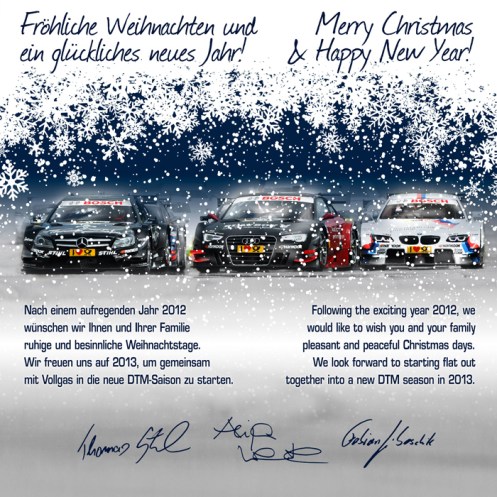
© DTM
As the year-end draws closer, SRO became the latest promoter to release a highlights reel of the 2012 season with a small feature remembering Cooper Tyres British F3 championship.
Following a tense three-way battle with Jazeman Jaafar and Felix Serralles (note 1}, the series was eventually won by Britain’s Jack Harvey {note 2} under the darkening skies at Donington Park.
Along the way, the leading trio saw off challenges from the likes of Alex Lynn and Carlos Sainz Jr during a campaign that visited circuits such as Brands Hatch, Pau, Silverstone, Monza, Spa-Francorchamps and Norisring amongst others.
Originally shown at the SRO Awards Ceremony at the start of November, the clip runs through a number of the highlights – and lowlights {note 3} – of the 2012 British F3 season.
{note 1}
As previously reported on this and a number of other sites, Fortec have now confirmed that Felix Serralles and British F3 teammate Pipo Derani are to move to the FIA European F3 Championship full-time in 2013, alongside two other yet-to-be-confirmed pilots. Serralles and Derani will also be competing in next year’s Toyota Racing Series. The team have still not fully revealed their British F3 intentions, but have ensured that they will have at least some presence in the category.
{note 2}
It was also confirmed in the last few week that Jack Harvey is set to join the GP3 Series with Lotus-ART. Harvey joins ex-Formula Ford racer Eric Lichtenstein who is to compete with Carlin and Samin Gómez Briceno who will be piloting one of the Jenzer Motorsport entries.
{note 3}
It would have been nicer to have less focus on the accidents; alas, that tends to be the nature of these reels, irrespective of the championship on show.
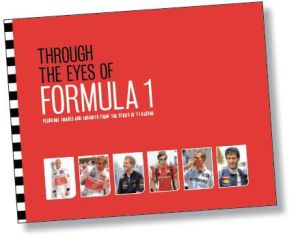
© Dennis Publishing.
With Christmas fast approaching, now may be your final chance to pick up “Zoom: Through the Eyes of Formula 1”, published by Dennis Publications.
Launched as an exhibition earlier this year to critical applause, “Zoom” proved to be something of a unique concept in modern sports merchandise.
Unlike other releases of this nature, “Zoom” contains a collection of photographs taken by some of the drivers and big hitters in Formula One, with shots from the likes of Bernie Ecclestone, Lewis Hamilton, Sebastian Vettel and Michael Schumacher featuring.
In doing so, this concept allows “Zoom” to give these famous names the opportunity to be the protagonists rather than the subject.
Prints of the original shots, signed by the photographer, were auctioned by motorsport specialists Coys in aid of Great Ormond Street Hospital Children’s Charity.
Coming in at an even £20, “Zoom: Through the Eyes of Formula 1” continues the push to raise money for this fabulous charity.
Visit Octane Magazine to purchase a copy of “Zoom: Through the Eyes of Formula 1″ and see the stars of Formula One from a very different light.
Apologies. That was a truly dreadful headline.

 TheMotorsportArchive.com