
With the third Viva F1 Blogger Swap Shop wrapping up, I was once again one of the last to post – not unusual at all now.
I had the pleasure of writing “Impressions of the Rear” for Gavin Brown’s Making up the Numbers site; a piece concentrating briefly on the rear of the grid in the mid-90’s.
Gavin’s site is a normally dedicated to analysing the numbers and statistics that make Formula 1 work. His blog is an oft absorbing and thoroughly interesting body that is worth many of praise it so regularly receives.
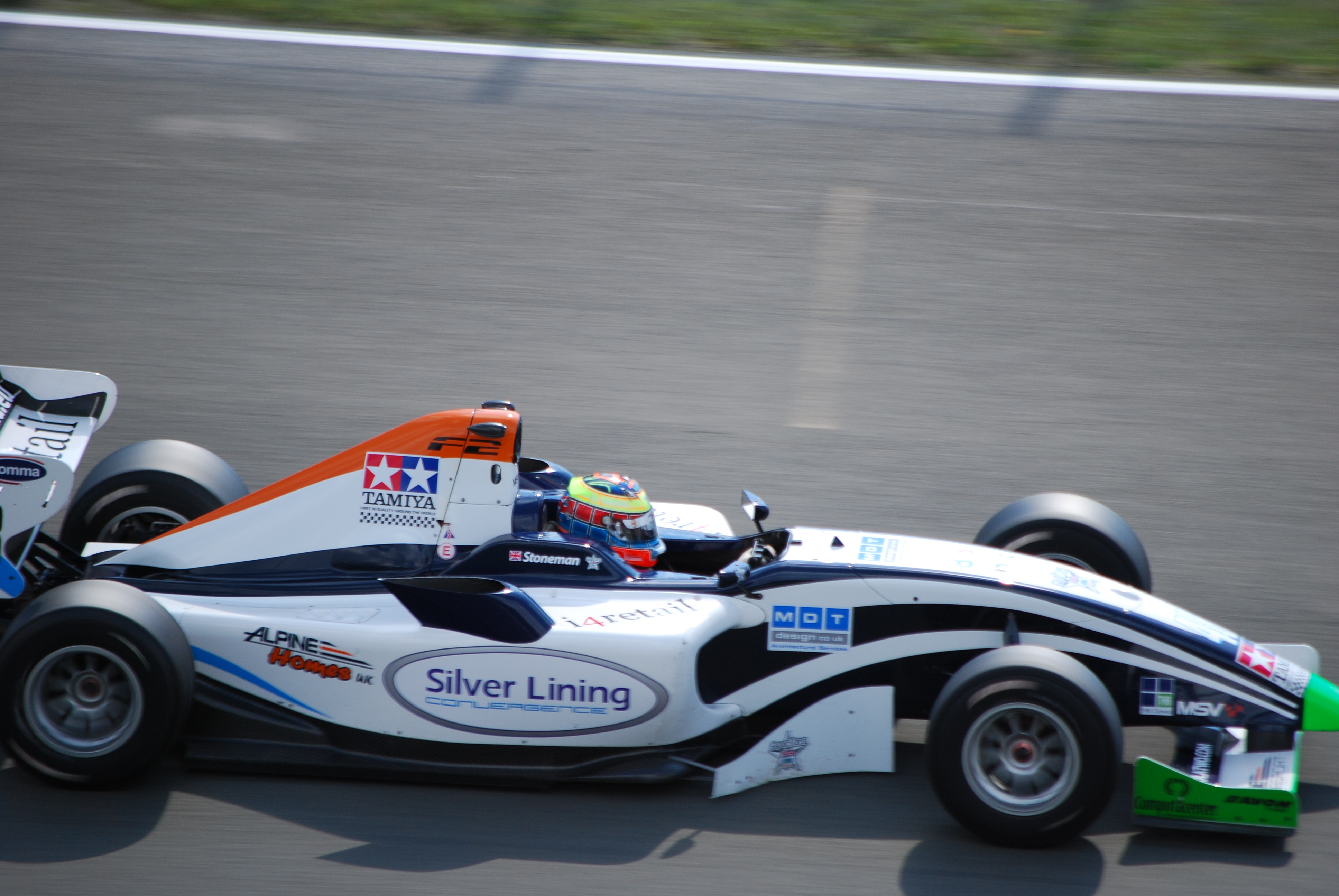
Dean Stoneman was 2010 F2 Champion. © Creative Commons
As drivers and team prepare for a long year of racing ahead, regardless of the formula, one young man has been forced to step aside at a crucial point in his career.
Reigning Formula 2 champion Dean Stoneman was sadly diagnosed with testicular cancer last week, forcing him to withdraw from the World Series by Renault Championship. However it is thought that the 20 year-old Briton may have had his illness treated early enough to allow him to recover.
Stoneman has had, up to now, a relatively successful career in the junior ranks, taking the Formula Renault UK Graduate Cup in 2008, before following that up with his Formula 2 successes last year. On his way to the crown, Stoneman took thirteen podiums from eighteen races, eventually claiming the title at the penultimate race in Valencia – in what was, admittedly, one of the worst races I have ever witnessed. With his 2010 title run secured, Stoneman secured a test with the Williams Formula 1 team at last November’s rookie test in Abu Dhabi, setting a top-five time in the process.
Stoneman was originally to partner Toro Rosso reserve driver Daniel Ricciardo at ISR Racing for the 2011 campaign, but with the Formula 2 champion now not taking part, a valuable seat with a potentially championship winning team is now vacant.
ISR Racing took several wins in their 2010 run with Argentine driver Esteban Guerrieri at the wheel, but Guerrieri is rumoured to have secured an Indy Lights drive with Sam Schmidt Motorsports, meaning the Argentine pilot is unlikely to return to the European fold.
I wish Dean Stoneman well and hope he makes a full and speedy recovery.
The third ever VivaF1 blog swap is currently slithering its way around the internet almost as quickly as rumours of USF1’s demise (nearly twelve months ago.) It is something of an appropriate comparison, as today I am hosting Alianora La Canta from the wonderful La Canta Magnifico Blog who brings to us a post looking at the future of Formula 1 in the US; not only in terms of the Grand Prix itself, but also its potential stars.
I will be posting on Gavin Brown’s Making Up The Numbers later this weekend…
——–
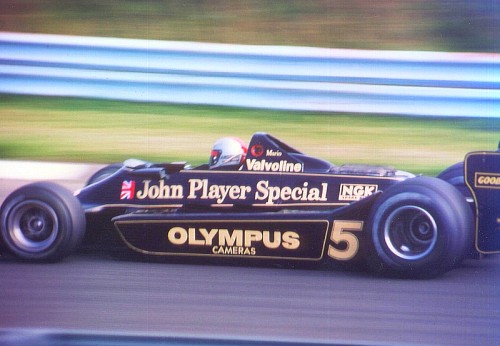
Mario Andretti was the last American World Champion in 1978.
The USA and Formula 1 have had a turbulent relationship for the past three decades.
Back in the days when the US Grand Prix was held every year at Watkins Glen, a steady trickle of drivers from the States tried their hand in F1 (one, Mario Andretti, even won the world title in 1978). Promoters will willing to take a risk on F1, meaning that sometimes the USA had more than one race per season. Occasionally the USA would even field teams, though they were rarely successful. That said, teams have always been the most difficult bit of F1 other than governance itself.
In the intervening years, the relationship has weakened considerably. It is not particularly the territory of this blog entry to explain that weakening since many others have already written well on the subject. What I’d like to write about is the beginnings of the relationship’s recovery and how that recovery might be encouraged. It would be a good thing for F1 to have more developed countries have a greater stake in matters, alongside the usual suspects continuing to support F1 and the emerging markets gradually getting their oar in.
The FIA Young Driver Academy
With excellent timing, I opened my Twitter account after typing the first paragraph to find Will Buxton reporting that two American drivers are short-listed for the FIA Academy. Alexander Rossi and Josef Newgarden are no slouches and will surely benefit from getting more thorough groundings on advanced techniques in European racing.
Due to the 5 places being allocated to regions and the other 5 to whoever is the best in the 3-day selection event in Austria, at least one of the two is guaranteed entry. One region is the Americas but only Alexander and Josef from that region made it to the finalist list. It’s even possible both might get in if they perform well enough. Even if they don’t make it onto the Academy’s first enrolment roll, the short-listing could help them be more attractive to sponsors.
The FIA Academy, to explain to those who haven’t heard much about it, aims to improve promising young drivers’ job prospects in motorsport. While much of the curriculum (e.g. physiology, driving skills, sponsorship) will be directly useful to the aspiring racers, other parts (e.g. logistics and planning) would also be indirectly helpful – nobody will ever attribute a win or championship to “my ace packing skillz”* but being organised can save a lot of worry, stress and niggling behind-the-scenes mistakes. Mistakes that can’t be seen from simply watching someone race have doomed quite a few careers in the past.
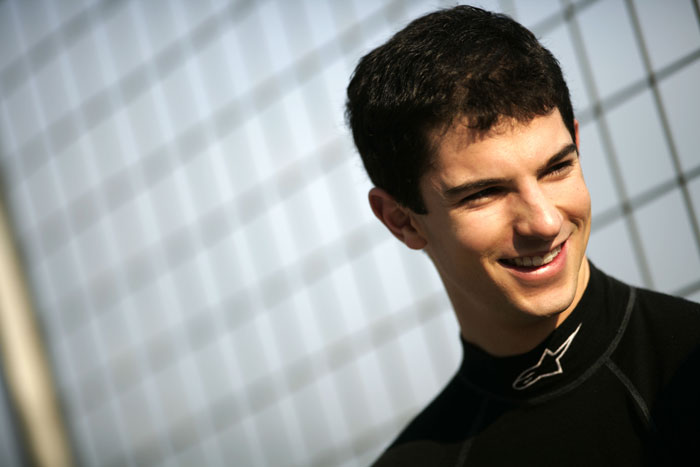
Rossi had a good 2010 and wants to go better in 2011. © alexanderrossi.com
The main teachers at the Academy, Alex Wurz and Robert Reid, are very much used to European styles of racing and that is likely to be reflected in how the curriculum is taught – and therefore in the precise nature of the skills picked up by the students. I think this will be particularly telling in such subjects as sponsorship – the way to attract a European sponsor is different to methods of attracting American sponsorship.
The USA has many large companies who would probably be happy to sponsor a driver once the floodgates to success have been opened by a contemporary compatriot. However, the icebreakers hoping to prove that not every American suffers from Michael Andretti’s culture shock (might have settled with time, but F1 doesn’t do “with time”) or Scott Speed’s brashness (great in America or teams like Williams, less great at Toro Rosso) will probably need funding from outside the States to complete the transition to F1. Large corporate entities are frequently cautious when it comes to marketing. That’s where learning the European way of getting sponsors should help.
Selling it…
Speaking of marketing, a new American team would certainly signal to the world that America has money to spare again. F1 teams are frightfully expensive, resource restrictions or no. Sponsorship is difficult for everyone except, it seems, Ferrari and Virgin. Even so, USF1 managed to get a sponsor who promised enough money (around $50m) to start a reasonably frugal team last year. Yes, it failed to launch. Yes, that’s an understatement. However, the episode demonstrated several positive things that may have been forgotten in the recriminations:
- The USA is perfectly capable of funding a team if a team’s funding request is sufficiently convincing. Before USF1 failed, it may even have been easier there than elsewhere. While lots of companies were seriously damaged by the recession, some stayed buoyant and have enough spare cash to take moderate marketing risks where sufficient gain in international revenue may result.
- The USA confirmed it has plenty of talent either already in situ or willing to move there. The former is not exactly a newsflash for those familiar with the strength of Stateside single-seater racing (as this very blog shows quite clearly) but the latter was surprising. Most teams in F1 are based in the UK and Italy. Even Sauber is somewhat limited in who it can attract because it is based in Switzerland – hardly in commuting distance for people from the UK, or even much of Italy, except for the few that use planes as commuting tools (i.e. drivers and team bosses). Yet USF1 attracted quite a few people to move across the Pond.
- The things that stood in the way of USF1’s entry were poor management. That skill is possessed by many people in America and the number of successful racing teams in the States proves that a fair number of those also have specialist experience. USF1 simply had the misfortune of being led by the wrong people during the critical start-up phase.
A New Grand… and a New Team?
There’s been an interest in forming an American F1 team since, but so far it’s come to nothing. Now, the main thing stopping a team from being formed is probably lack of confidence. Not just a lack of confidence in the economy, but a lack of confidence in people who talk big and under-deliver. It would take someone with a proven track record of starting up a company to convince the big companies to invest now.
Perhaps Sarah Fisher, recently retired from IndyCar driving, could make such an attempt in a few years’ time when her team is comfortably doing the complete IndyCar season. She has the type of personality that could convince a sponsor that her team was different from last year’s over-promisers and has taken enough hard knocks in team ownership to convince people that her team could tackle hurdles. In the meantime, there are a number of more established team bosses, in several series, who could seize the initiative if they could see their way clear to expand in uncertain times.
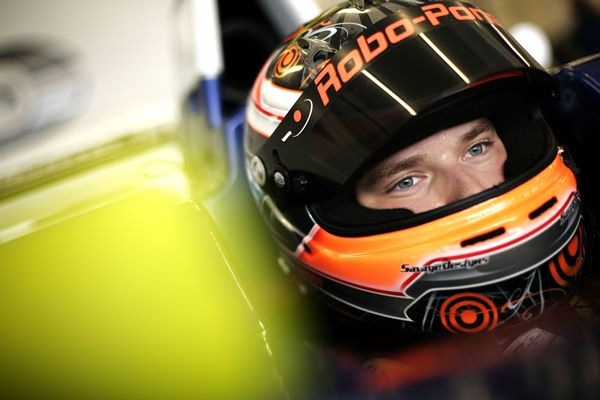
Josef Newgarden had a tough first year in GP3. © http://www.gp3series.com
If such a team did get established in F1, it would help make the progressions of American racers more straightforward. Scott Speed, as mentioned earlier, found his attitude to be his main stumbling block upon reaching F1. As also mentioned, had he been driving for a different team, things could have been so different. An American team would understand the differences of coming from the American culture, particularly the American racing culture, and be better prepared to help drivers through the transition.
Not every brash driver is lucky enough to get a Williams seat, nor does every determined driver get to be in a team where determination is rewarded. Both of those traits tend to help more in North America than Europe. A team understanding of such things is more likely to get the best from American racers, to the benefit of team, drivers and the USA’s standing at the pinnacle of single-seater motor racing.
Of course, one thing that could help American companies to have more confidence is the new F1 race at Austin. Frankly, if Korea can get its race running, Austin should be more than ready by the time F1 rolls in. Of course, Austin’s inclusion on the F1 calender will only help if F1 manages to avoid such bungles as marred its acceptance with the American people during its time at Indianapolis (the 10-year contract with Bernie should ensure the continuity problems of the 1980s are averted, finances permitting).
*Should any driver reading this entry attempt to attribute a win or championship to organisation, then I sincerely hope they paid attention to their “communication and media” module first and come out with a proper sentence, rather than dump teenspeak and internet-speak onto an unsuspecting broadcast audience…
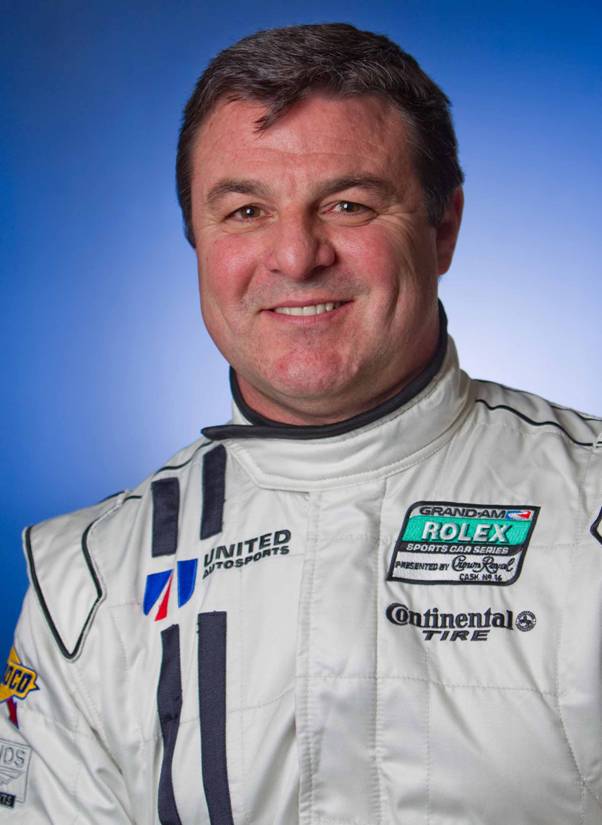
Mark Blundell. © United Autosports
It is fair to say that many thought Mark Blundell had hung up his helmet for good.
Having settled into a solid role as a Formula 1 analyst on ITV (until 2008), as well as starting his own management company, the 44-year-old appeared to be content with life outside the cockpit.
Of course, once a racer…
In what seemed like an age ago, Blundell contested four seasons in Formula 1 with Brabham, Ligier, Tyrrell and McLaren, before moving to the US to compete in the CART Series for PacWest Racing in 1996. He took three victories in the primarily North-American championship, but scaled down his racing commitments from 2001 onward when he became more involved at ITV.
Having originally hung up his helmet after securing a podium at the Sebring 12 Hours in 2003, Blundell started up a management the following year with Martin Brundle. The company, called called 2MB, looks after the affairs of IndyCar pilot Mike Conway and DTM race winner Gary Paffett, although Brundle departed the fold two years ago.
After seven years out of the cockpit, Blundell was convinced to drive for United Autosports at the 24 Hours of Spa, where he along with Zak Brown, Eddie Cheever and Richard Dean claimed 4th in the GT3 category. Although this will be Blundell’s Daytona début, he has experienced success in endurance racing before, having taken victory at the 1992 Le Mans 24 Hour Race.
Blundell will be at the wheel of a Ford-Riley Daytona Prototype (DP) alongside Brundle. Also driving will be Daytona GT and DP veteran, Mark Patterson and United Autosports chairman, Zak Brown. The Rolex 24 Hours represents the beginning of United Autosports second year of racing competition and for their début Daytona run, the Anglo-American squad are teaming up with the experienced Michael Shank Racing.
With less than one week to go before green lights signal the opening practice session, I checked in with Mark to see how things were coming along.
The team tested their DP Prototype at Daytona recently. © United Autosports
Formula 1 Archive: Daytona is one of those famous circuits that is often mentioned in the same breath as Monaco, Le Mans, Spa-Francorchamps or Indianapolis.
Now that you have had some testing this weekend, what are thoughts of the circuit so far?
Mark Blundell: It’s a great track with immediate appeal when you come into vision with on the street road and you know there is something magic about the track. This is confirmed when you drive it and the huge speed on the banking and the tight complex but high speed bus stop make for some challenges behind the steering wheel.”F1A: The circuit has recently being completely repaved, leaving all competitors to effectively start from a clean sheet of paper. Does this bring an extra value to testing that you are doing now?
MB: “Well from the driver point of view its new to me so I have no reference but I am happy its smooth because at 200 mph with bumps would get my attention, but yes lots of new data and also because new tire combination with continental so all teams looking to develop as fast as possible ready for the race.”F1A: You are just one part of a four-driver team. Does such a race require you all to have at least vaguely similar driving styles? With that in mind, how do you approach this race in terms of car set-up – can you optimise or does it involve a series of compromises?
MB: “It helps to have a similar style and also be equal comfort in the cockpit but I think we all tested the car and made changes that everyone was happy with and I believe that all us have enough speed and experience to get to the end of the race and that is the most important factor first to finish, overall the whole race and set up is about compromise but that’s the beauty of sports car racing working with each other.”F1A: How have you found the Ford-Riley Prototype at this early stage?
MB: “I was surprised as I had a picture in my mind of the car’s performance and this has been expelled, the overall car is well balanced and enough down force to make it a great car to drive and I hope its brings us success.”F1A: You have enjoyed success at endurance races before, particularly at Le Mans and Sebring. Is there anything that you bring from those previous experiences that can help ensure a good run at Daytona?
MB: “Experience of knowing how to win a 24 hour event and to paces yourself and your team members but overall its all about the team and we all have to contribute as much as we have in experience speed and effort to have a hope of pulling off a result in a race like this..”F1A: A number of drivers from various other forms of motorsport are also taking part in the race. Does the fact that the race has such a wide variety of talented competition give this race a prestige that other events might not possess?
MB: “It’s great to race against all these guys in one event and yes I think that is some of the appeal and because its a very famous race at the beginning of the international motorsport season there is a lot of focus from all around the world.”F1A: This will be United Autosport’s first race in the US. Does performing in front of the team’s home crowd bring its own set of pressures?
MB: “No more pressure, as we know the job we have to do, but its great to be part of the Anglo American team that makes up United Autosports and to race with friends as well makes it extra special!”Daytona's steep banking will be a test for the team. © United Autosports
F1A: After 2003, you withdrew from racing to work in television and later set up your company, only to get back into the drivers seat last year. How did the drive come about? Can you describe the preparation involved to get back into the racing game after such a lengthy absence?
MB: “Well I got the desire and the bug to return to the racing wheel and my buddy Zak mentioned to me about racing in Spa and that was it – I was converted again, and I have put some effort into loose some weight and prepare and I think I will pay off, you know its like riding a bicycle, once you have done once then you never forget.”F1A: Do you have any plans for further racing this year?
MB: “I hope to do some more racing depends on time taken with my business.”
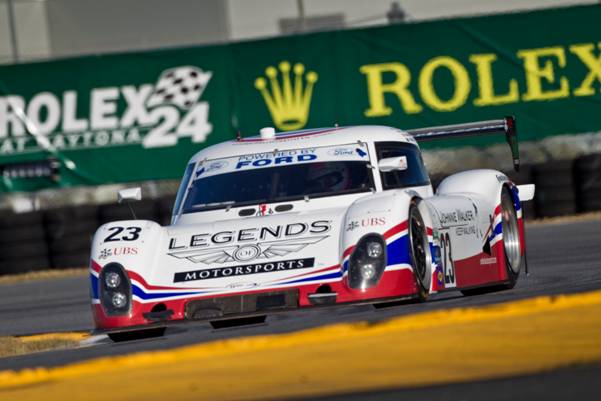
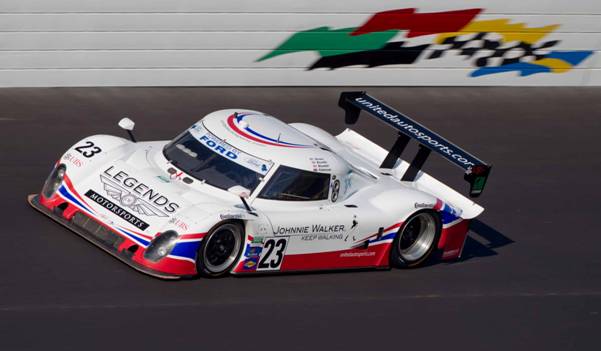
You can follow the exploits of both Mark Blundell and United Autosports on Twitter. My thanks to Mark for his time and to Martyn Pass at United Autosports for putting this together.
Green flag for the Rolex 24 Hours of Daytona will fly on Saturday January 29th at 8.30pm GMT (3.30pm EST). A preview post will follow next week.
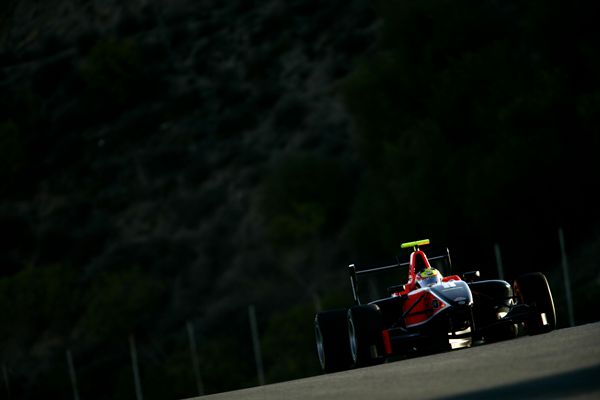
Rio Haryanto ran well in GP3 in 2010. © http://www.gp3series.com
Fledgling junior racing category, GP3, released its 2011 calendar this week.
The Formula 1 support series will retain all eight of its 2010 rounds, with an event at Monte Carlo still to be confirmed. GP3 did not run on the famed Monaco Grand Prix weekend last year – in its place was the World Series by Renault race – but confirmation of GP3 would go quite a way to boosting the standing of the Championship.
Unlike last year, the Championship will kick off in the Turkish capital of Istanbul and will take in rounds at Barcelona, Valencia, Silverstone, Nurburgring, Budapest and Spa-Francorchamps, before ending the season at the legendary Monza circuit, just outside Milan.
Three tests will take place in the two months leading up to the season opener, starting with a two-day run at the Paul Ricard circuit in France on the 3rd and 4th of March. Silverstone will host a three day test from March 29-31, while a final pre-season showing is scheduled April 12-14 at Barcelona.
Mexican driver, Esteban Gutierrez won the inaugural GP3 series and is moving to GP2 as a result. He has also secured a reserve spot with Peter Sauber’s Formula 1 squad.
2011 GP3 Championship Calendar
| Date | Venue | |
| 3-4 March | Paul Ricard, France | Test |
| 29-30-31 March | Silverstone, Great Britain | Test |
| 12-13-14 April | Barcelona, Spain | Test |
| 7-8 May | Istanbul, Turkey | Race |
| 21-22 May | Barcelona, Spain | Race |
| 27-28 May* | Monte Carlo, Monaco | Race |
| 25-26 June | Valencia, Spain | Race |
| 9-10 July | Silverstone, Great Britain | Race |
| 23-24 July | Nurburgring, Germany | Race |
| 30-31 July | Budapest, Hungary | Race |
| 27-28 August | Spa-Francorchamps, Belgium | Race |
| 10-11 September | Monza, Italy | Race |
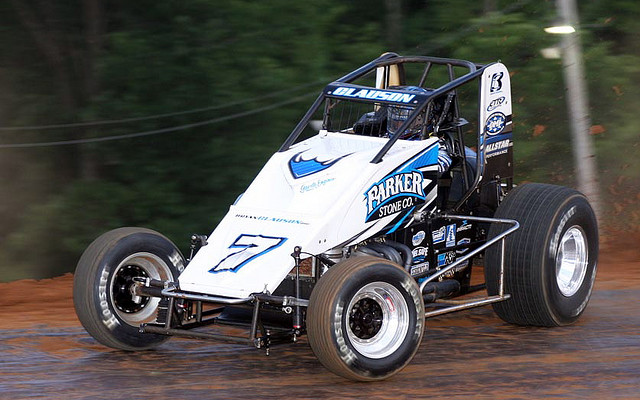
© Bryan Clauson Racing
AJ Foyt, Mario Andretti, Johnny Rutherford and Bobby Unser.
For decades, these names burned themselves into the consciousness of the US motor racing industry and their lights will continue to shine for many years to come.
That foursome represent a supremely talented group – top drawer in fact – that took on short ovals, road circuits, super speedways and in one case the world and won. They also represent a group that reigned supreme on the dirt tracks that held so many midget races over the years, but in recent decades – bar one or two exceptions – the road from dirt track ovals to IndyCar has virtually dried up.
Sure, their were still some North American heroes to cheer on – the likes of Al Unser Jr., Michael Andretti, Danny Sullivan and Bobby Rahal gained many plaudits during their respective careers, but their history began on the permanent road courses, street circuits and paved ovals of the CART-era.
Step forward Bryan Clauson. The 21-year-old is the reigning USAC National Drivers and Midget Series champion and having secured a notable scholarship from the Road to Indy campaign, Clauson will be contesting six Indy Lights races this season for Sam Schmidt Motorsport. It is an interesting side-step for Clauson, who at one time raced in NASCAR’s Nationwide and ARCA series’ part-time, but as opportunities narrowed, the Californian found himself back on the USAC trail and on the road to his first title.
Whether Clauson can ever fill the shoes left by the likes of Foyt, Andretti, Rutherford or Unser remains to be seen, but one thing is for certain – with advertising campaigns such as the one below, the weight of expectation may be pushing hard on the young man’s shoulders.
- AJ Foyt – USAC National Champion (7 times), Indianapolis 500 winner (4 times), Le Mans 24 Hour Race winner (1967).
- Mario Andretti – 1978 Formula 1 World Champion, Indycar Champion (4 times), 1969 Indianapolis 500 winner, 1974 USAC National Dirt Track Champion.
- Johnny Rutherford – 1980 CART Series Champion, Indianapolis 500 winner (3 times), 1965 USAC National Sprint Car Champion.
- Bobby Unser – USAC National Champion (twice), Indianapolis 500 winner (3 times)
…
- Bryan Clauson – 2010 USAC National Champion
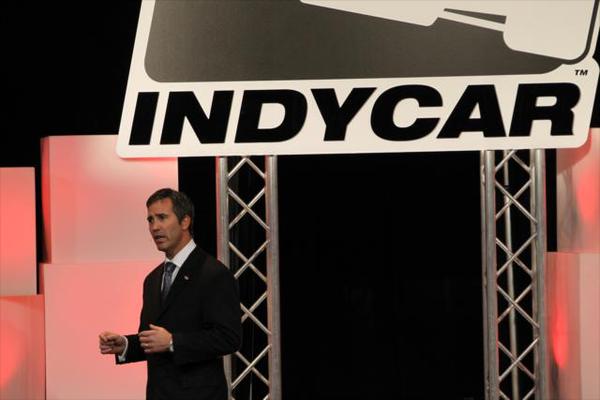
INDYCAR CEO, Randy Bernard, addresses the audience. © Michael Levitt / LAT
Last week, members of the INDYCAR fraternity, led by CEO Randy Bernard, gathered in Indianapolis for a State of the Union address.
The meeting was called to announce future changes to the IndyCar Series and its respective feeder formulae. Among the topics on hand were changes to race direction rules for the 2011 season, as well as updates regarding the IndyCar Series in 2012. There were also announcements regarding how the IndyCar Series is to be marketed and promoted. Potential changes to the TV situation have also just emerged as of late.
Altering the Now
For the events themselves, some rules have really been tightened up. For example, the 107% rule of road and street courses has been reduced to 105% – if a driver does not qualify within those boundaries of pole, then he or she will not race (unless there are outside circumstances (mechanical failure or disruptive weather for example). This is very solid rule, originally introduced to Formula 1 in 1996 to combat the number of poor drivers that were occasionally up to ten seconds off the pace on laps where pole came to only 90 seconds. That is one thing in a series where cars varied in design; however in a Championship such as IndyCar, where all cars are virtually identical, having a driver eights seconds off the pace on 68-second lap is simply not acceptable.
Apart from being a potential on track hazard, a super-slow competitor also harms the image of a series. When trying to promote a Championship on the basis of the quality of its drivers, it does not help to have one car lapped before one-tenth distance.
The practice sessions were also reconfigured to give rookies an opportunity to bed themselves in. Instead the opening session being a sixty-minute run, first practice has now been lengthened to 75 minutes, with rookies and drivers outside the top-10 in the Championship availing of the first three-quarters of-an-hour. The final 30 minutes will be open for all drivers. Following this first session, those that ran the entire session will have to return two sets of tyres, while drivers that ran for a half-hour must return only one set.
How tyres are allocated through qualifying on road and street courses has also been altered, with only one set being made available to each entry per qualifying segment. The one-at-a-time nature of qualifying on a oval remains unchanged.
Drivers will also benefit from a day’s extra running prior to the races at New Hampshire, Las Vegas, Iowa and Milwaukee – which is interesting, because Las Vegas has technically not actually been confirmed yet…
Something that will be changing on ovals are the post-caution restarts. Double-file restarts are to be introduced on ovals, having been in CART in the late-90’s, while also being a current component of NASCAR races. While this is a move that may make racing extra competitive for a turn or two, it is hard to see a large benefit to the racing itself, especially should the high groove be layered with tyre marbles. Several drivers expressed misgivings about this ruling, impressing that it may cause several accidents, others such as Danica Patrick and Scott Dixon seemed cautiously optimistic. Until we see it in action (at either Indianapolis or Texas), it will be difficult to judge.
More significantly, restarts are to begin on the start / finish straight, as opposed to in between the 3rd and 4th turns, thereby bringing the pack closer together as they tear into the opening corner. A definite improvement on the previous restart strategy that often saw the field strung out as the pounded into turn one on some ovals.
One element that will effect both road/street courses and ovals is the change of pitbox positioning – previous seasons had seen the points table determine how far down the pitlane an entrant would be. Up until now, whomever led the Series possessed the final pitbox, leaving that driver with an unblocked exit back onto circuit – and with it, a vital advantage.
The rewritten rule will now see pit box selection based on the qualifying positions based on a similar-like event. For example, if a driver secures pole in Sao Paulo at the beginning of May, they will not get the first pitbox until the following road/street course. It is an odd rule and will probably make little difference to the actual racing and is – as you see above – rather difficult to explain on screen.
Like many forms of motorsport across the world, there will be very limited testing this season, with the first test taking place at Barber Motorsports Park from 14th-16th of March, while an oval test will run at Kentucky Speedway from May 9th-10th.
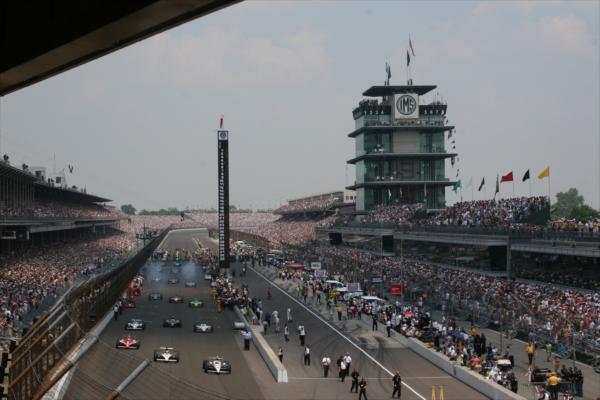
2011 will be the 100th anniversary of the first Indy 500. © Larry Seidman
Future Visions
As for 2012, the technical specifications for the engine manufacturers have yet to be released to the public; however it is known that engine capacity is to be reduced from 2.4-litre to 2.2-litres. This change will make little difference to the pace of the cars and am surprised that the capacity was not cut further in order reflect wider moves by the larger car manufacturers. The fuel cell will also reduce by approximately six gallons.
There will also be an expansion of boost output (also known as “push-to-pass”). Previously, there were two setting – one for ovals and another for road and street courses; however a third boost level has been added to account for the short ovals which have come back onto the calendar.
Currently three aero-kit manufacturers confirmed for 2012; Dallara, Lotus and Chevrolet, yet according to IndyCar project manager, Tony Cotman, a fourth is expected to join the field. Interestingly, it is thought not to be a car manufacturer, but a company from outside the motor racing sphere.
Another potential game changer is the newly announced merger between NBC and Comcast. Versus, which is carried by Comcast has been airing IndyCar since the 2009 and has a further eight years left on that particular contract; however the station has received criticism for being lost in a sea of minor sports channels. Being part of NBC also exposes IndyCar to around an extra 50 million homes in the US, expanding it a long way beyond its current reach with Versus. At a time when advertising and sponsorship dollars mean so much, this is a big win for the series.
New offices will also be opened in Hollywood as IndyCar attempts to rebuild its media and entertainment credentials. Heading this new office will be Sarah Nettinga, who performed a similar role in NASCAR for the past several years. Having been starved of media attention for many years, something not helped by the truly dire Champ Car-related film Driven, the California-based team will be looking bring the series to the wider public, through various projects in television, film and gaming. The attention is sorely needed and when it is fully up-and-running, it may find itself focussing on some of the exports from categories below.
Driving the Next Generation
IndyCar’s feeder formulae have also been on the receiving end of some good news – and about time too. Since the dissolution of the Atlantic Series at the end of 2009, a clear road from US F2000 to IndyCar has been carved out (via the Star Mazda Series and Indy Lights); however making the jump to US F2000 has been something of a stumbling block for a number years.
With this in mind, a scholarship system has been put in place to promote the winner of the Skip Barber Nationals to US F2000, along with a $200,000 fund to take to the Series. The US F2000 Champion will receive $350,000 to move up to Star Mazda and the winner of that championship will take $500,000 to secure an Indy Lights programme. Which ever driver wins the Indy Lights Series will have the option of taking up to $1 million to an IndyCar team.
The Road to Indy also an additional branch as it attempts to reconnect with USAC roots. The USAC National Championship contest high-powered midget cars mainly on short ovals, as well as on some dirt tracks; however the title winner will be offered the opportunity to run an oval program in the Indy Lights Series, in order to help grow a larger local fanbase. Thankfully, Indy Lights returns to television this year as part of a highlights package to be aired the Wednesday following a race, after one year being confined to indycar.com.
These initiatives are fantastic for several reasons. The IndyCar Series has lost many a driver over the years, due to either an inability to raise funds to reach a competitive level, or they were lost to the NASCAR ladder. This will – hopefully – see talented drivers up through the ranks and eventually make it to the main series.
The first of these USAC graduates, Brian Clausen, will be competing for Sam Schmidt Motorsports in this year’s Indy Lights campaign and all eyes will be on the California native to see if he can contest for race wins in the series.
These drivers, along with fellow young racing pilots Marco Andretti, Graham Rahal, Charlie Kimball, JR Hildebrand, James Hinchcliffe and martin Plowman may be the drivers that carry IndyCar Series through not only the next five years, but potentially the next two decades.
For far too long IndyCar has attempted to make heroes of those with familiar surnames whose talents have fallen blatantly short of their forebearers. Names such as Foyt, Unser, Andretti, Rahal and Fittipaldi will always be legendary, but for IndyCar to succeed, the aforementioned youngsters need to become legends in their own right.
The Immediate Road Ahead
As reviewed, there are many changes on the cards for this year and many years to come and it will most likely not end here. With less than two months to opening race in St Petersburg, eighteen drivers are already confirmed with a further six or seven full-time drivers still to be announced. The next several weeks will also see a number of partial schedules announced too.
Many claimed that 2011 had the potential to be a lame duck season, but right now, it is lining up to be anything but.
Earlier this week, I came across an announcement regarding an emerging Championship, called the A10 World Series.
But what is the A10 World Series? So far, their site has only one linking element on its front page, which leads to minor details regarding the engine specification. The A10 Series is to be a new single seater formula, powered by 600 BHP V10 engines, at this point ruling out any links to the Ferrari engines that piloted the A1GP Series. The link also has an audio file of the engine too.
The only V10 engines (I know of) that are in active competition at the moment are the 5.5-litre Audi and Judd motors that currently contest the LMP1 Series; however with the amount of concentration that Audi place on sportscar racing, it is questionable if they would wish to expand to an unknown series, such as this. On the other hand, Audi’s sister company, Lamborghini, produced a nifty 5.2-litre V10 engine for their road cars several years ago – an engine that shared many of Audi’s technological features at the time. However, Lamborghini have not contested single-seater championships since the early 90’s and has been working very hard in the FIA GT Championship as of late.
Judd, on the other hand, have been producing fairly competent V10 engines for sportscars in recent years, while being involved as an engine supplier rather than a manufacturer. The knowledge and experience the company has may make them a potential favourite to supply the A10 World Series; however whether Judd have the facilities to expand to yet a further championship is an unknown.
As for Formula 1 engine manufacturers, Cosworth did run a restricted 3-litre V10 engine in 2006 with Toro Rosso, but it may be unlikely to foresee their power-plant running in A10 World Series, due to their current obligations to Formula 1. Alternatively, Cosworth’s one-time Formula 1 competitors, BMW, have pulled back many of the motorsport efforts in recent years, leaving them with little motor racing exposure. Even their Formula BMW category has been withdrawn.
Toyota are another possibility. The company’s Formula 1 plans were touted to be sold to ailing Formula 1 squad, HRT all winter; however talks collapsed just before Christmas and it appears that there is no way back. With NASCAR being Toyota’s only racing series at the moment, an entry to the A10 World Series, with an already proven V10 engine (the RV Series) would be a slow re-introduction back into single-seater racing. The Japanese company also have the benefit of their own junior single-seater series based in New Zealand and Australia, called the Toyota Racing Series, meaning a road for development drivers is also rather strong.
No other information regarding chassis or circuits has yet been revealed; however more information is expected to be released daily. Many a Championship have either replaced specification chassis (GP2) or simply collapsed (A1GP* and Champ Car) in recent years, leaving speculation open as to what chassis will be raced.
Basic company details for the Championship reveal that its offices are based in Southampton and that they were registered last October; however direct contact details are still not available.
Another question is where does the A10 World Series position itself? Do the organisers see this as a competitor for Superleague Formula or something that sits alongside it? Following the collapse of A1GP, there has to be a question as to whether another high grade racing series is necessary (assuming, of course, that parts of this may be based in Europe) and right now, it does not take much research to realise that Superleague already struggles for an audience in its grandstands during race weekends. Also, what is A10 World Series to be paired with; does it have support formulae or is it a support for some other Championship? This is also very, very late to be launching a Championship that is supposed to running this year, so when will it be racing (if it is)?
It is very odd that until a few days ago no one had heard of this series, especially when considering its apparent global ambitions. One wonders what will revealed next.
I am going to stick my neck out here. I think it is a racing simulator league, along the lines of iRacing. That is based on absolutely nothing at all, apart from gut feeling.
*The first generation A1GP cars are currently being raced in Auto GP, while the second generation machines are apparently in storage.
The BBC announced yesterday that former Red Bull driver, David Coulthard is to join Martin Brundle in the commentary box for their Formula 1 broadcasts.
Brundle, who will be replacing Jonathan Legard in the main seat, has been a full-time co-commentator since 1997, having acted as an aside to the great Murray Walker and later James Allen. The Englishman also acted as a third commentator alongside Walker and Dr Jonathan Palmer in 1995 when his Ligier seat was split with Aguri Suzuki. Palmer, of course, replaced the BBC’s original co-commentator, 1976 World champion James Hunt in 1993, when Hunt passed away due to a heart attack.
It is a job that requires both incredible enthusiasm and knowledge and there is no doubt that Brundle and Coulthard have both those qualities in spades. Whether the pair have the ability to bring those elements to the fore remains to be seen and to be frankly honest, we may not see them fully gel until well into this season or even next year.
During the past two years, there were signs that all was not right during some races, with both Legard and Brundle interrupting each other on regular occasions; often making for some rather jagged performances in the box.
Sadly, it did not work out for Legard and while I understand on occasion why many viewers disliked his style of delivery, some of the bile aimed at him has been frankly ridiculous. We live in a world where nearly every single solitary piece of useful information is at the fans’ fingertips and without doubt that makes us more informed than ever before. It also opened the television team to some of the most absurd – and occasionally obscene – criticism imaginable.
When contemplating critiques, one should attempt to commentate on a race at home as it happens in front of them, while gleaming information from various screens around them. Try it – I guarantee you it is very, very hard. It is very easy to criticise from the comfort of our living room chairs and couches all the way across the world; however I doubt for a single second many armchair commentators would succeed in such an environment.
Unfortunately in Legard’s case, the problem has more or less been the delivery of the content. For all the criticism that races get on occasion (regardless of formulae), a good commentator is often the person who can really make a race come alive, while a poor one may only accentuate the negative. A good narrator is just as important as the story he or she is attempting to read.
As for Coulthard, this will not be his first foray into the commentary box. In 1994, the (then) rather green Williams driver often took up third commentator duties alongside Allard Kalff and John Watson for Eurosport’s Formula 1 broadcasts, whenever Nigel Mansell had a weekend off from CART. He was not bad back then, albeit somewhat untrained.
Being a presenter on a broadcast is very, very different to being an actual commentator, so we may yet see a quite different Coulthard in the box than at the beginning of the show.
Yet it is quite glaring that there will be no journalistic presence in the box and thus it will be interesting to see if Brundle can genuinely act as a lead for viewers. Walker, Allen and Legard knew that in a sense they were the people who were to ask the expert the questions that the viewers wanted answered. Considering his expertise, Brundle may not be able to replicate that element without sounding false.
And so the pointless search for perfection continues apace and with it, those who pine for the new “Murray and James” or “Murray and Martin” will most like be tapping their fingers with impatience.
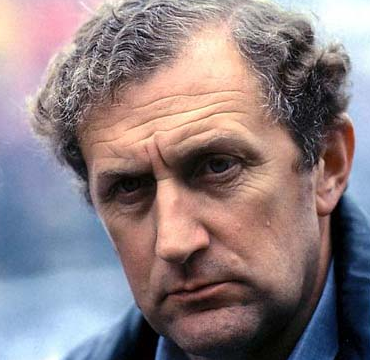
Derek Gardner. © Copyright unknown.
After days of keeping my head down and travelling, I discovered only last night that former-Tyrrell Formula 1 designer, Derek Gardner, has passed away at the age of 79.
Born in 1931, Gardner worked for the Matra company in the late-60’s before joining Ken Tyrrell’s Championship winning team in 1970, eventually drawing up his first car for the British team later that year in his garage. Débuting at that year’s Canadian Grand Prix, Jackie Stewart was able to put the Tyrrell 001 on pole, but was unable to reach the finish.
Gardner went on to design two of Stewart’s title winning cars, the Tyrrell 003 (1971) and the Tyrrell 006 (1973) and also penned the infamous Tyrrell six-wheeler for the 1976 season. Then Tyrrell driver and future World Champion, Jody Scheckter was not fond of the six-wheeled machine, yet was still able to take it to victory at the 1976 Swedish Grand Prix.
Thereafter, the Tyrrell team began to fall into decline and Gardner left Formula 1. Soon after he began working as a researcher for the Borg-Warner clutch company, although he would continue to design boats long after his time in racing teams had passed.
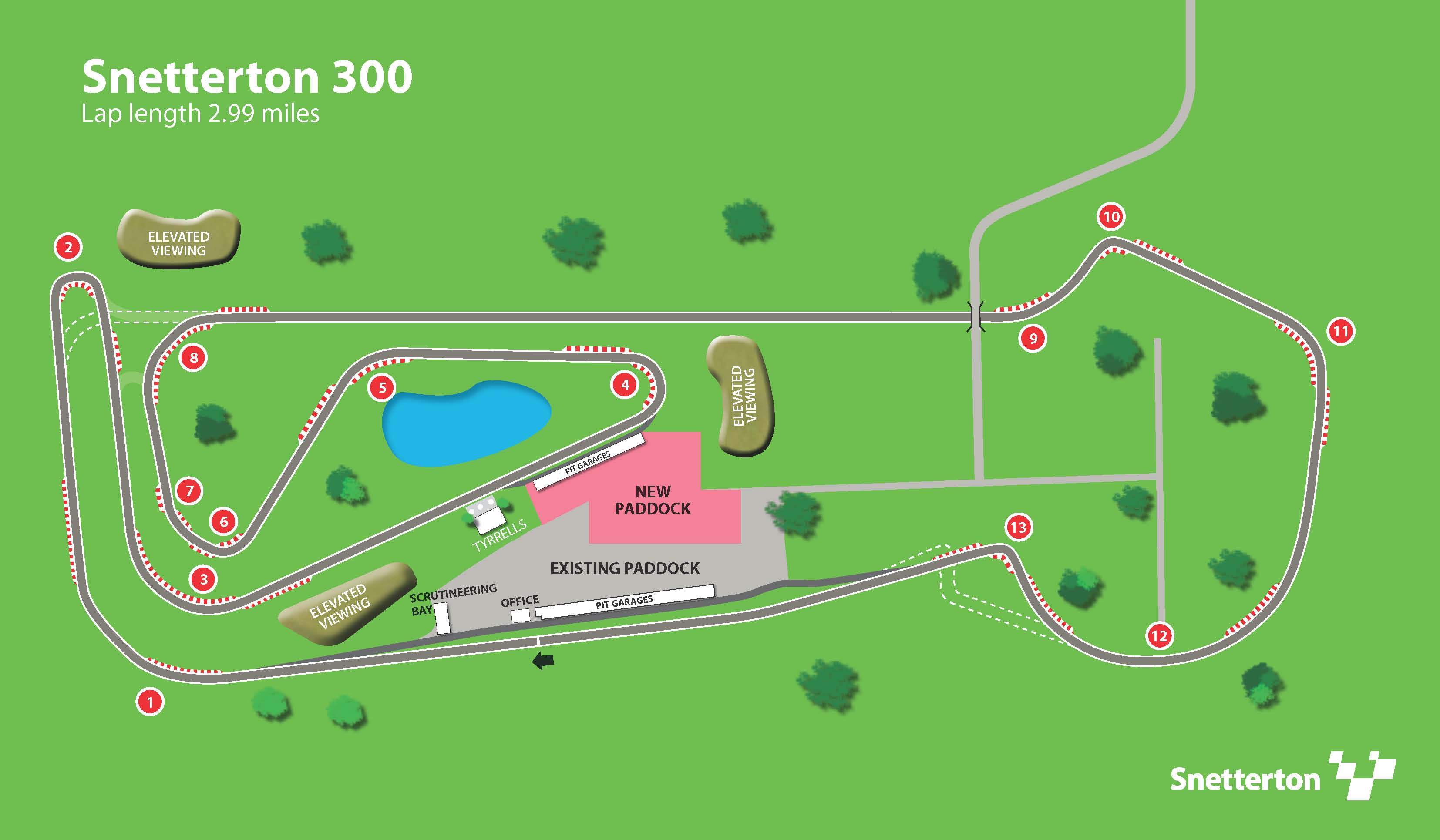
Snetterton "300" layout. © Motorsport Vision.
British national racing circuit, Snetterton, released a video of it’s new “300 circuit” profile yesterday afternoon.
The developments, instigated by Motorsport Vision, incorporates much of the original Snetterton layout, with a new infield section, making it the second longest track in the UK, bringing the circuit to 2.99 miles. The new layout will host British Formula 3, as well as the BTCC, the British GT Championship and the Superbike Series amongst others. With this new layout, Snetterton is hoping to achieve an FIA Grade 2 licence.
Despite the circuit alteration, the “200” layout will still be in use, albeit with a tightened turn 2 (now more of a hairpin) and a heavily altered final corner, while the “100” will still exist in its original format.
There are still to be future developments as Motorsport Vision is to continue to alter regions off the track to help safety, with spectator banks being moved. Plans are also afoot to develop the paddock area and to build extra workshops to the east of the circuit entrance.
A video below (produced in rFactor it would seem) showcases the new “300” layout and while the new form seems functional, it does not come across as the most inspiring of tracks; however, simulations can sometimes lie. One will have to wait until there is some on track action before my mind is made up.
Fans are being asked to help the naming of the new corners – this can be done via Snettertonnames.com.
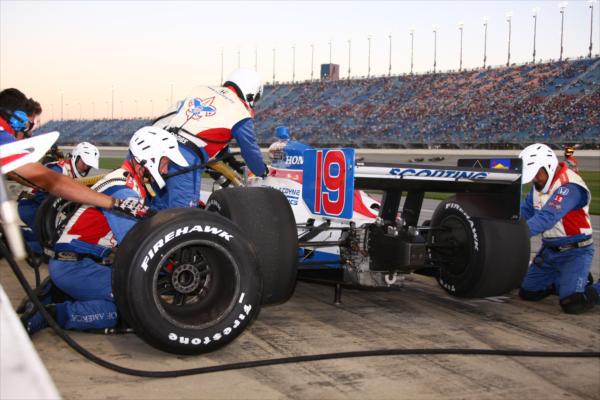
Firestone have been IndyCar's sole tyre since 2000. © Dan Helrigel
Rumblings emerged this evening about the status of Firestone as the sole tyre supplier for the IZOD IndyCar Series beyond the end of this year.
Firestone have been sole supplier to the IndyCar series since Goodyear left the (then) Indy Racing League at the end of 2000, giving the series eleven years of unrivalled success in IndyCar. There was potential for the tyre company to using the threat of a pull-out as their contract with the series broached the point of expiration, but with that deadline passed, a withdrawl seems to be the most likely result.
However, all these rumours are still possibly just a stepping stone or a stumbling block, should points of negotiation have reached a head.
One can also not ignore the fact that Firestone’s parent company, Bridgestone, pulled out of both Formula 1 and GP2 at the end of 2010, marking what may be a significant shift in the Japanese company’s plans. If Firestone were to leave, it would also be potentially disastrous for the Indy Lights Championship, where the tyre supplier is also the title sponsor as well as the sole rubber supplier.
In the last two years, several other Japanese names have pulled out of top-level motorsports, such as Honda and Toyota (Formula 1), Subaru and Suzuki (World Rally Championship) and Kawasaki (MotoGP).
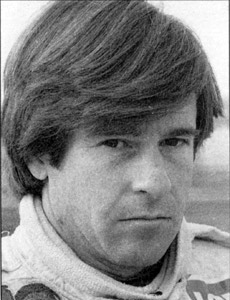
The red-haired Zuniño replaced Lauda at Brabham. © Copyright unknown
When Niki Lauda walked out on his Brabham team following practice for the 1979 Canadian Grand Prix, the British team found themselves in a dire situation.
Having endured a dreadful season, the Brabham pairing of Lauda and young teammate Nelson Piquet retired from race after race after race. In fact, in the first thirteen races of the 1979 season, Brabham suffered fifteen retirements from twenty-five entries, with Lauda not managing to qualify for the Grand Prix of Monaco.
Even a win against a depleted field at the non-Championship race at Imola could not lift Lauda’s spirits. Dispirited, the World Champion from only two years previously had been truly humbled and with his will gone, Lauda left. One might be able to guarantee to a certain degree that drivers everywhere would jump at the chance to pilot a Formula 1 should the opportunity arise. Step forward Ricardo Zuniño.
Argentine Touring Cars, European F2 and Aurora AFX
Born in the San Juan district in Western Argentina, Zuniño was a relatively late starter in motorsport and did not get behind the wheel of a racing machine at the ripe age of 25. Starting with a period in sportscars, he eventually took to the Argentine Touring Car Championship with Fiat, meeting some little success.
Having shown signs of decent, if somewhat untrained talent, Zuniño soon gained sponsorship from the Automobile Club of Argentina and in early 1977, set off for Europe and the hotly-contested Formula 2 Championship.
In a Hart-powered March 772, Zuniño did not have the most successful of seasons first time around; scoring only a single point at the Grand Prix of Pau. Oddly enough, what was originally a 73 lap race at Pau was cut to 59 tours, when heavy rain made the course virtually undriveable. Along with Zuniño and Euroracing’s Alberto Colombo, future Formula 1 stars Didier Pironi and Ricardo Patrese all crashed on the final lap of the famous French street race, gifting a win to the Renault-backed Frenchman, René Arnoux.
1978 would prove to be a slightly more fruitful experience for Zuniño, although he could still do no better than seven points, thanks to three 5th place finishes and a 6th in the works March team. The following year, Zuniño was looking for a move up the racing ladder, making Formula 1 his primary goal, regardless of his results in the lower category.
As the final year of the 1970’s got under way, a muted Formula 1 drive in an ageing Surtees chassis with the proposed BS Fabrications squad fell apart and with little else to lose (or do), the 29-year-old secured a test with Bernie Ecclestone’s Brabham team.
That too would come to nothing and as prospects became thin on the ground, Zuniño accepted a drive with Arrows’ British Formula 1 team – otherwise known as the Aurora AFX Championship – and soon began piloting their A1 machine. There would be little chance of a Championship run though, as the Argentine had already missed the first five rounds by the time the offer from Arrows arrived.
Settling in would not be an issue for Zuniño. The Argentine national claimed several points finishes, before scoring a victory at the Fuji Tapes Trophy at Brands Hatch in late-August. Against the likes of David Kennedy, Emilio de Villota, Guy Edwards, Desiré Wilson and eventual Champion Rupert Keegan, Zuniño secured a top-six position in the Championship. While his competitors were hardly top drawer opponents, he still managed some considerable results against recognised talent.
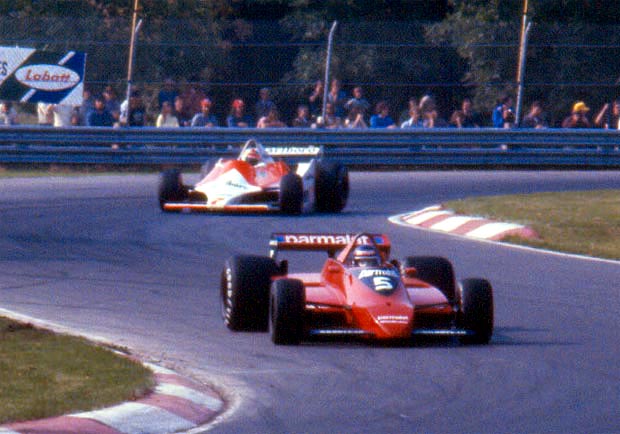
Zuniño, leading John Watson's McLaren in Montreal 1979. © José Miguel Barros / Forix
On the money in Montreal
Thanks to small gap in the British Formula 1 calendar in late-September, Zuniño arrived in Montreal for the Canadian Grand Prix as a spectator; however Friday morning brought turbulent events in the paddock, as Niki Lauda resigned.
Spotting his one-time test driver in the paddock, Ecclestone approached and Zuniño’s career was changed in an instant. By Friday evening, he was a fully-fledged Brabham driver.
With precious little time to get truly acclimatised to the new BT49, the man from San Juan eventually qualified on the tenth row, but finished a credible 7th place, albeit four laps down on race winner Alan Jones. To make it even more spectacular, the Argentine had even set the race’s 6th fastest lap and had lost plenty of time stuck in the pits thanks to gearbox problem. Even if it meant little on the classification sheets, it was still an impressive achievement and following the race, Zuniño was rewarded with another drive at the United States Grand Prix at Watkins Glen, one week later.
By now, the Brabham man had more time to feel his way into the car and started the race from 9th position ahead of drivers such as Patrese, Pironi, Mario Andretti, Patrick Tambay, John Watson and newly crowned World Champion Jody Scheckter. The race, run in changeable conditions, caught Zuniño out and he was one of many drivers to spin off the track and into retirement.
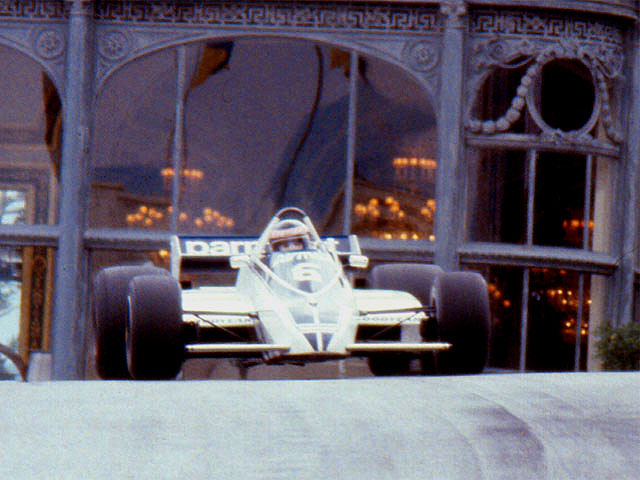
While Piquet got a podium at Monaco, Zuniño didn't qualify. © José Miguel Barros / Forix
Poor Form, Poor Fortune
Following these two impressive showings, Zuniño was re-signed for a full season in 1980. Fortune would turn to the worse for the Argentine driver – the season started with his home Grand Prix at the great Oscar Gálves circuit in Buenos Aires and while Zuniño finished in 7th place, he was much slower than a fired up Nelson Piquet – himself eager to make his mark on the World Championship. Zuniño would follow-up with an 8th at Interlagos and a 10th place finish at Kyalami – Piquet meanwhile was clocking up points, while consistently out-qualifying his older teammate; sometimes by over one second.
The situation would reach a painful low at Long Beach at the tail-end of March. While Piquet took both pole position and an easy victory, his struggling teammate qualified only 18th (2.7 seconds slower than Piquet) and retired after one corner as he attempted to avoid a pile-up between Andretti, Jean-Pierre Jarier and Jochen Mass.
Sadly later in the race, Clay Regazzoni suffered a brake failure in the same corner and rammed Zuniño’s parked Brabham. Initially, it was thought that Regazzoni had simply injured his foot; however it soon transpired that the Swiss man had been paralysed in the incident from the waist down.
Neither Brabham finished the Belgian Grand Prix five weeks later, but at the sixth round in Monaco, Piquet qualified 4th and finished 3rd. Zuniño, meanwhile, did not even qualify for the race, having missed the mark by nearly a second. By now, it was an open secret that Brabham were looking to ditch their Argentine number two. Incidentally, Zuniño did register a top-six finish at the Spanish Grand Prix, only for the race to declared a non-Championship event after it had been run.
As the field lined up at Paul Ricard for the French Grand Prix at the end of June, Zuniño burned his clutch on the grid, ending his race before the lights had gone out; Piquet, meanwhile finished 4th, leaving him 2nd in the World Championship standings.
After the dust settled upon the Paul Ricard result, Zuniño had been quietly fired, to be replaced by the mildly superior Hector Rebaque. In fairness to Zuniño, his Mexican substitute did not fair much better than the Argentine journeyman, with Rebaque scoring only a single point, ironically at the Canadian Grand Prix.
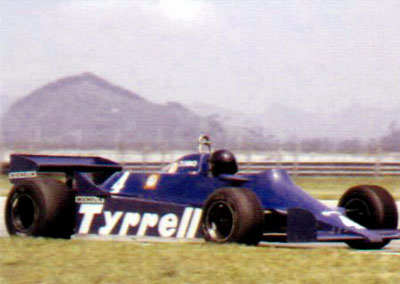
One last hurrah in Brazil. © Copyright unknown.
Fading Away
Zuniño did not completely disappear from Formula 1. The San Juan man sat out the rest of the 1980 season, but did return to Brabham for the South African Grand Prix at the beginning of 1981. The Kyalami race was initially to be opening round of the season; however FISA declared the event a non-Championship event and was run to Formula Libre rules. No manufacturer teams were present for the race, leaving only nineteen cars to take part with Zuniño finishing in 8th position.
For the Brazilian and Argentine Grand Prix, the former Brabham driver found a temporary home at Tyrrell, finishing 13th in both events; however he had been running in the top-ten at his home race, until a skipped chicane led to a one-lap (!) penalty.
Truth be told, Zuniño had been outclassed by American teammate Eddie Cheever in the two races and by the next Grand Prix at Imola, the Argentine had again been replaced – this time by the reigning European Formula 3 Champion, Michele Alboreto.
An offer to complete the season for Mo Nunn’s struggling Ensign team appeared, but with Zuniño unwilling to trawl around at the rear of the field week in-week out, he turned the British team down. With no other drives on the horizon, the Argentine’s brief top-level was over after only ten races from eleven entries.
Come 1982, the Falkland’s War broke out and with the Argentine economy struggling to stand on its own, sponsorship deals were curtailed without warning. For Zuniño – and many other Argentine drivers of the day – motor racing quickly became history. Returning to his home country to compete in occasional historic car events and the Mil Millas road race, his love for motorsport competition had waned somewhat and with lots of new found free time, he took charge of the Posada San Eduardo hotel in San Juan.
Sitting at base of the Andes, the former driver later became head of the region’s tourist organisation, where he remains to this day.

Dario Franchitti
What is left to say about Dario Franchitti? A third title and a second Indy 500 win added much to the reputation of the popular Scot. Despite trailing Will Power for the length of the season, a steady string of podiums, including wins at Mid-Ohio and Chicagoland were enough to overhaul the Penske driver in the final race.
Doing laps in Jim Clark’s Lotus 38 at Indianapolis in September was simply the icing on the cake.
Will Power
To come back from two fractured vertebrae he received in practice at Sonoma in 2009 was quite an achievement. To do it with a victory at Sao Paulo was simply incredible.
Power led the IndyCar Series throughout 2010, only losing out when he clumped the wall at Homestead, damaging his suspension in the process. The Australian took five races over the course of the year, but a tough time on the ovals weakened his challenge severely. Expect the Franchitti / Power battle to continue this year.
Scott Dixon
Although Dixon claimed 3rd in the Championship, the Kiwi did not have the most stellar of seasons. While victories at Kansas and Homestead were well deserved, Dixon picked up a lucky 50 points at Edmonton when Helio Castroneves was demoted; yet for much of the year, the Ganassi driver seemed strangely anonymous.
The two-time Champion will be looking to get back on the title trail next year.
Helio Castroneves
After a difficult 2009, Helio Castroneves returned to the Penske camp for an eleventh season with both the Championship and a fourth Indy 500 crown in mind.
That neither feat were achieved must surely disappoint, especially in a car that is a regular winner. There were occasional highlights, such as his win at the new Barber Motorsports Park and pole at Indianapolis; however like Dixon, there were too many days where you barely realised Castroneves existed, although his outburst following the race Edmonton showed that the passion still burned bright. A late burst of form was not enough to haul himself ahead of Dixon in the standings.
Ryan Briscoe
There were times when the 2009 IndyCar title Challenger seemed to have gone into hibernation, while his Australian teammate took all the headlines.
Bar his win at Texas and two other podiums (St Petersburg and Watkins Glen), Briscoe’s season was more “not quite there” story. The Penske driver did feature in the upper echelon of the points on a number of occasions, but rarely seemed to be in a position take wins. 2011 will be a big year for Briscoe and may go a long way to deciding his future in the series.
Tony Kanaan
Of the four drivers at Andretti-Autosport, Tony Kanaan appeared to be the real father figure of the team.
A regular points scorer, Kanaan did still suffer a few blips through the season and very nearly did not qualify for Indianapolis. He could won the famed event, had it not been for a very late “splash-and-dash” fuel-stop, but he would make up for that disappointment with victory at Iowa.
Despite being the highest runner at Andretti-Autosport, Kanaan lost his 7-11 sponsorship and with it his seat for this year. Until several days ago, it was looking as if the popular Brazilian would be out of a drive; however a move to de Ferran / Dragon Racing could be Kanaan’s last hoorah.
Ryan Hunter-Reay
At a time when IndyCar fans are searching for a new homegrown hero to follow, Ryan Hunter-Reay was signed to Andretti-Autosport in place of Hideki Mutoh.
Indeed, the American had a solid season, during which he delivered some strong performances on road and street courses; however his oval form was not quite as emphatic. Hunter-Reay came close to a win at the opening race in Sao Paulo, but would soon make the trip to Victory Lane at Long Beach. This year, he becomes Andretti-Autosport’s lead driver in place of Tony Kanaan – it will be interesting to see if he can live up to the challenge.
Marco Andretti
Son of Andretti-Autosport team owner, Michael, Marco Andretti has had something of a charmed life in recent years. The brash 23-year-old has tasted occasional success in recent years, but in what is possibly the strongest IndyCar field since the mid-90’s, his form has been less consistent. The American is obviously a talented young driver, but he needs to get closer to Hunter-Reay if he is to silence his critics.
If ever there needed to be a study as to whether a son should drive for his father’s team, then Marco Andretti would be an interesting study.
Dan Wheldon
For a driver nicknamed “Difficult Dan”, 2010 was certainly a tough year for Dan Wheldon. More was expected of the 2005 IndyCar Champion, yet with Panther Racing it was hard to see how Wheldon could produce better result. The 32-year-old’s quality on the ovals was clear and manifested three podiums, but his road and street course form was lacking.
Having been dropped by Panther Racing, where Wheldon goes to next is a mystery, although rumours of him returning to Andretti-Autosport fold in fourth car have surfaced recently and refuse to go away.
Danica Patrick
A that could have made her an American superstar, Danica Patrick instead suffered greatly as she dipped her toes in NASCAR’s deep waters.
Ten appearances in the Nationwide Series wrapped around her IndyCar schedule and while her Nationwide performances were somewhat less than noteworthy, Patrick’s IndyCar form certainly took a turn for the poorer. She will be repeating the experiment in 2011, but whether it works or not is entirely down to how she approaches the challenge. Improved form could all be down to attitude.
Justin Wilson
2010 was the first season since his Champ Car debut six years earlier that Justin Wilson went without picking up a race win, yet it would be hard to call his season a failure.
There were certainly some competitive runs (including podiums at Long Beach and St Petersburg) and while Wilson is improving on ovals, the results are not there just yet. A second year with Dreyer & Reinbold Racing will go someway to delivering stability that may bring better results; however the team has not won since 2000 and attempting to break the Ganassi / Penske stranglehold might be too much to ask of Wilson.
Vitor Meira
Vitor Meira returned from injury with AJ Foyt Enterprises and instantly placed his Dallara-Honda on the podium at Sao Paulo. Beyond that, there was not a whole lot to cheer for, although Meira performed to his usual respectable standards.
The partnership continues for two more years, but after no wins in 112 starts, it is hard to see Meira progressing to Victory Lane any time soon.
Alex Tagliani
Débuting last year was Alex Tagliani’s FAZZT Racing team and the Canadian driver instantly re-established himself as one to watch. Some poor luck and occasional brainfades meant that Tagliani was further down the results than he should have been, but the momentum is now with the team with build on the experience.
Tagliani picked up a best result of 4th at Mid-Ohio, but did lead the race; while at Indianapolis the 38-year-old qualified on the second row, before coming home 10th in the race itself.
Raphael Matos
Despite a string of titles in IndyCar’s feeder categories, Raphael Matos has been unable to turn his form into solid results in the main series. If anything, the 29-year-old Brazilian struggled even more in his second year than during his debut venture.
He did secure two 4th place finishes (Sao Paulo and Watkins Glen), but it isn’t enough and unless de Ferran / Dragon Racing come up with a second car for 2011, Matos will find himself without a drive. Tellingly at this stage, there appears to little talk about him returning to IndyCar for a third season.
Mario Moraes
Despite showing some progress in 2009, last year turned out to be a nightmare for both Mario Moraes and KV Racing. There were only four top-ten finishes in a season where he and his two teammates – Takuma Sato and EJ Viso – seemingly crashed non-stop.
Like Sato and Viso, Moraes’ situation at KV Racing is uncertain, but should he return, the Brazilian will need to showcase a far better turn of speed without the crash tactics, if he wishes to remain part of the IndyCar tapestry.
Alex Lloyd
It’s quite telling that the year Alex Lloyd won Rookie of the Year, few people seem o be talking about him. Although largely unspectacular, Lloyd did pull off the occasional decent result, including 4th at Indianapolis; however it is unreasonable to expect Lloyd to pull off miracles with Dale Coyne Racing.
The 25-year-old will most likely be back with the minnow squad this year, although probably with a different teammate than the mobile chicane that was Milka Duno.
EJ Viso
In 2008 and 2009, EJ Viso took 18th place in the IndyCar standings with backmarkers HVM, so theoretically there should have been a leap up the order when seated at KV Racing?
Sadly for the Venezuelan, Viso’s year was more about ripping carbon than tearing past competitors, with the 25-year-old picking up a sole podium spot at Iowa. There were plenty of accidents, including ones where he took out his teammates – something that Viso desperately needs to avoid once the IndyCar roll out in St Petersburg in March.
Hideki Mutoh
After two years of steady improvement at Andretti Green Racing, Hideki Mutoh moved to Newman-Haas for 2010, only to crash down the order. Following a couple of podiums and plenty of top-six finishes in his previous two years, Mutoh did not do better than 12th this year (at Texas, Watkins Glen and Toronto) and often did so without appearing on the map during races.
Mutoh certainly has some potential as a driver, but language often seemed to get in the way of progress and when developing a car through a weekend, a common tongue is vital. Rumours are circulating that Newman-Haas may expand to two cars this year should the money be in place; however Mutoh may not be in either car, instead giving way to Indy Lights runner James Hinchcliffe and IndyCar veteran Oriol Servia.
Simona de Silvestro
Without doubt, the most popular driver to join the IndyCar series since Danica Patrick appeared some years ago, Simona de Silvestro produced some solid results in a pretty unforgiving HVM machine.
De Silvestro came from the Atlantic Championship with several race wins under her belt and instantly made an impression in Sao Paulo, leading for two laps. Keeping calm while literally under fire at Texas and then delivering two top-ten results (Toronto and Mid Ohio) made her a firm fan favourite.
Graham Rahal
I had been highly critical of Graham Rahal last winter. It seemed both he and Paul Tracy seemed to spend more time on Twitter lamenting the lack of North American drivers in IndyCar, than actually busying themselves finding backers.
However, while Tracy moaned incessantly, Rahal was busy behind the scenes working on sponsorship for a partial schedule, that eventually saw him drive for four different teams. In twelve appearance, Rahal finished in the top-ten on seven occasions and would surely have been much further up the Championship order had he done a full-season.
Still only 21, Rahal is the youngest driver to ever win a top-level open wheel race, when he won on his debut at St Petersburg in 2008; however he has not repeated that feat since. A deal with Chip Ganassi’s satellite team for this year will give him an opportunity to be a race winner once again.
Takuma Sato
One of the biggest disappointments of the IndyCar season was the performance, or perhaps lack of performance of ex-Formula 1 driver Takuma Sato.
Sato did run well at Kansas and was on his way to a top-four spot, only to be taken out by fellow Japanese driver, Hideki Mutoh. In the end, the former Honda pilot penetrated the top-ten only once, but managed to find the wall on many occasions. Having watched Sato’s career over many years, even I was shocked by the amount of accidents he had. If he returns for a second season, a vast improvement will be required
Bertrand Baguette
Several eyebrows were raised when Belgian driver, Bertrand Baguette signed with Conquest Racing for the 2010 season. Having won the World Series by Renault Championship the previous year, an obvious next step would have been GP2 after the Renault Formula 1 team decided on Vitaly Petrov.
It took several races for Baguette to feel his way into the series, but when he did, the 25-year-old established himself fairly well and looks to return for a second season this year, again with Conquest Racing. With a solid year behind him, expect Baguette’s stock to rise.
Milka Duno
Quite simply one of the poorest drivers to ever grace the IndyCar Series. While Milka Duno brought a large amount of cash to Dale Coyne in 2009, she did not bring any talent and this was most apparent on the road courses.
During practice at Mid-Ohio, Duno was often 8-9 seconds per lap down on the leaders on what is a 68-second lap. Some races even saw the Venezuelan parked by Chief Steward Brian Barnhart due to her lack of pace. Whether Duno moves on to another form of racing or just has her IndyCar license revoked remains to be seen.
Mario Romancini
Having only competed in eleven races, 24th in the standing isn’t an honest reflection of Mario Romancini’s efforts in 2010. The steady, but not stunningly quick 23-year-old apparently ran out of funding following the Edmonton event, leaving Conquest Racing to fill their second car with randomers until the season end.
Romancini was the highest finishing rookie at this year’s Indy 500 (13th position); however judging by recent tweets, it seems unlikely that the Brazilian will return to the series to improve on that achievement.
Mike Conway
While always quick, Mike Conway occasionally found it difficult to bring his Dreyer & Reinbold machine to the end of the race in 2009; however it seemed as if the 27-year-old had finally found some consistency last year.
Solid runs at Sao Paulo, Barber Motorsports Park and Long Beach were about to be followed up by a top-six at Indianapolis, until Ryan Hunter-Reay ran out of fuel, starting a chain of events that sent Conway into the barriers. The crash severely injured the Kent driver who is looking to return to IndyCar’s this year. Whether Dreyer & Reinbold will hold a seat open for him remains to be seen.
Sarah Fisher
2010 was the year Sarah Fisher pull back from driving somewhat. Although she ran six races, the Iowan introduced a second car for the lacklustre Jay Howard, while also offering a seat to Graham Rahal on a few occasions.
A risky fuel strategy saw Fisher lead at Chicagoland for a time, and holding a top-three position for several laps thereafter, although she dropped to 15th by the chequered flag. Fisher announced her retirement a few weeks ago to concentrate on running her team.
Paul Tracy
One wonders how much Paul Tracy has left. The 42-year-old registered his twentieth season of IndyCar competition in 2010, yet there are no signs of the Canadian picking up a full-time drive any time soon.
When he does get a chance to race, he can still be very quick, if occasionally brash and while he may be well past his best, but Tracy still has a lot to offer. The heartbreak following his non-qualification at Indianapolis was plain for all to see.
Ed Carpenter
When Vision Racing withdrew from the IndyCar Series at the end of 2009, it was difficult to see where Ed Carpenter would end up. Eventually a deal was done to run four races as part of a Panther / Vision satellite squad and Carpenter delivered with a wonderful 2nd place at Kentucky.
Carpenter also qualified well for Indianapolis 500, putting his Dallara-Honda on the 3rd row, but bad luck with pit stops under caution dropped to 17th by the end of the race. Carpenter will be racing part-time for Sarah Fisher Racing in 2011.
Tomas Scheckter
Placing Tomas Scheckter can indeed be a difficult process. Although experienced, there are more consistent drivers in the field and having not run a full-season since 2007, Scheckter has had a tough time convincing owners and fans of his potential worth.
Another year as a part-time driver is on the cards for 2011.
Ana Beatriz
Despite only running four races, Ana Beatriz showed a decent turn of speed, notching up a best finish of 13th at Sao Paulo.
A winner in Indy Lights, Beatriz will be looking to return to Dreyer & Reinbold should a seat become available; however that will be heavily dependent on money.
Jay Howard
Jay Howard only ran four races last year, having a fairly difficult time in all the events. The Englishman secured a best finish of 22nd at Chicagoland and cemented a fairly poor year by failing to qualify for the Indy 500.
He is rumoured to have at least one-race deal for this year, although who with has yet to be revealed.
And others…
There were, of course, several Indy 500 only entries. Townsend Bell and Bruno Junqueira both ran, with Bell taking 16th place while the latter did not finish. Neither AJ Foyt IV and Jacques Lazier qualified.
Alongside veterans John Andretti and Davey Hamilton, rookie Sebastian Saavedra competed at two events with Andretti taking a best finish of 9th at Kansas and Saavedra coming home 16th at Homestead. Hamilton finished 18th at Chicagoland in his de Ferran / Dragon car.
IndyCar rookies JR Hildebrand and Adam Carroll also entered events – both would register best results of 16th. The unrated Francesco Dracone also ran two races, with a highest finish of 20th.
Roger Yasukawa contested Motegi for Conquest finishing 20th and five laps down.

30 pence for a race programme!! © BRDC
An unseasonal cold spell broken, a sodden and wintry base is revealed, as the snow in Ireland and the UK peels away feebly.
The once pretty white sheets, now betray their subtle beauty as they age to a dirt riddled slush. This is what winter in Ireland is supposed to look like – grey.
Motorsport tends not to happen in these conditions. Smaller race meets and track days would often be cancelled beforehand, while many Championships are deliberately scheduled to avoid such poor weather systems.
In the early-70s, it was not unusual for seasons to be filled out by non-Championship meets. Occasionally drivers would also partake in Formula 2 races, as well as the odd Sportscar or CanAm event – it helped keep them sharp, as well as offering decent entry money (on occasion).
When in 1973, there was an eight-week gap between the South African and Spanish Grand Prix on the Formula One calendar, the BRDC International Trophy stepped in.
A 40-lap run – held at Silverstone – was supported by the Formula 2 fraternity, but this – being the 25th running of the event – was something extra special. Alas, even the best of events can have its hiccoughs and no weather forecasters – regardless of their accuracy – can see months in advance.
Thus when the 1973 International Trophy was originally scheduled, it is rather unlikely that any of the 29-car field foresaw a snow flurry approaching, amidst what was becoming an icy-cold spring day. Admittedly practice and qualifying had witnessed some strong winds and brief bouts of heavy rain; however this was something else entirely.
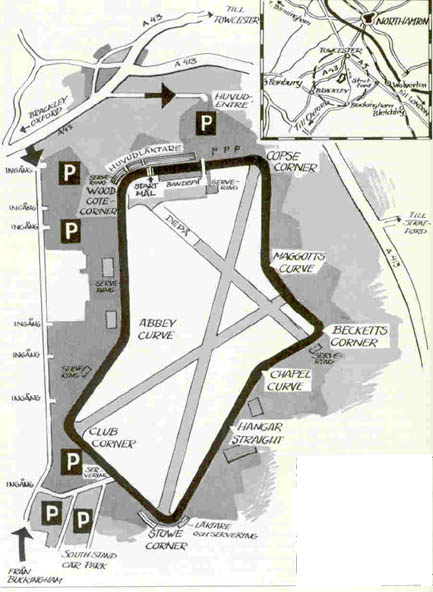
Silverstone, as it was in 1973. © Copyright unknown.
Filling out the pack for this non-Championship event were thirteen Formula 1 entries, mixed with sixteen of the best Formula 5000 cars from the previous day’s support race.
Although some top names were taking part in their contemporary machines, many of the Formula 5000 cars found themselves manned by pilots who would rarely be seated at Championship races.
On pole was reigning World Champion, Emerson Fittipaldi ahead of his Lotus team mate Ronnie Peterson, with Jackie Stewart’s Tyrrell filling out the three-wide front row.
The McLaren pairing of Peter Revson and Denny Hulme swept the second row close behind. Fittipaldi’s race did not last long. The Brazilian’s clutch gave up on the opening lap, as it did with Jackie Oliver’s Ford-powered Shadow.
The rest of the race was peppered with several more retirements – in fact, six Chevrolet engines blew up, while a further entry, Ray Allen, fell foul a fuel pressure problem; the frailties of the exhausted engines laid bare for all to see.
Carlos Pace also failed to reach the halfway distance when a wheel nut worked its way loose from his Surtees Ford. As the race creaked onward Denny Hulme, Howden Ganley and Mike Hailwood also parked their respective machines thanks to various faults.
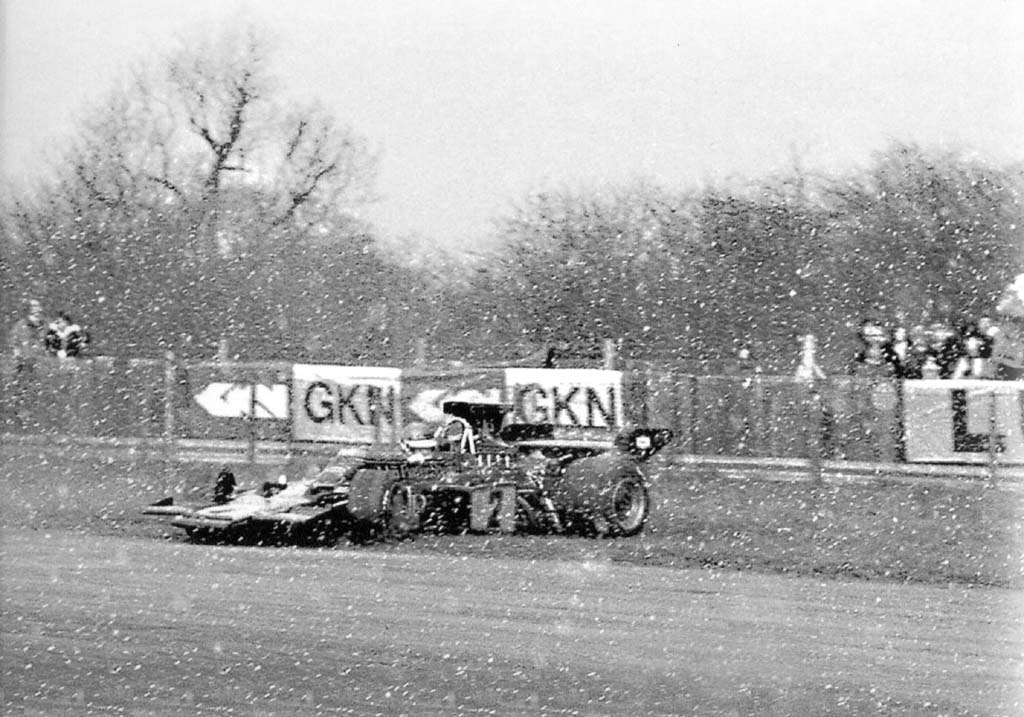
Peterson had snow traction. © Copyright unknown
Out front, Peterson had made the perfect start, jumping to the head of the pack, yet the Swede was being closely harried by Stewart, eager for the win.
When the field came by to complete the second tour, the Scot had assumed the lead from his Swedish rival.
Normally, in these situations, Stewart would simply have kept his head and ran to a(nother) solid victory, but several laps in, the unthinkable happened. Under no pressure, Stewart rounded Becketts, only for the grip to disappear from beneath him – the crowd taken aback, as the Tyrrell pilot lost both traction and positions. By the time he had recovered himself, Stewart had dropped to 6th spot.
With little time to waste in the relatively short race, Stewart deposed the BRM pair of Niki Lauda and Clay Regazzoni, before relegating Revson and Hulme to garner 2nd place. Half the race was gone and the wired Scot zeroed in on Peterson’s Lotus like a man possessed. Every supposed limit of the Tyrrell was being broken, while the Swede was being drawn in.
Still pushing, Stewart tested Peterson’s temper with every turn, however the “feel” of the Northamptonshire circuit was soon to change – a chill was noticeably increasing.
Above the track, clouds gathered en masse – not the darkened grey clouds that signal incoming rain; instead, near white mounds collected, bringing with them layers of snow. The surrounding air grew colder still, sending a clear invitation to the skies to open up – within moments, Silverstone in April became a severe black slick.
In the middle of the fast sweeps at Becketts, leaf-like dots of white precipitated the circuit, causing Peterson to helplessly lose both his Lotus and the race lead. Stewart, too, spun in the flurry – his deep blue Tyrrell sliding out of control at Stowe, but the Scot maintained his advantage of being the frontrunner.
Ironically enough, there were only two retirements due to the flurry (both Brett Lunger and David Oxton spun off) – many of the remaining runners got to the end; however a number of spins and harmless slides would cost much time and add skipped heartbeats.
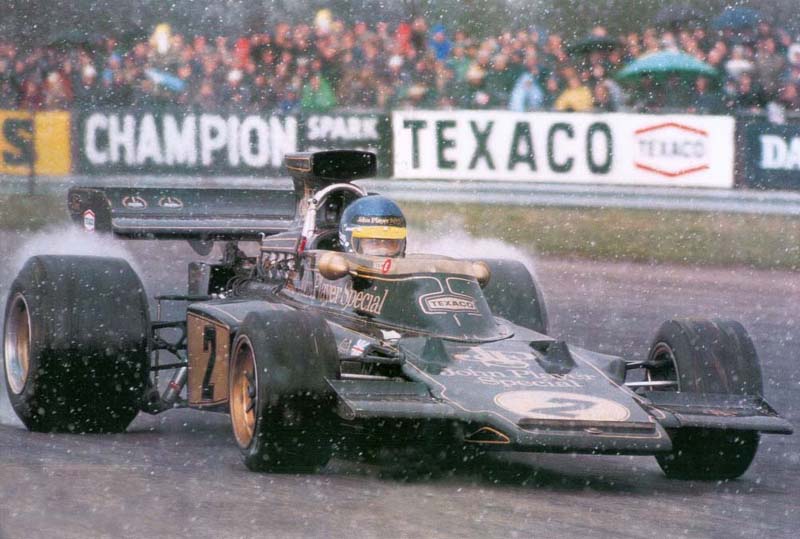
Peterson, not reveling in the snowy conditions. © Copyright unknown.
Stewart continued on to win, some ten seconds ahead of Peterson, with Regazzoni and Lauda 3rd and 5th respectively, sandwiching 4th place Revson.
It was indeed a good result for BRM, who mechanics particularly enjoyed themselves in the paddock later on, as they conducted a fierce snowball fight.
American George Follmer brought the sole remaining Shadow home in 6th place.
Gijs Van Lennep was the leading Formula 5000 car, finishing 7th overall and two laps down on Stewart, although with respect the Formula 5000 class was being led easily by Brett Lunger, until he stuffed it on lap 33. Thirteen cars made it to the end, most of whom were lapped.
The snow really hit hard after the race, but died down just enough for several Formula Ford and historic races to be run later in the day, albeit shortened.
Doubtless, nowadays a race would almost instantly be stopped should snowy conditions prevail, although it is unlikely that simple things like snow would bring a halt to the World Rally Championship at any stage.
But that just makes me sound old, doesn’t it?
——–
1973 BRDC International Trophy of Silverstone (8 April, 1973; Non-Championship Event)
Qualifying
| Pos | Driver | Car / Engine | Time | Diff | Speed (km/h) |
|---|---|---|---|---|---|
| 1 | Emerson Fittipaldi | Lotus-Cosworth | 1’16.4 | – | 221.984 |
| 2 | Ronnie Peterson | Lotus-Cosworth | 1’16.6 | 0.2 | 221.405 |
| 3 | Jackie Stewart | Tyrrell-Cosworth | 1’16.9 | 0.5 | 220.541 |
| 4 | Peter Revson | McLaren-Cosworth | 1’17.1 | 0.7 | 219.969 |
| 5 | Denny Hulme | McLaren-Cosworth | 1’17.2 | 0.8 | 219.684 |
| 6 | Carlos Pace | Surtees-Cosworth | 1’17.4 | 1.0 | 219.116 |
| 7 | David Hobbs | Lola-Chevrolet | 1’17.5 | 1.1 | 218.834 |
| 8 | Clay Regazzoni | BRM | 1’17.5 | 1.1 | 218.834 |
| 9 | Niki Lauda | BRM | 1’17.6 | 1.2 | 218.552 |
| 10 | Brett Lunger | Lola-Chevrolet | 1’18.2 | 1.8 | 216.875 |
| 11 | Mike Hailwood | Surtees-Cosworth | 1’18.3 | 1.9 | 216.598 |
| 12 | Tony Dean | Chevron-Chevrolet | 1’19.2 | 2.8 | 214.136 |
| 13 | Keith Holland | Trojan-Chevrolet | 1’19.2 | 2.8 | 214.136 |
| 14 | Jackie Oliver | Shadow-Cosworth | 1’19.4 | 3.0 | 213.597 |
| 15 | Steve Thompson | Chevron-Chevrolet | 1’20.0 | 3.6 | 211.995 |
| 16 | Vern Schuppan | BRM | 1’20.4 | 4.0 | 210.940 |
| 17 | George Follmer | Shadow-Cosworth | 1’20.4 | 4.0 | 210.940 |
| 18 | Teddy Pilette | Chevron-Chevrolet | 1’20.9 | 4.5 | 209.637 |
| 19 | Tom Belso | Lola-Chevrolet | 1’21.0 | 4.6 | 209.378 |
| 20 | Graham McRae | McRae-Chevrolet | 1’21.3 | 4.9 | 208.605 |
| 21 | Bob Brown | Chevron-Chevrolet | 1’21.4 | 5.0 | 208.349 |
| 22 | Howden Ganley | Iso Marlboro-Cosworth | 1’21.4 | 5.0 | 208.349 |
| 23 | Bob Evans | Trojan-Chevrolet | 1’21.5 | 5.1 | 208.093 |
| 24 | David Oxton | Begg-Chevrolet | 1’21.5 | 5.1 | 208.093 |
| 25 | Gijs van Lennep | Lola-Chevrolet | 1’22.1 | 5.7 | 206.572 |
| 26 | Clive Santo | Surtees-Chevrolet | 1’22.4 | 6.0 | 205.820 |
| 27 | Ian Ashley | Lola-Chevrolet | 1’23.1 | 6.7 | 204.087 |
| 28 | Ray Allen | Surtees-Chevrolet | 1’24.3 | 7.9 | 201.181 |
| 29 | Jock Russell | McRae-Chevrolet | 1’26.0 | 9.6 | 197.205 |
Race Classification
| Pos | Driver | Constructor | Laps | Time/Ret. |
|---|---|---|---|---|
| 1 | Jackie Stewart | Tyrrell-Ford | 40 | 52:53.2 |
| 2 | Ronnie Peterson | Lotus-Ford | 40 | + 10.4 s |
| 3 | Clay Regazzoni | BRM | 40 | + 22.7 s |
| 4 | Peter Revson | McLaren-Ford | 40 | + 28.6 s |
| 5 | Niki Lauda | BRM | 40 | + 50.0 s |
| 6 | George Follmer | Shadow-Ford | 39 | + 1 Lap |
| 7 | Gijs Van Lennep | Lola-Chevrolet | 38 | + 2 Laps |
| 8 | Tom Belsø | Lola-Chevrolet | 38 | + 2 Laps |
| 9 | Vern Schuppan | BRM | 38 | + 2 Laps |
| 10 | Keith Holland | Trojan-Chevrolet | 38 | + 2 laps |
| 11 | Tony Dean | Chevron-Chevrolet | 38 | + 2 laps |
| 12 | Clive Santo | Surtees-Chevrolet | 37 | + 3 Laps |
| 13 | Bob Brown | Chevron-Chevrolet | 37 | + 3 Laps |
| Ret | Brett Lunger | Lola-Chevrolet | 33 | Accident |
| Ret | David Oxton | Begg-Ford | 27 | Differential |
| Ret | Mike Hailwood | Surtees-Ford | 27 | Differential |
| Ret | Howden Ganley | Iso Marlboro-Ford | 24 | Oil pressure |
| Ret | Denny Hulme | McLaren-Ford | 24 | Oil pressure |
| Ret | David Hobbs | Lola-Chevrolet | 23 | Engine |
| Ret | Bob Evans | Trojan-Chevrolet | 17 | Engine |
| Ret | Jock Russell | McRae-Chevrolet | 21 | Engine |
| Ret | Steve Thompson | Chevron-Chevrolet | 17 | Engine |
| Ret | Carlos Pace | Surtees-Ford | 16 | Wheel nut |
| Ret | André Pilette | Chevron-Chevrolet | 10 | Engine |
| Ret | Ray Allen | Surtees-Chevrolet | 6 | Fuel pressure |
| Ret | Graham McRae | McRae-Chevrolet | 5 | Engine |
| Ret | Ian Ashley | Lola-Chevrolet | 4 | Accident |
| Ret | Jackie Oliver | Shadow-Ford | 1 | Clutch |
| Ret | Emerson Fittipaldi | Lotus-Ford | 1 | Clutch |
*Drivers in italics ran Formula 5000 machinery.
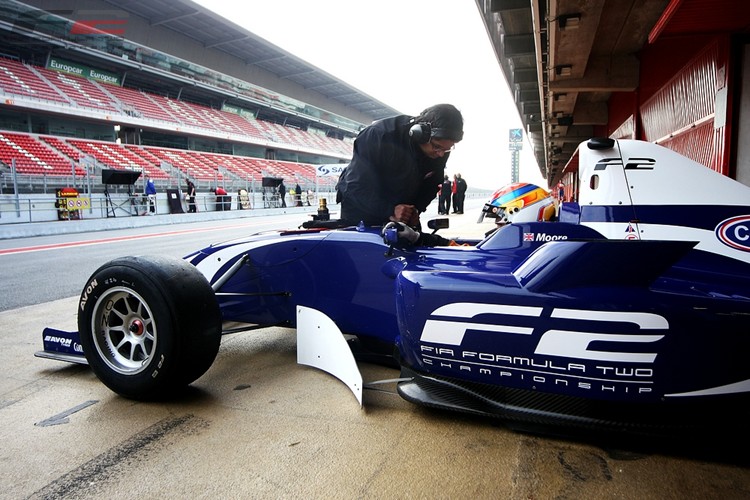
© James Bearne
Just prior to the Christmas snow grounding, the Formula 2 Championship announced a new television package for the series.
Starting in 2011, Formula 2 moves to MotorsTV, becoming one of the station’s flagship Championship’s, bringing with it extended extended coverage.
The broadcasts, lasting approximately one hour, will focus more on the competitors, while also introducing qualifying segments. Each event will also be broadcast live from formulatwo.com, while also enjoying the benefit of no commercial breaks and numerous repeat viewings thereafter.
Although mainly a European channel, MotorsTV is available across the globe; however Formula 2 is working on securing wider broadcasting rights as it attempts to build on the momentum of the last two years. As an addition, Formula 2 will hold all of its rights, giving them some directorial charge over its production.
Inevitably, since the series was brought back to life in 2009, there have been teething troubles and setbacks – none more heartbreaking than Henry Surtees’ fatal accident at Brands Hatch last year.
Recently, Formula 2 lost its position as a support event for the World Touring Car Championship (WTCC), but will be a lead in for the International GT Open Series instead. Part of the WTCC package was coverage on Eurosport; however that position has been taken up by the AutoGP Championship.
Winning the Formula 2 Championship does bring its rewards. The title holder will participate in a test for Williams at the tail end of the season, while the runner-up and 3rd placed driver get test with GP2 teams.

My hand. Epic. © Leigh O'Gorman
Have lots of fun.
Sit down, watch too much television and don’t drink too much.
Cheers,
Leigh
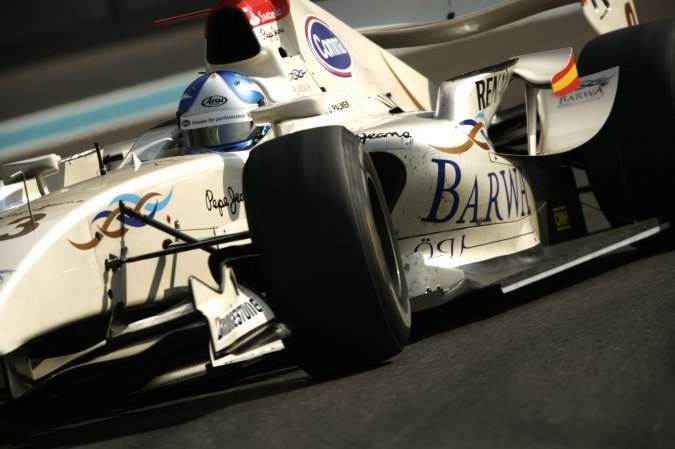
Jolyon Palmer tested for Barwa Addax. © http://www.gp2series.com/
The GP2 Main Series has announced a nine-round schedule for its seventh year of competition.
Unlike this year’s calendar, the Championship will run exclusively in Europe, with the end of year Abu Dhabi race dropped; most likely to return to the 2011-12 GP2 Asia Series.
In order to accommodate the end retirement of the GP2 08/10 chassis, the 2010 season concluded in the Middle East; however with the new car ready for action, such an arrangement will not be necessary in twelve months time.
The new GP2 cars will be ready to race when the Asia series begins at Abu Dhabi in February. At this stage, it remains to be seen whether the 2011-12 Asia Series will be filled out with extra races between November and February.
A final series of tests has also been organised for April, with a pair of sessions been run at Silverstone (April 5-6), followed by three days of running at Barcelona (April 19-20).
The Main series will kick off in Istanbul in May and will support Formula 1 through its European season, eventually finishing at Monza in September. Along the way, there will be rounds at Barcelona, Monaco, Valencia, Silverstone, Nurburgring, Budapest and Spa-Francorchamps.
There is a gap of four weeks between the Monaco and Valencia rounds, while Formula 1 travels to Canada. Unlike this year, no provisions have been made to detour the GP2 series to Portimao – that race was eventually cancelled prior to the start of the 2010 Championship.
Several drivers also made announcements in the last few days – Charles Pic, Giedo van der Garde have confirmed that they will drive for Barwa Addax, while Jules Bianchi is to be teamed up with Sauber Formula 1 reserve pilot, Esteban Gutierrez at Lotus-ART. Already seated for 2011 are Jolyon Palmer (iSport International), Fabio Leimer (Rapax), Michael Herck (Scuderia Coloni) and Stefano Coletti (Trident Racing).
All of the above will also be contesting the 2011 GP2 Asia Series with their respective squads, bar Bianchi and Coletti.
Another schedule confirmed this week was the 2011 Superleague Series. The single-seater Championship has announced twelve race weekends; however only nine of them have been solidified.
It does seem rather worrying at this late stage that the last three rounds of 2011 are simply listed as “Non-European” events. Should they be finalised, rounds ten and eleven will run in October, with the final race weekend taking place in November.
Along with seven weekend fixtures in Europe – including one in the re-opened Donington Park in early August – there are to be two rounds in China; the first at Ordos, followed by a return to the street circuit in Beijing. This season’s Beijing adventure ended up being a non-Championship event, due to the circuit failing some relatively basic track safety directions. The other six confirmed race weekends take in Monza, Portimao, Assen, Nurburgring, Navarra and Zolder.
2011 GP2 Main Series Calendar:
Test - Silverstone, UK (April 5/6)
Test - Barcelona, Spain (April 19/20)
--------
Round 1 - Istanbul, Turkey (May 7/8)
Round 2 - Barcelona, Spain (May 21/22)
Round 3 - Monte Carlo, Monaco (May 27/28)
Round 4 - Valencia, Spain (June 25/26)
Round 5 - Silverstone, Great Britain (July 9/10)
Round 6 - Nurburgring, Germany (July 23/24)
Round 7 - Budapest, Hungary (July 30/31)
Round 8 - Spa-Francorchamps, Belgium (August 27/28)
Round 9 - Monza, Italy (September 10/11)

Provisional 2011 Superleague Formula Calendar:
Round 1 - Monza, Italy (April 16/17)
Round 2 - Portimao, Portugal (May 7/8)
Round 3 - Assen, Holland (June 4/5)
Round 4 - Nürburgring, Germany (June 18/19)
Round 5 - Navarra, Spain (July 2/3)
Round 6 - Zolder, Belgium (July 16/17)
Round 7 - Donington Park, UK (August 6/7)
Round 8 - Ordos, China (September 10/11)
Round 9 - Beijing, China (September 17/18)
Round 10 - TBC Non-European (October)
Round 11 - TBC Non-European (October)
Round 12 - TBC Non-European (November)
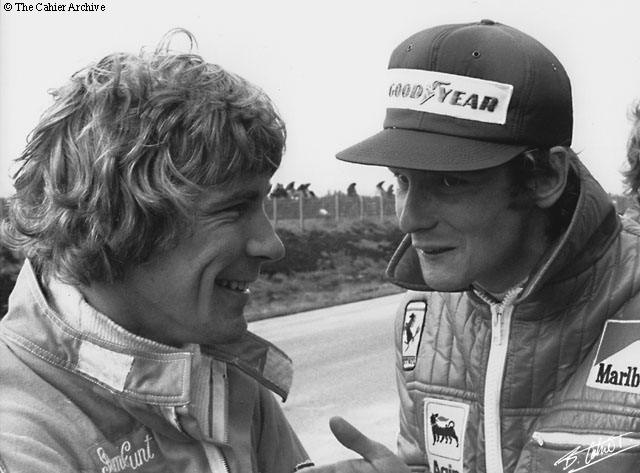
Hunt (left) chats with rival Niki Lauda at Anderstorp. © The Cashier Archive.
The last few days have revealed plans of a biopic of the 1976 Formula 1 World Champion, James Hunt.
Production company DreamWorks have commissioned the project that is to be based on Tom Rubython’s highly criticised 2010 biography of the driver, Shunt; however script writers have yet to be brought in on the work.
Young English actor Alex Pettyfer is to play the lead, with rumours of Steven Spielberg directing.
Is this really necessary? Will this be a Hollywood-ised version of James Hunt’s admittedly active social life; another Driven? And why Hunt? The Englishman was an excellent driver, but there appears to be a drive to base the film around his epic private life.
While wishing the production team the best, I remain suspicious about a project’s intentions when the director, producers and lead actors have been cast, before a script has even been started.
Hunt won the 1976 title with McLaren, following a year long battle against Ferrari’s Niki Lauda.

 TheMotorsportArchive.com