

The Chicagoland Speedway. © Copyright unknown.
Sometimes it’s a wonder why qualifying is ever run at Chicagoland. Such is the rate of overtaking at the circuit, that a driver can concentrate on perfecting the race set-up and work through the field from there. At the finale of the 2008 IndyCar season, Helio Castroneves climbed from 27th position to win by 0.0033 of-a-second in a stunning battle with Scott Dixon. Today it was James Hinchcliffe’s turn to run through the field.
Hinchcliffe suffered a fuel injection failure in qualifying, leaving the Canadian driver in 13th spot, but it was not to deter him – however before he could win, he still had to fight his way to the front.
As the green flag dropped, poleman Martin Plowman surged into the lead with fellow front row starter Pippa Mann pressing hard, while behind the feisty duo Philip Major battled hard with Sebastian Saavedra. Hinchcliffe got the good start he needed and had broken into the top 6 in the early laps, when the first yellow came out.
Indeed, it was a scary incident that brought out the yellows on lap 6. On the backstretch, Charlie Kimball lost control of his AFS / Andretti-Autosport machine, collecting Gustavo Yacaman as the collected the wall. In the collision, Kimball’s car was lifted and flipped up skyward and overturned. The car turned all the way over, landing on its roll bar, sliding a couple of hundred yards down the track.
Despite the severity of the accident, Kimball climbed out of the car with no injuries. After a few moments surveying the damage, the red flag was waved on lap 8.
Cars returned to the track ten minutes later, running under the safety car until the beginning of the 10th lap with Plowman ahead of Mann. With the drop of the green flag, Hinchcliffe stole 5th from JK Vernay and closed in on 3rd place Major and Saavedra in 4th spot.
Saavedra could not hold the top four though – as the one-third mark approached, his Bryan Herta Autosport run machine started lose power and the Colombian fell toward the pack; however Saavedra was momentarily saved by another caution.
As Mann challenged Plowman for the lead on the 30th lap, she glanced his right rear with her front wing left endplate, puncturing Plowman’s tyre in the process. The polesitter slowly began to lose balance in the rear of the car, as his wheel scraped off the tarmac – another full course yellow. Mann now had the lead ahead of Vernay, Major, Hinchcliffe, Arie Luyendyk Jr and Dan Clarke, while Plowman lost a lap in the pits getting repairs.
Saavedra pitted at this time as well, also losing a number of laps as his engine struggled to produce power. He would return to the track, but was never a factor again. Nearer the back of the field, Stefan Wilson surprised all by managing to spin under the safety car in turn 3 – it would not cost him much as the Englishman fell from 10th to 11th.
Hinchliffe laid down a challenge to Major for a top 3 position the moment the greens re-emerged on lap 39, finally claiming it two laps later. It was not long before the Canadian pulled himself up to the rear of 2nd place Vernay as the Frenchman followed Pippa Mann in the lead of the race.
Not far behind the leader trio, series returnee Brandon Wagner made his way up to 6th after starting 8th, but on lap 51 it all went awry. Exiting turn 2, Wagner let the rear end step out and the American spun off the circuit and onto the grass patch – yellow flags and another caution. It was a silly spin and one which would lose him two laps, as he pitted to check for damage.
Mann still led Vernay and Hinchcliffe at the green, but as soon as the racing was back under way Hinchcliffe grabbed 2nd from Vernay and left in pursuit of Mann. The Canadian pushed Mann hard around the outside lap after lap, but there simply wasn’t enough extra power to force the issue.
The fight was quickly halted on lap 59 – Plowman trying to get back on the lead lap, brushed the wall as he went wide at turn 2. There was little damage, but it was enough for another safety car period. A moment of confusion followed – Mann and Hinchcliffe side-by-side as the yellows emerged, but the restart lead was eventually awarded to Mann.
Five laps remained as racing got back under way, with Hinchcliffe constantly trying his luck around the outside of Mann. He finally nailed it on the penultimate lap and come the chequered flag, Hinchcliffe would claim his first oval victory in style by a mere 0.0159 of-a-second ahead of Mann – the third closest finish in Indy Lights history. A great shame for Mann who loses out on her first Indy Lights victory by approximately three feet.
Behind them Major passed both Vernay (4th) and Clarke (5th) for a career best 3rd spot in the final few tours, while Wilson, Luyendyk Jr and Adrian Campos Jr filled the 6th to 8th positions. Dillon Battistini had a solid run to 9th, finishing just ahead of Rodrigo Barbosa. Saavedra (11th) and Wagner (12th) both finished three laps down.
While the race had a fantastic finish, it took quite a while for it to get started; however another good sign (bar the finish) is this evening displayed perfectly the strength of the modern Indy Lights car, when Charlie Kimball emerged unscathed from what was a scary incident.
It’s a vital win for Hinchcliffe and one that helps his title chances a somewhat, but a good run by Vernay means that the Canadian has taken precious little from Vernay’s lead.
Race Rating: 3 out of 5
2010 Firestone Indy Lights Standings (Round 11)
| Position | Car | Driver | Team | Points |
|---|---|---|---|---|
| 1 | 7 | J.K. Vernay | Sam Schmidt Motorsports | 444 |
| 2 | 2 | James Hinchcliffe | Team Moore Racing | 391 |
| 3 | 26 | Charlie Kimball | AFS / Andretti Autosport | 343 |
| 4 | 27 | Martin Plowman | AFS / Andretti Autosport | 338 |
| 5 | 29 | Sebastian Saavedra | Bryan Herta Autosport | 303 |
| 6 | 40 | Dan Clarke | Walker Racing | 271 |
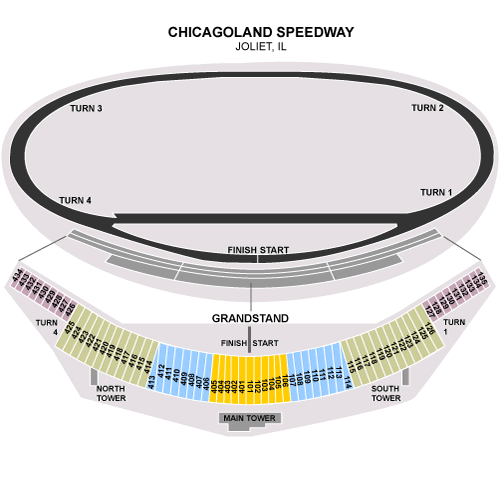
Chicagoland Motor Speedway. © Copyright unknown
There are occasions when drivers have no choice but to rise above the elements and conditions to get that little bit extra from the car – an example being Mark Webber when the Red Bull man drove the 2007 Japanese Grand Prix with a stomach bug and famously vomited into his helmet when on the team radio during a safety car period.
Martin Plowman had to endure just such conditions this week as the Staffordshire pilot came down with a stomach flu. Despite the discomfort, the 22-year-old planted his AFS / Andretti Autosport machine onto pole position for the Indy Lights Chicagoland 100 with a two-lap average of 189.503 mph, claiming the bonus point in the process. Alongside him is fellow Briton, Pippa Mann who secured her second front row in the series.
Last year’s Championship contender Sebastian Saavedra put his Bryan Herta Autosport car onto the second row, with Philip Major alongside him; both qualified ahead of current championship leader and title hunter, JK Vernay (5th) and Charlie Kimball (6th).
Gustavo Yacaman planted his Cape Motorsports car on the inside of the fourth row, with Indy Lights returnee Brandon Wagner on the outside. Wagner wasn’t the only driver to reappear this week – Dillon Battistini made his first Lights appearance since the end of 2008 placing in 9th and Arie Luyendyk Jr steps in at Alliance Motorsport in place of Shane Hmiel, qualifying a lowly 14th. Stefan Wilson (10th) comes back after missing Sonoma with funding issues.
Near the rear of the field, ‘Speedy’ Dan Clarke and Adrian Campos Jr filled out the sixth row, while Championship challenger James Hinchcliffe had a dreadful session, qualifying all the way down in 13th. Rodrigo Barbosa’s dire weekend continued – near or on the bottom of the time sheets in practice, the Brazilian found himself last and a long way off the pace in qualifying.
Firestone Indy Lights Chicagoland 100 at Chicagoland Speedway
SP Car Driver Car Name Entrant Time Speed
1 27 Martin Plowman AFS / Andretti Autosport 57.7510 189.503
2 11 Pippa Mann Sam Schmidt Motorsports 57.7691 189.444
3 29 Sebastian Saavedra Bryan Herta Autosport 57.9118 188.977
4 49 Philip Major (R) Sam Schmidt Motorsports 57.9742 188.774
5 7 J.K. Vernay (R) Sam Schmidt Motorsports 58.0347 188.577
6 26 Charlie Kimball AFS / Andretti Autosport 58.0628 188.486
7 10 Gustavo Yacaman Cape Motorsport 58.1744 188.124
8 32 Brandon Wagner Davey Hamilton Racing 58.2079 188.016
9 35 Dillon Battistini Team PBIR 58.2190 187.980
10 28 Stefan Wilson (R) Bryan Herta Autosport 58.3553 187.541
11 40 Dan Clarke (R) Walker Racing 58.3794 187.463
12 22 Adrian Campos Jr. (R) Team Moore Racing 58.4052 187.381
13 2 James Hinchcliffe Team Moore Racing 58.4914 187.104
14 24 Arie Luyendyk Jr. Alliance Motorsports 58.8925 185.830
15 18 Rodrigo Barbosa PDM Racing 59.5351 183.827
Firestone Indy Lights Championship (after Qualifying)
1 7 J.K. Vernay (R) Sam Schmidt Motorsports 412
2 2 James Hinchcliffe Team Moore Racing 341
3 26 Charlie Kimball AFS / Andretti Autosport 327
4 27 Martin Plowman AFS / Andretti Autosport 321
5 29 Sebastian Saavedra Bryan Herta Autosport 284
6 40 Dan Clarke (R) Walker Racing 241
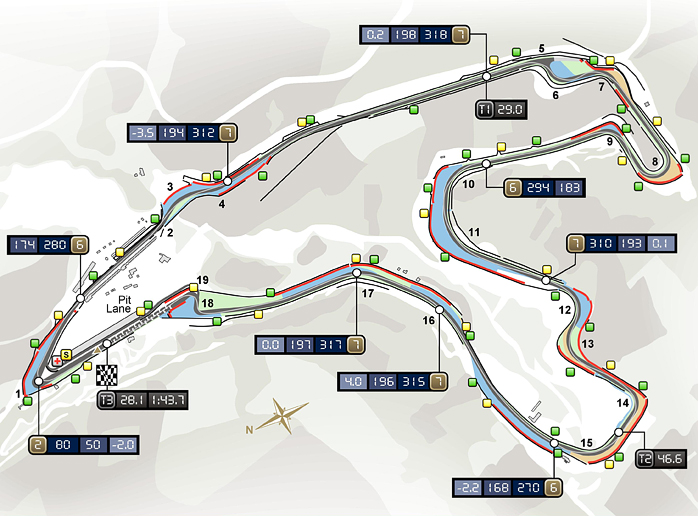
The layout of Spa-Francorchamps. © FIA
Free Practice 3
Despite Saturday morning starting out dry, there was not much running early in the session as the long Spa-Francorchamps circuit held onto occasion damp spots. Mark Webber used the shortened time to his advantage to secure the top time of third practice ahead of Lewis Hamilton, Sebastian Vettel and Jenson Button.Hamilton returned to the old Silverstone-spec front wing package, while team mate Button kept the Hungaroring version. Vettel had a more turbulent session – the young German lost engine power during his final run as he suffered from problems with his air box; surprisingly, Vettel making use of an old engine this weekend.
Sauber already have Pedro de la Rosa on his 8th engine of the year as the Spaniard hits his maximum limit of power units, setting the 11th best time in the process. Vitantonio Liuzzi spent much of the session in the garage – the F-duct was removed from his Force India, leaving the Italian to set the 18th best time.
With 15 minutes left, the skies opened halting any fast runs.
Qualifying
It didn’t look like he would do it, but Mark Webber secured his fifth pole position of the 2010 Championship. All weekend the Red Bull driver looked like he might be pipped by his team mate, the McLaren’s and even the Ferrari’s, but Championship leader pulled a special lap out of the bag when it mattered.
He will be wary on the opening lap tomorrow though. The powerful Lewis Hamilton flanks the Australian on the front row, as he beat Robert Kubica to 2nd spot at the last moment. The Pole still beat the other Red Bull of Sebastian Vettel to lead the second row of the grid – they will also be very aware of the Mercedes powered Jenson Button in 5th spot as they head out on the opening lap.
Felipe Massa (6th) led the Ferrari’s in a poor session for Fernando Alonso (10th) – the Spaniard stayed out too long on his soft tyres during the session, negating any chance of an improved position. Rubens Barrichello led the Williams charge in 7th, with younger team mate Nico Hulkenberg in 9th; both the Cosworth powered cars sandwiched the Force India of Adrian Sutil who 8th quickest.
Rain returned in the final moments of qualifying, but it was not enough to slow the field.
A disappointing session for the Mercedes pair saw both drop out of qualifying after Q2, with Michael Schumacher leading the two. It’ll be a tough race for the German squad as both will also pick up penalties – Schumacher a ten-place drop for his antics at Hungary and Nico Rosberg a five-place drop for a gearbox change.
The two Toro Rosso’s also fell by the wayside, with Jaime Alguersuari heading Sebastien Buemi (13th & 15th respectively); however Buemi will also serve a penalty for impeding Rosberg. Vitantonio Liuzzi split the Italian cars with the 14th best time; not aided by a mid-run spin.
Both Heikki Kovalainen and Timo Glock made it through to Q2 following a crazy first session, but in the dry condition, the pair rounded up Q2 in 16th and 17th. Glock would also take a penalty for impeding Sakon Yamamoto in the opening 20-minute run.
In a manic opening session that was halted by a red flag, there were a number of minor shocks. Indeed while Kubica surged forward, his Renault team mate, Vitaly Petrov, dropped a tyre onto a wet kerb and was flung across the circuit and into the arms of the Armco barrier. It left the Russian in a dangerous position and the reds came out as the marshal’s cleared the stricken machine.
Both Sauber’s had offs that finished their sessions early. With little to lose, Pedro de la Rosa decide to go for an engine that resulted in a grid penalty for the Spaniard.
Rain fell during the twenty minute run resulting in a few spins, including a faint accident between Lucas di Grassi and Jarno Trulli. The Virgin wobbled midway around the circuit and was connected by Trulli; both spun around, but recovered with the Lotus rejoining by driving the wrong way down the gravel trap – stewards took no action.
Both Trulli and di Grassi would drop out of Q1 though, as too did the Hispania pair – for a time they looked like they just might make it to Q2, but were knocked out as the track dried.
Belgium, Qualifying (August 28th)
3rd Session
1 WEBBER Red Bull 1m45.778s
2 HAMILTON McLaren 1m45.863s
3 KUBICA Renault 1m46.100s
4 VETTEL Red Bull 1m46.127s
5 BUTTON McLaren 1m46.206s
6 MASSA Ferrari 1m46.314s
7 BARRICHELLO Williams 1m46.602s
8 SUTIL Force India 1m46.659s
9 HULKENBERG Williams 1m47.053s
10 ALONSO Ferrari 1m47.441s
2nd Session
11 ALGUERSUARI Toro Rosso 1m48.267s
12 LIUZZI Force India 1m48.680s
13 KOVALAINEN Lotus 1m50.980s
14 ROSBERG Mercedes 1m47.885s (*)
1st Session
15 TRULLI Lotus 2m01.491s
16 BUEMI Toro Rosso 1m49.209s (**)
17 KOBAYASHI Sauber 2m02.284s
18 SENNA HRT 2m03.612s
19 YAMAMOTO HRT 2m03.941s
20 GLOCK Virgin 1m52.049s (***)
21 SCHUMACHER Mercedes 1m47.874s (****)
22 DI GRASSI Virgin 2m18.754s
23 PETROV Renault no time
24 DE LA ROSA Sauber 2m05.294s (*****)
* penalised 5 places for gearbox change
** penalised 3 places for impeding Rosberg
*** penalised 5 places for impeding Yamamoto
**** penalised 10 places after Hungarian GP
***** penalised 10 places for using 9th engine
Belgium, 3rd Free Practice (August 28th)
1 WEBBER Red Bull 1m46.106s
2 HAMILTON McLaren 1m46.223s
3 VETTEL Red Bull 1m46.396s
4 BUTTON McLaren 1m46.397s
5 KUBICA Renault 1m46.492s
6 ALONSO Ferrari 1m46.627s
7 MASSA Ferrari 1m46.962s
8 SUTIL Force India 1m47.064s
9 HULKENBERG Williams 1m47.170s
10 KOBAYASHI Sauber 1m47.296s
11 DE LA ROSA Sauber 1m47.388s
12 PETROV Renault 1m47.406s
13 BARRICHELLO Williams 1m47.512s
14 SCHUMACHER Mercedes 1m47.695s
15 ROSBERG Mercedes 1m47.837s
16 BUEMI Toro Rosso 1m47.905s
17 ALGUERSUARI Toro Rosso 1m47.981s
18 LIUZZI Force India 1m48.692s
19 TRULLI Lotus 1m50.600s
20 SENNA HRT 1m51.133s
21 KOVALAINEN Lotus 1m51.384s
22 DI GRASSI Virgin 1m51.517s
23 GLOCK Virgin 1m51.669s
24 YAMAMOTO HRT 1m52.001s
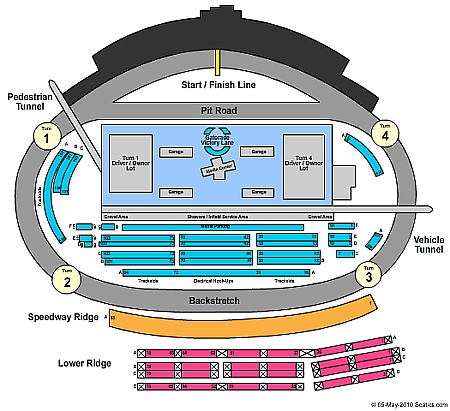
A map of the Chicagoland Motor Speedway. © Copyright Unknown.
For the 12th time this season, Roger Penske’s team showcased their prowess in qualifying; however it was Ryan Briscoe and not Will Power that secured the top spot this time around. With an average two-lap qualifying speed of 216.346mph, Briscoe’s speed advantage over fellow front-row starter, Dario Franchitti was ample indeed – the Scot averaged 215.593mph over his two fast laps.
Power did head the all-Penske second row; however Franchitti’s Ganassi team mate certainly made life a little difficult for himself – Scott Dixon will starting 15th following a difficult run.Marco Andretti was the top Andretti-Autosport runner with his 5th place spot; however it was a mixed bag for the four-car team – Ryan Hunter-Reay slots in at 9th position, while Danica Patrick and Tony Kanaan will start from 12th and 13th respectively.
Alongside Andretti in 6th position will be Graham Rahal in his Newman-Haas machine, while his team mate Hideki Mutoh runs from one row behind. The Newman-Haas pair will be sandwiching the Panther Racing driver of Dan Wheldon. The 2005 Champion has had a difficult season so far and there are questions as to whether he will still be at Panther next year, but a good result here may help to revive his flagging career. Temporary team mate, Ed Carpenter lines up 11th in his first run since the Indianapolis 500 in May.
Takuma Sato got the best out of the KV Racing equipment – the former F1 driver will start front the outside of row 5; however fellow KV racer’s, EJ Viso and Mario Moraes will be rolling from 16th and 21st respectively.
Former Indy Lights Champion Alex Lloyd is currently running as rookie of the year and he will be starting beside Kanaan in 14th place; however in a very rare occurrence, the much maligned Milka Duno qualified 26th spot.
It does not say something positive about the state of the current car and oval track that a driver that can be be 8 seconds per lap down at Watkins Glen is battling for places with other drivers at the rear of the field.
Of the remaining “regular” runners, Raphael Matos qualified in 18th ahead of the row 10 pair of Alex Tagliani (FAZZT Racing) and Bertrand Baguette (Conquest Racing). Justin Wilson (Dreyer & Reinbold) and Vitor Meira (AJ Foyt Racing) filled out row 12. Simona de Silvestro starts a disappointing 27th for HVM.
There were a number of part-timers back for this race too with Tomas Scheckter 17th for Conquest Racing (replacing the skill-less Francesco Dracone), while Ana Beatriz returns for Dreyer & Reinbold (22nd), Davey Hamilton sits at de Ferran / Dragon Racing (28th).
Both Sarah Fisher Racing machines entered the race with Fisher herself qualifying 25th and Jay Howard picking up last spot out of the 29 runners. For the few races Howard has run, he has generally been off the pace – one wonders how quickly this partnership will dissolve once the season is done.
The Chicagoland 300 starts at 1am (BST) on Sunday morning and will broadcast live from indycar.com and Sky Sports 4, with coverage beginning at 12.30am.
2010 IndyCar 300km Race of Chicagoland (Round 14, Qualifying)
Rank Car Driver Total Time Speed
1 6 Briscoe, Ryan 00:50.5857 216.346
2 10 Franchitti, Dario 00:50.7624 215.593
3 12 Power, Will 00:50.7792 215.521
4 3 Castroneves, Helio 00:50.7902 215.475
5 26 Andretti, Marco 00:50.8265 215.321
6 02 Rahal, Graham 00:50.8281 215.314
7 4 Wheldon, Dan 00:50.8789 215.099
8 06 Mutoh, Hideki 00:50.8892 215.055
9 37 Hunter-Reay, Ryan 00:50.9074 214.979
10 5 Sato, Takuma (R) 00:50.9154 214.945
11 20 Carpenter, Ed 00:50.9423 214.831
12 7 Patrick, Danica 00:50.9616 214.750
13 11 Kanaan, Tony 00:50.9896 214.632
14 19 Lloyd, Alex (R) 00:51.0285 214.468
15 9 Dixon, Scott 00:51.0761 214.269
16 8 Viso, EJ 00:51.0901 214.210
17 36 Scheckter, Tomas 00:51.1179 214.093
18 2 Matos, Raphael 00:51.1462 213.975
19 77 Tagliani, Alex 00:51.1617 213.910
20 34 Baguette, Bertrand (R) 00:51.2162 213.682
21 32 Moraes, Mario 00:51.2700 213.458
22 24 Beatriz, Ana (R) 00:51.2770 213.429
23 22 Wilson, Justin 00:51.2875 213.385
24 14 Meira, Vitor 00:51.3547 213.106
25 67 Fisher, Sarah 00:51.3573 213.095
26 18 Duno, Milka 00:51.4342 212.777
27 78 de Silvestro, Simona (R) 00:51.4625 212.660
28 21 Hamilton, Davey 00:51.5051 212.484
29 66 Howard, Jay (R) 00:51.5991 212.097
2010 IZOD IndyCar Series
1. Will Power Penske 514 points
2. Dario Franchitti Ganassi 455
3. Scott Dixon Ganassi 419
4. Ryan Briscoe Penske 385
5. Helio Castroneves Penske 370
6. Ryan Hunter-Reay Andretti-Autosport 360
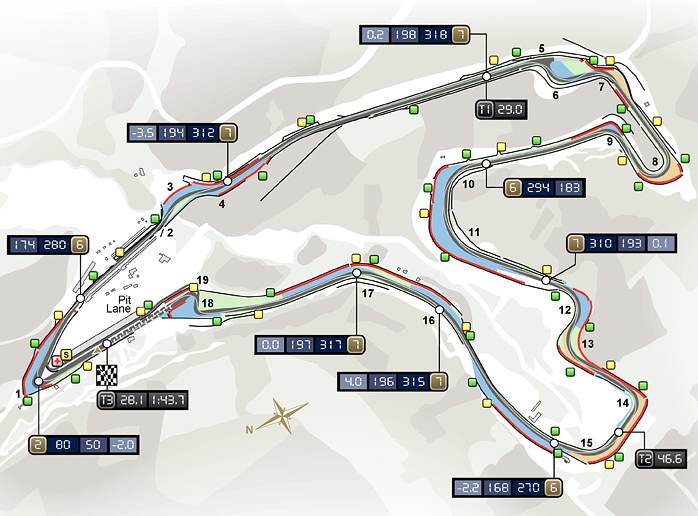
An overview of Spa-Francorchamps. © FIA.
Free Practice 1
Following a four week gap for the summer break, Formula 1 returns with a visit to the glorious Spa-Francorchamps circuit in Belgium and with a certain inevitability, the dark clouds rushed in and the expected rain caressed the circuit.
The track was at its most damp during the morning session with heavy rain and occasional strikes of lightning; however as the day wore on, the sun would gradually reveal itself.
While some fans would certainly have shown a level of dismay for the rather inclement weather, some of the teams were also having mild feelings of dissatisfaction. A number of squads showed up with large updates and the conditions were not conducive to running them properly.
Ferrari arrived at Spa with a brand new floor and an upgraded blown diffuser as they try to get Fernando Alonso from the fringes of the World Championship right into the thick of battle. It helped a little as Alonso was quickest in both Friday sessions, a long way faster than team mate, Felipe Massa.
Both McLaren and Renault appeared with minor upgrades, including the début of the F-duct for the French team – both teams saw an improved pace, but cancelled out by their opponents.
Red Bull have a new rear wing package and the same front section that has caused such controversy in recent weeks – although the section has passed the revised FIA front wing flex tests, questions still remain as to whether the strength of the test itself amounts to anything.
Toward the mid-pack, Williams have whole new front and rear wing sections. Unfortunately it wasn’t the best of starts to Rubens’ Barrichello’s weekend – the Brazilian, who will be taking part in his 300th race this weekend, missed much of the first session stuck in the garage; however the veteran was still 9th fastest.
Mercedes brought a refined floor to Spa-Francorchamps and a slightly upgraded F-duct. Michael Schumacher brings a 10-place grid penalty into this race following his Hungaroring antics with Barrichello, leaving the German rather hamstrung before the cars even hit the track. Schumacher did still manage a top-10 in practice ahead of his fellow Mercedes driver, Nico Rosberg.
Force India return to the track where they had their 2009 pole position and single podium (both Giancarlo Fisichella) with their new blown diffuser for Vitantonio Liuzzi, while Adrian Sutil maintained the previous version of the VJM03. Sutil topped the opening session for a time, before being toppled by Alonso – the German driver eventually claiming 5th.
It was a poor session for Sebastien Buemi as gearbox issues left sitting in the garage for much of the morning and down in 18th spot, while Hispania replacement driver Sakon Yamamoto missed the early part of the morning with undisclosed engine problems and tests, finally getting a lap in to come last and ten seconds off the pace.
Free Practice 2
Red flags don’t happen that often in motor racing. Normally they signify a huge crash of some sort that requires on site medical assistance or possibly a wreck so big, that it requires extensive clean up work or safety fixes. Rarely are red flags thrown because children are climbing the fences by the circuit.
With just 15 minutes left on the clock in the afternoon practice session, that is exactly what happened at the Spa-Francorchamps circuit. The perimeter of the track is rather huge and as was discovered at the Hockenheimring in 2000, it is sometimes impossible to marker every inch of a track steeped in the forests.
There were incidents during the 90-minute run, although they were ably covered by local yellow flags – Timo Glock smashed his Virgin into the barriers at Liege corner, heavily damaging the car’s right side, while Liuzzi knocked his front wing slightly after an off near Bruxelles. This was followed by a number of other spins as drivers took slick tyres out onto a track that still had a number damp patches.
On track, the second session delivered better weather conditions, something which Adrian Sutil took a hold of as the Force India driver was fastest just behind Alonso’s Ferrari.
Kubica obtained the fastest straight-line speed of the day with an incredible 331 kph nearing the top of the Kemmel straight as the new F-duct on his Renault was put through its paces. The Pole would eventually record the 4th fastest time of the day, just marginally slower than Hamilton. Massa, Vettel and Button were next up in 5th-7th respectively, while Championship leader, Mark Webber was only 18th fastest.
Sakon Yamamoto ended the session trackside, as his Hispania machine raised an alarm inside the cockpit.
Belgium, 2nd Free Practice (August 27th)
1 ALONSO Ferrari 1m49.032s
2 SUTIL Force India 1m49.157s
3 HAMILTON McLaren 1m49.248s
4 KUBICA Renault 1m49.282s
5 MASSA Ferrari 1m49.588s
6 VETTEL Red Bull 1m49.689s
7 BUTTON McLaren 1m49.755s
8 DE LA ROSA Sauber 1m50.081s
9 BARRICHELLO Williams 1m50.128s
10 KOBAYASHI Sauber 1m50.200s
11 PETROV Renault 1m50.251s
12 SCHUMACHER Mercedes 1m50.341s
13 ROSBERG Mercedes 1m50.382s
14 ALGUERSUARI Toro Rosso 1m50.682s
15 HULKENBERG Williams 1m50.831s
16 LIUZZI Force India 1m51.520s
17 BUEMI Toro Rosso 1m51.523s
18 WEBBER Red Bull 1m51.636s
19 KOVALAINEN Lotus 1m53.480s
20 TRULLI Lotus 1m53.639s
21 DI GRASSI Virgin 1m54.325s
22 SENNA HRT 1m55.751s
23 YAMAMOTO HRT 1m56.039s
24 GLOCK Virgin 2m03.179s
Belgium, 1st Free Practice (August 27th)
1 ALONSO Ferrari 2m00.797s
2 HAMILTON McLaren 2m01.567s
3 KUBICA Renault 2m02.081s
4 VETTEL Red Bull 2m02.450s
5 SUTIL Force India 2m02.646s
6 BUTTON McLaren 2m02.913s
7 WEBBER Red Bull 2m02.926s
8 KOBAYASHI Sauber 2m03.401s
9 BARRICHELLO Williams 2m03.424s
10 SCHUMACHER Mercedes 2m03.489s
11 MASSA Ferrari 2m03.601s
12 HULKENBERG Williams 2m03.649s
13 ROSBERG Mercedes 2m03.654s
14 DE LA ROSA Sauber 2m03.851s
15 LIUZZI Force India 2m04.145s
16 ALGUERSUARI Toro Rosso 2m04.250s
17 PETROV Renault 2m04.690s
18 BUEMI Toro Rosso 2m05.680s
19 GLOCK Virgin 2m05.697s
20 DI GRASSI Virgin 2m06.695s
21 TRULLI Lotus 2m07.189s
22 SENNA HRT 2m07.737s
23 KOVALAINEN Lotus 2m07.955s
24 YAMAMOTO HRT 2m10.507s
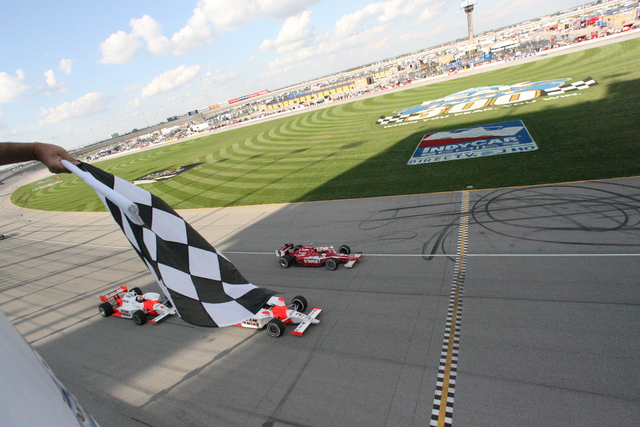
Castroneves beat Dixon to the line by inches in 2008... © indycar.com
With the seasons road and street courses completed, the 2010 IZOD IndyCar season draws to a close over the following five weeks with four ovals, taking in Kentucky, Japan’s Motegi circuit and Homestead in Miami – however the final stretch starts this weekend at Chicagoland Motor Speedway.
Chicagoland has in the last few years played host to some of the most outstanding races in recent history with some obscenely close finishes and even holds the record for the closest race finish of all time when Logan Gomez won an Indy Lights race there by a mere 0.0005 of-a-second – in other words, a mere three inches.
The circuit has also been the decider of some truly fantastic title battles too. In 2007, Scott Dixon was about to claim his second IndyCar when he ran out of fuel with half a lap remaining and had to watch as Dario Franchitti passed in the last corner to take the race and the championship.
Dixon got his own a year when he eventually did notch up title number 2 – this time in a battle against the Penske of Helio Castroneves. Due to misplaced transponders, the race was decided on a photo finish as Castroneves took the win by a mere 0.002 of-a-second. It wasn’t enough for the Brazilian – Dixon’s 2nd spot was enough to give him the overall glory.
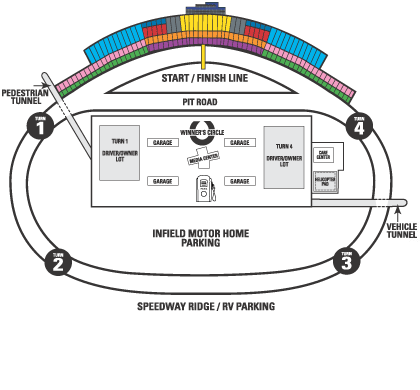
A map of Chicagoland's now famous D-shaped track. © Copyright unknown.
This year’s event is just as important in the fight for the Championship. Penske star Will Power is currently 59 points ahead of Franchitti and nearly 100 points on the second Ganassi of Scott Dixon. At this stage, it is Power’s title to lose, but one simple slip up or crash could change everything and bring the Ganassi’s back into it.
Over the course of the year, Power has shown a prowess on the road circuits that has rarely been touched having won five of the nine events – in the four he failed to pick up, his lowest position was 4th (Barber). While the 29-year-old is definitely adjusting, he has yet to master an oval circuit, although he did secure a pole at Texas earlier this year – if Power can conquer the ovals, he may eventually become an unstoppable force in the series.
It’s something which may be worrying both Helio Castroneves and Ryan Briscoe somewhat. Penske are apparently holding at three cars for next year, but a dearth of sponsorship will probably see that drop to two cars for 2012. Castroneves is 35 now and while he has three Indy 500 victories to his name, as well 20 other race wins, he has never claimed the title, whereas the younger Briscoe has several wins, but lapses in concentration continue to cost him. There is potential for ether one to be dropped should Penske scale scale back; however it is also very possible that neither driver may be retained.
As for this weekend, Ana Beatriz returns at Dreyer & Reinbold Racing while Mike Conway continues to recover and Tomas Scheckter takes up a seat with Conquest Racing alongside Bertrand Baguette.
This weekend may see continuing rumblings around the paddock for several reasons. At last Sunday’s race at Sonoma, ex-Formula 1 driver Takuma Sato took out Danica Patrick on the final tour after having a similar incident with during practice some days earlier. While emotions have tempered since then, there does appear to be some resentment bubbling underneath the surface between the duo.
It also emerged yesterday that several of the smaller team bosses are apparently reluctant to buy into the new IndyCar of 2012 as they feel they may not have the money to purchase new equipment come the end of next season. This could be posturing to try to get the price of the new Dallara tub decreased even further – if these teams had genuine worries, one wonders why it took six weeks to voice them.
This is an important race for the IndyCar Series, but not just because of the title hunt. NASCAR’s new schedule plants it right in Chicago’s IndyCar date for next and should no new slot be found, the race will be gone from calendar.
2010 IZOD IndyCar Series
1. Will Power Penske 514 points
2. Dario Franchitti Ganassi 455
3. Scott Dixon Ganassi 419
4. Ryan Briscoe Penske 384
5. Helio Castroneves Penske 370
6. Ryan Hunter-Reay Andretti-Autosport 360
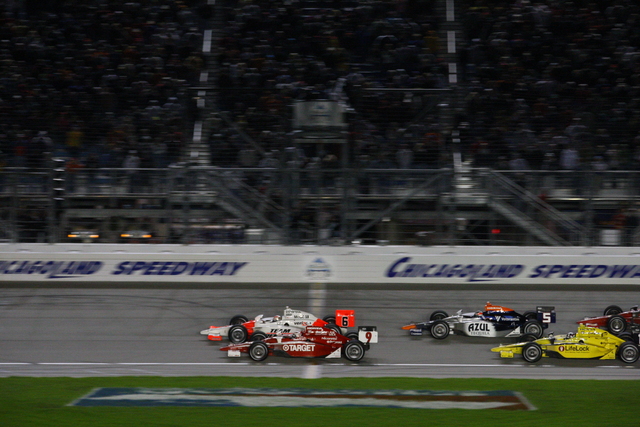
Dixon would lose out to another Penske in 2009, this time Ryan Briscoe. © indycar.com
The Firestone Indy Lights Series is slightly more stretched out. Rookie Frenchman JK Vernay has shown the way this year in IndyCar’s leading support series and has claimed five wins from the ten races so far, which has left the once Formula 3 EuroSeries driver 71 points ahead of nearest rival James Hinchliffe. Charlie Kimball runs the ladder in third spot 14 points behind Hinchcliffe, while Mid-Ohio victor Martin Plowman sits several points behind Kimball.
With only three races remaining, it is unlikely that Vernay will lose this now; however it is hard to judge his oval record as he has only competed in two this year; scoring 13th at Indianapolis and 3rd at Iowa. If Vernay can maintain something relatively close to his Iowa form, then the title is his, but like the main series, all it takes is one slip up…
2010 Firestone Indy Lights Series
1. JK Vernay Sam Schmidt Motorsport 412
2. James Hinchcliffe Team Moore Racing 341
3. Charlie Kimball AFS / Andretti-Autosport 327
4. Martin Plowman AFS / Andretti-Autosport 320
5. Sebastian Saavedra Bryan Herta Autosport 284
6. Dan Clarke Walker Racing 241
Qualifying for the IZOD IndyCar Chicagoland 300 begins at 7pm (BST) on Friday evening, while qualifying for the Indy Lights starts at 7pm (BST) on Saturday evening. Coverage for the Indy Lights race begins at 10pm (BST) on Saturday night, while the pre-race for the IndyCar event begins at 12.30am on Sunday morning with the green flag around 30 minutes later.
All events will be broadcast live from indycar.com, while the IndyCar race will also be broadcast from Sky Sports 4 from 12.30am on Sunday.
However future tyre supplier Pirelli have not been bound by such restrictions and with Nick Heidfeld released from his contract at Mercedes, the experienced German hit the rough Mugello circuit to put the new rubber through its paces.Now though, the Formula 1 circus kicks back into gear and the drivers and teams will be refocussing their efforts as they approach the season run in – there are now only two European races left, before the series moves to events in Asia, South America and the Middle East.
Mark Webber leads the championship standings from Lewis Hamilton by a slim margin of only four points; however this weekend may well be a vitally important one for the reigning Champion, Jenson Button. Weather conditions for this weekend’s Grand Prix at the famous Spa-Francorchamps circuit in Belgium are forecast to vary from wet and slightly cold to fresh and sunny and it is the changeable conditions that Button needs to take advantage of.The McLaren driver has not won since the Chinese Grand Prix four months ago and he is slowly but surely beginning to fall behind the leaders. A poor result this weekend and very soon McLaren could potentially start considering their options and get Button to pump Hamilton; however the 2008 Champion has himself not won since June and is also in need of a good result to keep his championship challenge alive. While Hamilton may be just behind Webber, the Red Bull is clearly a better car.
There are no outside chances for team orders with the Austrian / English squad – Mark Webber is on a roll and decent results in the final two European events will see his confidence soar. Ever since Vettel’s victory at Valencia (and Webber’s crash), the Aussie has looked truly stunning.
Ferrari’s Fernando Alonso has also played himself somewhat back into contention – his controversial win at the Hockenheimring and his 2nd spot at Hungary now mean he is only 20 points behind Webber. With 175 points still to play for, the 2010 Formula 1 World Championship is far from being over.
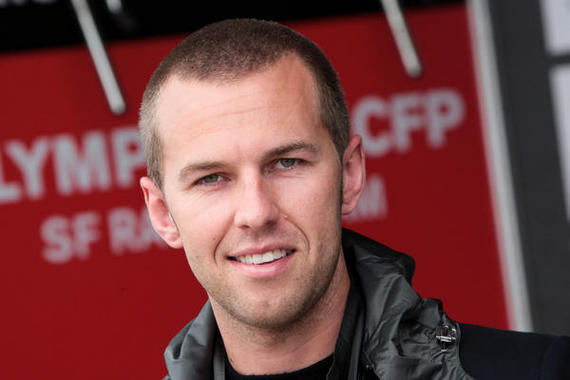
Chris Van der Drift prior to the race at Brands Hatch. © Superleague
At the beginning of the month, Superleague Formula driver Chris Van der Drift had an extremely frightening accident that left the Kiwi with multiple injuries.
Van der Drift hit the back of AS Roma driver Julien Jousse and was launched into the air. The Olympiacos driver then went straight into the side of the bridge near Pilgrims Drop and suffered a dislocated and broken ankle, a broken wrist, a broken finger, two broken ribs, a cracked shoulder blade and a mangled left index finger.
His crash reportedly had the second highest recorded G-force that a driver has survived.
Right now, Van der Drift is struggling to pay his medical bills for the care and treatment he has received so far and will continue to receive in the future. Unbeknownst to Chris, it would appear that his management team may not have secured his personal insurance (amongst other things) and as such, van der Drift has been left with bills that he cannot cope with.
Chris will be attending Bisham Abbey, a sports science medicine facility used for elite athlete training and recovery. The facility is used by Great Britain’s Olympic team, top rugby and football teams; however Chris will be the first racing driver to use Sport England’s state of the art facility.
With this mind, a Go-Karting Benefit event has been organised for Tuesday September 7th at Daytona Karting Circuit, Milton Keynes in order to try and raise money for Chris. The special guest star on the day will be Red Bull Racing driver, Mark Webber.
The event will see some of motorsports biggest and up and coming talents, as well as many racing teams, compete in a two hour endurance race, which will be officiated by Mark Webber and covered in Autosport. Some of Chris’ past race teams and opponents along with race drivers and associated motor racing companies have also signed up to be part of the event.
So to all racing drivers, racing teams and motorsport companies, please show your support by entering the go-kart race. The cost of entering a team is £250 (the charge for Daytona) and a donation for Chris and teams need to be there at 5pm for a 6pm start. An auction is also being held at the event, so any motorsport memorabilia that you would like to donate would also be greatly appreciated.
If you would wish to enter a team for this event, please contact Jessica on 07824602856 (UK mobile number) or at jessicaracing@googlemail.com for more information. Teams are limited, so sign up quick!! The event is open to the public, so come along and donate some monies to help Chris get on the road to recovery.
Earlier today, I posted a piece about Bertrand Gachot and at the tail end of the post was a picture of the man that replaced him at Jordan, Michael Schumacher.
Now this particular picture was taken as he joined Benetton following his single race run with the Irish squad; however I received a couple of comments regarding how strange Schumacher looked in the picture.
So I figured while I have the time, I will go two better. At times like this, it must be remembered that Lewis Hamilton had a poor attempt at an afro when he contested GP2. Enjoy…
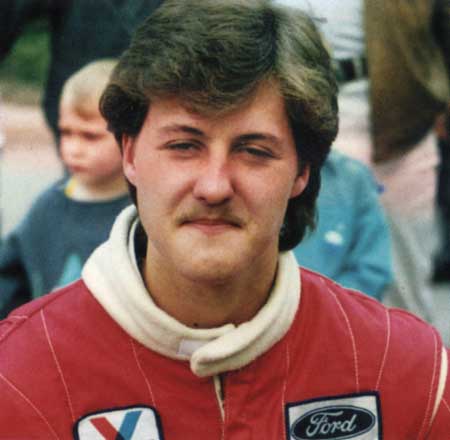
Schumacher mullet and bad moustache, example 1. © Copyright unknown.

Schumacher mullet and bad moustache, example 2. © Copyright unknown.

Happier times, Bertrand Gachot. © Copyright unknown.
When Jordan F1 driver, Bertrand Gachot, was jailed for actual bodily harm just prior to the 1991 Belgian Grand Prix, little did anyone know the world of Formula 1 would soon be changed forever.
With no experienced driver ready or able to take the seat alongside team leader Andrea de Cesaris for the annual visit to Spa-Francorchamps, Eddie Jordan took a punt on the then unknown Michael Schumacher. By the end of practice and qualifying on Friday, the career of Gachot was cooked meat. Schumacher on the other hand qualified 7th, but retired on the opening lap with an overheated clutch; however the message was clear and Gachot was gone.
The life and career of Bertrand Gachot is a rather interesting tale. The son of a French European Commission official in Luxembourg nearing the end of 1962, he would spend much of his career claiming either French or Belgian nationality; something that many commentators would pick at during his career, including the ever irascible James Hunt.
Gachot though was often keen to point out that he was European as opposed being from Luxembourg and even based his helmet design on that of the EU flag.
Jumping into karting at the age of 15, the Luxembourg / French / Belgian (take your pick) driver moulded his skills and eventually attended the famous Winfield School at Paul Ricard.
Winners of the “Volant Elf” (fastest driver at the course) at the School would receive a full budget for a Formula Renault season, but Gachot would just miss out on this scheme – he would lose out to future Ligier pilot, Eric Bernard, who also beat Jean Alesi to the prize.
For a time Gachot attended university, but longing for a life in motor racing, he dropped out of his course and decided to have a go at the Formula Ford 1600 series in 1984.
Within two years, he had taken titles in both the European Formula Ford 1600 series and the British Formula Ford 2000 Championship, before Formula 3 beckoned. A rather successful year in 1987, saw Gachot take 3 wins in 18 races for West Surrey Racing and 2nd in the title hunt, losing out to the popular Briton, Johnny Herbert.
Keen to progress through the ranks, Gachot would finish 5th in the 1988 Formula 3000 Championship with Spirit Racing; however despite a somewhat disappointing campaign, Gachot would find himself in Formula 1 just one year later.
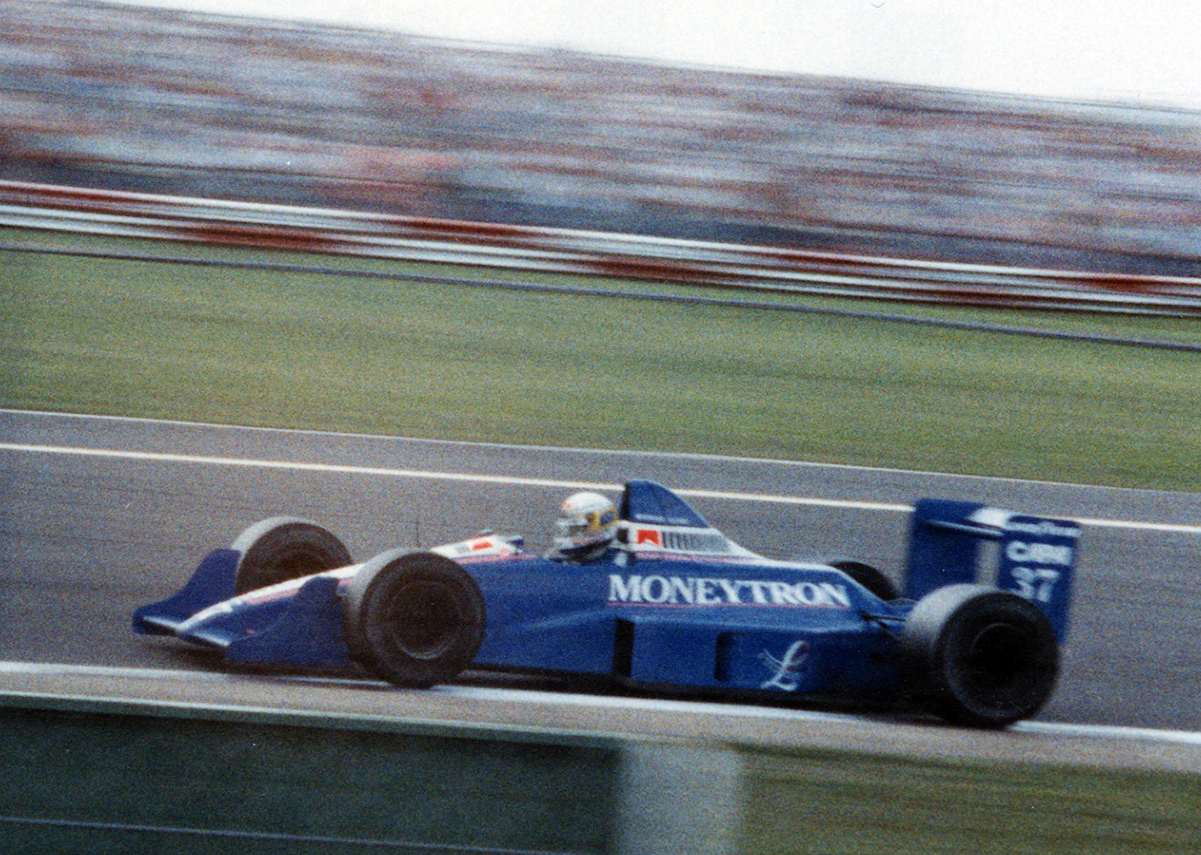
The Onyx ORE-1 wasn’t nearly good enough to be in Formula 1. © Copyright unknown.
Nearly every driver that one speaks would consider Formula 1 to not only be the pinnacle of motorsports, but also one of the toughest racing series’ on the planet when the 26 year-old Gachot joined the newly formed Onyx squad – it was around this time that Gachot applied and received a Belgian racing license.
Unfortunately for the small team, Formula 1 consisted of 39 entries (a maximum of 26 can race) and at the season opener in Brazil and the team were simply not prepared – the event at Rio’s Jacarepaguá circuit would be the first of many DNPQ (did not pre-qualify) for Onyx. For the opening six rounds (including long trips to Mexico, Canada and the US), Gachot would be busy packing up for the trip home by 10am Friday morning.
Meanwhile his team mate Stefan Johansson was having a much better time of it – the Swede qualified for the races in the Americas; however Johansson retired from the events at Mexico and the US and was disqualified in Canada for receiving a push start.
Although Gachot made it on to the grid at France and Britain, he still struggled against his more experienced team mate and was eventually replaced by JJ Lehto following that years Italian Grand Prix.
Gachot would sit out the next two races without a drive, but secured a seat with the Rial Racing team for the final two flyaway events at the end of what was a turbulent season. Gachot was Rial’s fifth driver that season and did not qualify for either race – in fact, Gachot and team mate Pierre-Henri Raphanel completed a run of ten consecutive races whereby neither Rial car qualified for a Grand Prix. Unsurprisingly, the lacklustre German team disappeared during the off-season.
If 1989 was bad, then the beginning of the Nineties was a truly dire time for the Luxembourg / French / Belgian (again, take your pick). Following the dissolution of Rial Racing, Gachot joined the Subaru-powered Coloni squad and was the Italian teams’ only driver for the season.
Sadly, Gachot did not qualify for a single race and did not even pre-qualify for the first ten rounds!! The Coloni C3B with its flat-12 Subaru engine was more than 110 kilos overweight and was reportedly a dire handling car.
A move to a Ford V8 engine halfway through the year improved things a little, but the Coloni was simply a bad car and never looked like making any race.

Gachot had a much better time of it in the Jordan 191. © Copyright unknown.
Anything had to be better than Coloni and while the Italian team busied themselves not even pre-qualifying for a single during the 1991 season, Gachot landed himself with another brand new team – Jordan.
Not much is ever really expected of new teams entering Formula 1, but Jordan were one of the few to break the trend and ran in the top-6 of the Constructor’s title all season, eventually finishing in 5th spot, sandwiched by Benetton and Tyrrell. With a 5th place (Canada), two 6th place finishes (Britain and Germany) and a fastest lap (Hungary), things were going well for Bertrand.
Even outside Formula 1 Gachot was finding success as in June of that year, he picked up his sole victory in the Le Mans 24 Hour Race while driving a Mazda entry with Johnny Herbert and Volker Weidler.
All was going swimmingly for the Luxembourg / French / Belgian (ho-hum) until his arrest.
Whilst in London one evening, Gachot was involved in a minor car accident with London taxi-driver, Eric Court. During a brief altercation with Court, the Jordan ace sprayed him with CS gas – a device that was illegal in Britain at the time.
Initially Gachot was convicted and sentenced to six-months at Brixton Prison, but was released after two months on appeal. Although the conviction was not quashed, the sentence was considered by the appeal courts to be far too harsh; yet while Gachot was now free, his career and reputation had nosedived.
Gachot was first replaced by Schumacher for the Belgian Grand Prix and then later Roberto Moreno and recent Formula 3000 series runner-up, Alex Zanardi. Upon his release, he flew out to Japan despite having no drive, but was able to secure a seat with the struggling Larrousse team for the final race of the season at Adelaide; however Gachot could not qualify.
For the 1992 season, Gachot changed his nationality to French on his racing license and stayed with Larrousse, but this did not lead to an improved year. A single point was his sole reward during a difficult year which saw the V12 Lamborghini-powered machine finish only four-times in a sixteen race season. His team mate, Ukyo Katayama fared little better with ten retirements and no points.
Suddenly the Luxembourg born French or Belgian had no drive for the 1993 season and as far as many were concerned, that was it for Bertrand Gachot… or at least nearly it.
During his gap year, Gachot ran a number of touring car events and even secured a points finish in his sole CART race at Toronto, but the following year, he found himself back on the grid, driving for Pacific Grand Prix – the same squad with which he won his British Formula Ford title eight years previously. In this case, there were few problems in getting the seat as he part-owned the team with the king of junior formulae, Keith Wiggins.
However, in this case, it was an unmitigated disaster. Gachot only managed to qualify for five of the sixteen races and retired from all of the them – his team mate, the lamentable Paul Belmondo only made it onto the grid twice, finishing neither. On the Saturday evening of the Australian Grand Prix, while packing to once again go home early, Gachot claimed it to be one of the best days of his life as he would not have to drive PR01 ever again.
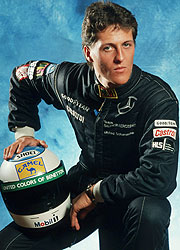
Gachot’s prison time gave this guy a chance. Wonder who he is..? © Copyright unknown.
In the off-season that followed, the original Lotus team disintegrated and the famous British marquee merged with Pacific for the following year and while 1995 saw results improve somewhat (including 8th place finishes for Gachot at Adelaide and for team mate Andrea Montermini at the Hockenheimring), it was not enough to keep the squad afloat.
The signs were there early during the season though – as Pacific struggled for cash, Gachot stepped aside so that pay drivers Giovanni Lavaggi and the legendary Jean-Denis Délétraz could display their meagre talents.
When both drivers eventually defaulted on their payments, Gachot was back in the car to drive the final three races of the season and as Pacific Grand Prix folded, so did Bertrand Gachot’s Formula 1 career.
While Pacific Racing racing went back to Formula 3000, before going to CART and eventually IndyCar, Gachot’s career in single-seaters was well and truly done. There were further attempts at the 24 Hours of Le Mans and the Japanese GT Championship, but these only served to give him some seat time before he hung up his helmet for good at the end of 1997.
Nowadays Gachot concentrates on business dealings, running a drinks company called “Hype Energy Drinks” and is currently sponsoring Michael Annett’s NASCAR Nationwide efforts for Germain Racing.
However, for all his achievements – whether it be winning Le Mans, getting the fastest lap at Hungary in 1991 or that he achieved five points in mostly tiny squads, Bertrand Gachot may simply be remembered as the guy that inadvertently introduced Formula 1 to Michael Schumacher.
What Schumacher did next is, as they say, history.
…especially when you are in a hut at 4am and the thunderstorms roll in… In saying that, it is the marshals that make this sport happen and without their help and enthusiasm. racing simply could not happen. Those that might be interested in marshalling at local or international meets, should have a look at the British Motorsport Marshals Club for more information.
Bed time.
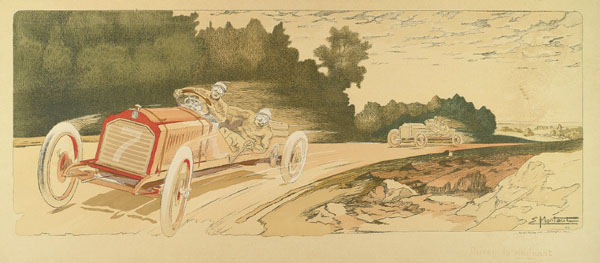
A painting by Ernest Montaut showing Arthur Duray leading the Circuit des Ardennes in 1906.
Long before the great Spa-Francorchamps graced the Grand Prix calender, the Ardennes in the eastern region of Belgium played host the initial burst of motor racing at the beginning of the 20th century.
Of course motor racing began in Belgium just before the turn of the century, in 1896 to be precise when the Automobile Club de Belgique ran the first racing trials – the ‘Concours d’Automobiles’ – around the Spa region.
The First Races
However, beginning in 1902 and running until 1907, the Circuit des Ardennes Auto Race ran the very first ever closed course races at the Circuit de Bastogne.
The track was conceived by Baron Pierre de Crawhez and in its earliest form, the track ran to 53-and-a-half miles, before being lengthened to just over 73 miles two years later – all the while maintaining a vaguely rectangular shape.
On its travels, the route would begin some 65 kilometres south of Spa at Bastogne, prior to shifting to Longlier and then Habay-la-Neuve, before returning to the starting point at Bastogne.
On the 31st of July 1902 in his Panhard 70, Englishman Charles Jarrott became the winner of the inaugural Circuit des Ardennes in a six-lap affair.
After trailing the similarly machined Pierre de Crawhez for the opening two tours, Jarrott claimed the lead and the eventual victory when de Crawhez crashed at the one-third distance. Jarrott completed the gruelling 512 kilometre distance in 5 hours 53 minutes, leading home the Mors Z car of Fernand Gabriel home by nine minutes.
That opening race was run under Formula Libre rules; however when the race returned the following June, the cars ran to “Heavy Car rules”, under which de Crawhez would claim the victory he lost the previous year.
The third running of the great Belgian race would be the first on the extended circuit and even in these early days of motor racing, it would see cars pass the 100 kph mark.
The race – now run to five laps – came in at a mammoth 591 kilometres – a distance that race winner, George Heath covered in 5-and-a-half hours, while his nearest rival George Teste trailed by a full hour.
The final year the race ran under Heavy Car rules would see a disappointing turn out for the event. Whereas around fifty machines contested the first running of the race, the 1905 Circuit des Ardennes would receive only fourteen entrants – eight of whom went the distance.
Final Outing as Grand Prix débuts
With the first official Grand Prix taking place at Le Mans in 1906, the Circuit des Ardennes would claim this status for its final two outings and that years event was a fascinating affair.
As cars generally began to pick up huge amounts of speed during motorsports younger years, it was decided to add a further two laps to the length of the race.
That year’s Circuit des Ardennes would clock in at 961 kilometres and amazingly, the event was completed in virtually the same time as in previous runs.
It would mark the first ‘home win’ for the race as Belgian Arthur Duray took the honours in his Lorraine-Dietrich machine, less than two minutes ahead of the Darracq driven by Frenchman Rene Hanriot.
Henri Rougier finished in third place in the next of the Lorraine-Dietrich cars only a few minutes behind the leading pair; however what is incredible about this race is that speeds of approximately 100 mph were being achieved by these early automobiles.
When the Grand Prix arrived at Bastogne for the final time in 1907, the course reverted to its original 1902 layout and the race was split into two categories to be run on two separate days – the Kaiserpreis Formula (or Emperor’s Prize) was a version of the great Belgian event run to German motoring regulations; that event ran on July 25th with the Grand Prix itself coming two days later.
With the Kaiserpreis returning to its homeland from the following year (itself running until only 1911) and only six cars entering the 6th Circuit des Ardennes, the race was doomed. Pierre de Caters won ahead of the severely depleted field in his Mercedes, with a pace much slower than the speed set in previous events.
The result mattered little – at this stage no one was paying attention.
The Wider Picture
For several years thereafter, racing continued to run regularly in Italy, France and the United States, with occasional events in Russia, although during the years of the First World War, motor racing was excised.
It was not until some years after the great war that motor racing would eventually return to Belgium at the now famous Spa-Francorchamps circuit at a site within the boundaries of Bastogne.
Unlike the shortlived Circuit des Ardennes Auto Race, the Belgian Grand Prix remains a regular fixture to this day and will have its 66th running in eleven days time.
Indeed, the circuit at Spa-Francorchamps has an incredible history that has seen some wonderful racing – mores the shame that the Circuit de Bastogne rings the home of the current Belgian Grand Prix, and no one even knows about it.
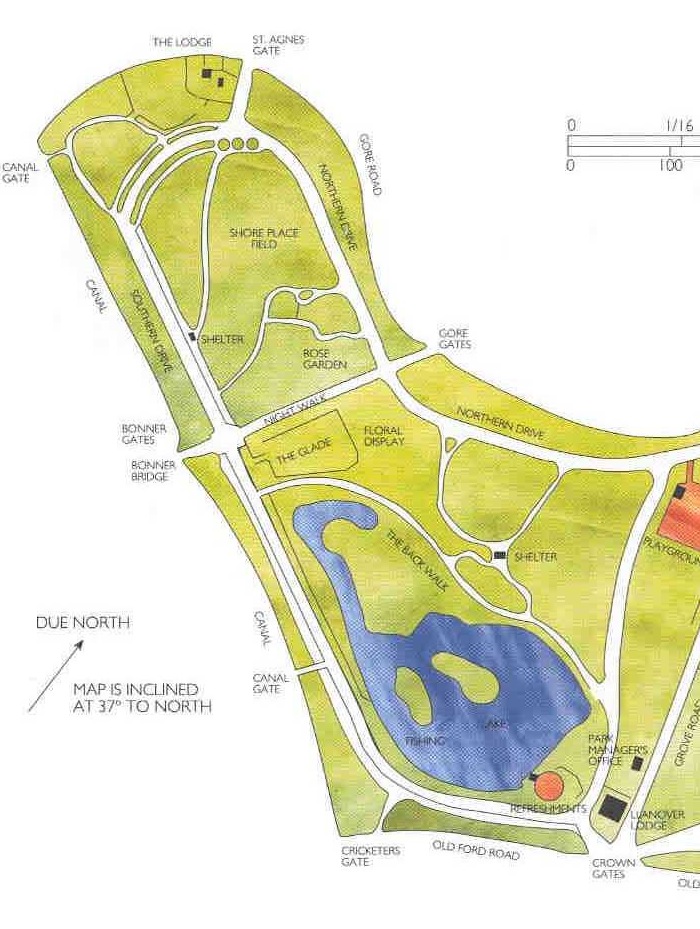
Starting at the Park managers office and going clockwise makes for good lapping at Victoria Park.
For those that do not know, I’m on a bit of a weight loss project at the minute.
It involved (in no particular order) cycling and no crap food. Come the start of last November, my scales nearly collapsed under the weight of my weight.
Incredibly I had grown so large that my potted belly had even gained its own moons if only to rival the crumb like bodies rotating around Neptune and Saturn; however much working out in the months since has seen their gravitational pull dissipate and waistline shrink (a little).
From 18 stone 3 lbs (255 lbs or 116 kilos), I’ve shrunk to a mammoth 16 stone 1 lb (225 lbs or 102 kilos) with more shrinkability hopefully coming at a later date. Thus far, “pretty happy with myself” covers what’s in my head up until now.
Normally try to get in about 30 miles of cycling around the nice and leafy Victoria Park (London) before or after work. My bike is heavy and I am slow – this is bound to take a while; however I have still got enough momentum to outrun the drunks as they wake up in the middle of the grass patch.
Last week, I was sweat drenched and making my way around the park on my old bicycle, when a guy in his mid-40’s (I think) passed me right around the outside… on Rollerblades.
No way. Not a chance. No one is going to pass me and my bike on crappy Rollerblades!!
As is the manner of all things manly, a race ensued as the mysterious Rollerblade Man and I battled hard for lap after lap – passing and repassing, daring to lead and daring to chase.
Rarely were we separated by more than 25 feet and the gap was often 10 feet or closer. Toward the end of the opening lap, Rollerblade Man was trailing very close and as I slid slyly across the poorly paved tarmac at turn 5’s Cricketer’s Gate, my rear wheel and his leading foot very near collided – disaster was so close at hand, so narrowly avoided.
Rollerblade Man paid me in kind on the straight at the beginning of the third lap. Passing the park manager’s office, the fitness freak tried to run me into couple walking their two children – a truly Schumacheresque move from the wiley mover.
And so for lap after lap, we continued to battle hard, one getting a small lead only to see it diminished moments later.
This went on for 6 miles.
It had to finish eventually and at the beginning of the seventh mile, my legs screamed “no more.” For months, I had been riding what I considered to be hard, but I cannot remember the last time I was that utterly shattered.
As we crossed the start / finish point the lead was mine, but whereas I collapsed sore on a park bench, Rollerblade Man kept on going lap after lap after lap.
Hmmm…. seems he had been playing with me the whole time (bastard).
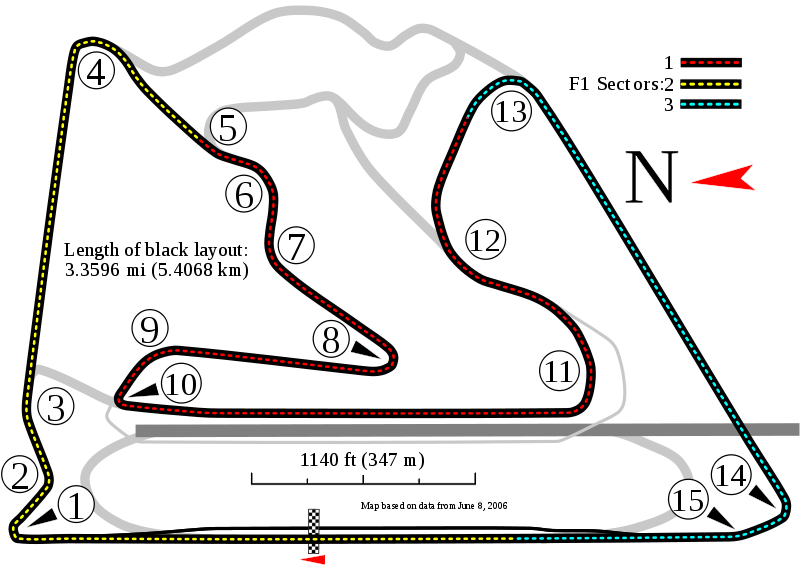
The original Grand Prix layout at Sakhir...
Unable to erase the 2010 Bahrain Grand Prix from either history or the minds of the sleepers, organisers of the opening race for the 2011 Formula 1 season have decided to rub out the track extension. Well, sort off.
While the original the original Grand Prix layout may not have been hugely popular, it was certainly far better received than the awful addition for this season’s opener.
The extension had already been there and had partially been used by other forms of racing as the circuit extended beyond the Grand Prix perimeter.
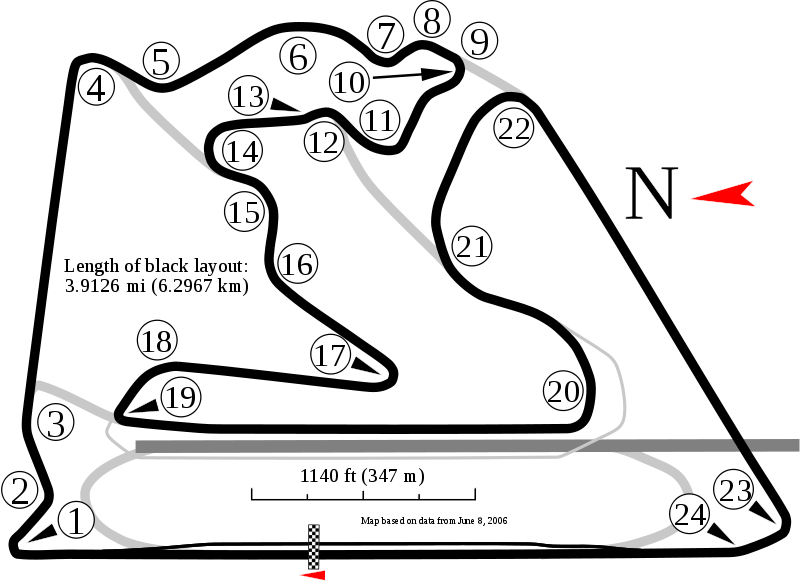
...and the alternative version in use earlier this year.
However when Formula 1 cars attacked it, it only served to spread the cars out through its seemingly endless twists and turns.
Such backtracks are incredibly rare in motorsports and I honestly cannot remember when this last occurred at a level such as Formula 1 (although I’m pretty certain it happened at some stage in the 80’s).
Hopefully, the quality of racing will improve to help us celebrate this little change. Next year’s Bahrain Grand Prix will be the first of twenty races in 2011.
As part of Viva F1’s blog swap shop, Maverick from the aforementioned site has dropped in with a sweet little post about the power and usage of engines in this years Formula 1 World Championship.
Several other posts have gone up to on various sites, including:
- Phil Jackson writing about Felipe Massa at Viva F1;
- Jackie (Viva F1) documented the stewards at La Canta Magnifico;
- Bridget Schuil composed a post about motor racing and the environment.
Meanwhile, I had time to throw a little something together for Pat Wotton at I Watch Too Much Racing about Giancarlo Baghetti: The Grand Débutante. For now, I’ll hand things over to Maverick.
——
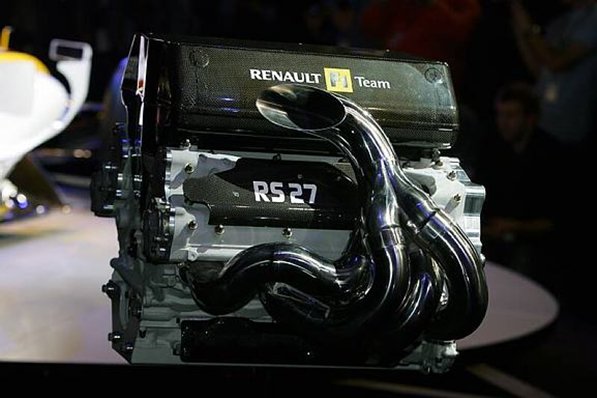
A Renault powerhouse. © http://www.formula1.com
“Engine Limitations”
The World Championship is currently finely balanced, all be it with Red Bull holding a performance advantage that they’re yet to really exploit to its fullest. On paper it currently looks like it should be a fight between Mark Webber and Sebastian Vettel. Fernando Alonso should offer the most serious challenge with his team mate seemingly out of the equation and McLaren’s upgrades faltering in recent races. However, with the engine-examining circuits of Spa and Monza coming up, the intriguing prospect of Renault vs Ferrari vs Mercedes power-plant is thrown into the equation.
It’s All About Power…
The widely-accepted class leader amongst that trio is the Mercedes-Benz FO 108X, as Renault and Red Bull seem keen to keep reminding us. As Force India demonstrated last year, a low-drag package coupled with the Mercedes engine can make for a formidable combination around the two circuits. It may not be enough to offset the disadvantage that McLaren have suffered for the last two races (assuming the new front wing tests don’t achieve that for them) but by keeping them in touch in the standings it could provide sufficient breathing space for McLaren to catch up with Red Bull’s pace.
…As Long As You Don’t Exceed Your Limit
However, there is a more fundamental challenge facing teams regarding engines – the limit of eight engines per car across the whole season. Ferrari quickly rattled through their first engine, changing it in both cars after qualifying in the first race of the year, and were already on their third unit by Australia (full engine cycle details). Since then, the Spaniard has made each engine last three race weekends, a pattern that both McLaren drivers have replicated. The difference, however, is that in Hungary McLaren came to the end of engine 5’s three-race cycle meaning they have three engines to cover the remaining seven races, leaving Lewis Hamilton and Jenson Button feeling relaxed. Alonso, on the other hand, has already used his 6th engine for the last two races and will need to continue the pattern of three races per engine. It’s potentially a tough ask with Spa and Monza to come, with Suzuka and Interlagos not doing them any favours. Certainly there is little room for problems if Alonso is to avoid a costly 10-place grid penalty for taking on a 9th engine.
At first glance, Vettel looks to be in a similar situation to Alonso although the picture may be more complicated than that as Red Bull have tended to change the engines more irregularly. That means that while Vettel switched to his 6th engine two races ago, there may be enough life still left in a previous unit for another race, possibly the relatively benign conditions of Singapore or Abu Dhabi. Indeed, he didn’t necessarily even use his 6th engine at Hungary as he could have switched back to an older one. On the other hand, the more frequent changes of engine could also point to a more deep-rooted problem in the Red Bull and it’s notable that Vettel struggled to stay within the eight engine limit last year too.
That said, on the other side of the garage, Webber is at least one race better off than Vettel and if it does come down to a battle between the Red Bull pairing, being able to risk running the engine a bit harder may just hand the Australian enough of an advantage in the coming months.
So in summary, possible sources of worry for Alonso, envy for Vettel and optimism for McLaren.
————————-
As part of VivaF1’s blogger swap shop, I have posted Giancarlo Baghetti: The Grand Débutante over on Pat Wotton’s I Watch Too Much Racing website. Hopefully those that read it will find it to be a nice little engaging post (little at 1701 words?). There is supposed to be a corresponding post from a different blogger coming soon and will post that as soon as I get it. There are other blogs taking part in the swap shop, notably F1 Weekender, An F1 Blog, Sidepodcast, Grab Bag Sports, Making Up the Numbers, La Canta Magnifico, Nick Hipkin on F1 and F1 Wolf.
In the meantime, life is quiet with not much racing going down at the moment; especially with F1’s summer shutdown in place and IndyCar having a week off.
Have fun everybody while nothing is happening.
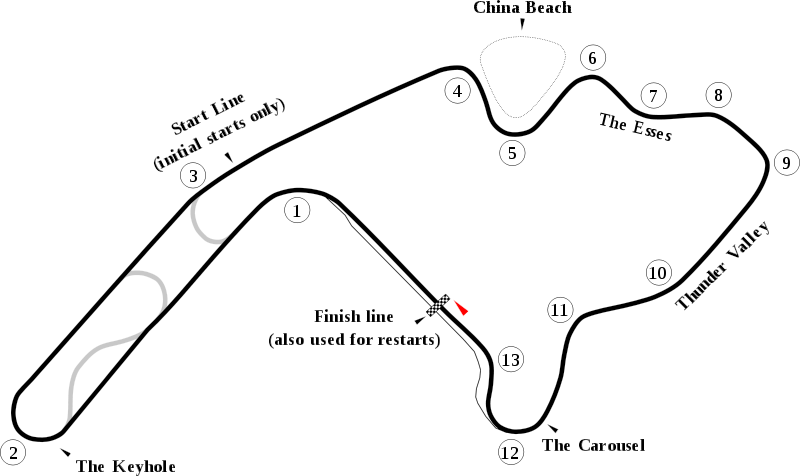
Mid-Ohio Sports Car Course
Mid-Ohio Sports Car Course is not a circuit that often brings the best out of the IndyCar Series. It is a sports car course after all. Over the last thirty years, a number of the races run at the track have been less than spectacular and while Round 12 of the 2010 IndyCar Series will not go into the history books as a stunning event, there was enough going on to keep one excited.
Certainly, Dario Franchitti will be happy following the 85-lap tour around the circuit. In order to keep any hope of a third IndyCar title alive, the Scot needed a win to close in on Penske driver and series leader Will Power – and he did just that, albeit not by much.
Power by no means made it easy for the Ganassi driver either. Starting from pole position, the Aussie jumped straight into the lead off the start, while fellow front row starter Franchitti slipped behind the quick starting Takuma Sato. The KV racer and former-F1 driver did well to hold his own amongst the “traditional” front runners, but an on-fire Franchitti was not going to be held back as the Scot pulled off a move for 2nd spot on the back stretch come the 4th lap, leaving the Japanese veteran to be preyed upon by Scott Dixon.
Sato was not the only rookie to get off the start well – HVM racer Simona de Silvestro jumped up two places from the start, giving the ‘Swiss Miss’ a handy eighth spot behind Briscoe.
Not all overtakes were going to be successful though – a lowly starting Tony Kanaan attempted to banzai passed several cars on the opening lap, but only succeeded in sending himself a long way wide at turn 4, before rejoining. Kanaan would continue to circulate before deciding to pit on the tenth lap – a risky strategy, but as he was stuck in traffic, the Brazilian had little to lose.
Things were faring a little better for Andretti-Autosport team mate, Ryan Hunter-Reay. The winner at Long Beach had poor start, dropping to 7th (from 4th), but had soon found found a way through the Penske’s of Ryan Briscoe and Helio Castroneves to take him back into the top five by the fifth lap.
In the midpack, Mario Moraes passed the FAZZT racing car driven by Alex Tagliani for 14th position. Moraes, who has had a poor season so far, had a horrible morning, when ran into three crew members in his pitbox, injured his fuel man and two tyre changes during the warm-up session.
Tagliani, being slowed by the pack traffic, dived into the pits at the end of the 21st lap – and proved to be a master stroke for the Canadian. Within two laps of pitting, EJ Viso and Justin Wilson clashed in turn 4, bringing out the first full course caution – as the field bunched up, nearly all opted to pit and suddenly Tagliani found himself at the head of the pack having already fuelled and changed to new tyres.
While the rest of the pack trundled around behind the safety car, an angry Wilson and Viso gesticulated wildly – each blaming the other for the accident. Realistically this was down to Viso – as they approached the busy fourth corner, Wilson placed himself on the inside of the Venezuelan, who then drifted toward the apex taking both out in the process. A silly mistake and one Viso should have learned to avoid by now. Ironically, a similar crash befell Wilson in qualifying when he was taken out by Briscoe; an accident that required the Englishman to wear bandages on his hand for the race.
With the pitlane busy, pressure was soon on and for Sato, it was too much – following a promising early stint, the KV driver stalled his car, dropping him to 11th place. Dixon also had a poor stop – the twice Champion would fall to 10th spot.
Amazingly in the rush to get out quickly saw several cars bump into eachother quite hard; the most obvious was Hunter-Reay and Helio Castroneves as they tangled fiercely exiting the pitlane. Both were at fault, but their moves to get as quickly as possible almost had a calamitous effect on Briscoe’s race as well when a rebounding Hunter-Reay very nearly removed the number 6 Penske from the action. One can be certain that Penske have had better pitstops, as even Power lost out to Franchitti coming out of the box.
Meanwhile, the Andretti-Autosport driver would pit again a lap later for a new front wing and a suspension check, leaving at the rear of the pack.
The race went back to green at the beginning of lap 29 with Tagliani out front ahead of (the already pitted) Kanaan, Franchitti and the three Penske’s. The battle remained fierce between the red, white and black cars with Castroneves sending one down the inside of Briscoe for 5th spot and while Castroneves was successful in his move, Sato failed miserable in his attempt to pick off Dixon.
Coming from a far long way behind, the KV rookie dive bombed down the inside of Dixon into turn 4 (again). It was a moment of pure red mist as Sato attempted to pick up lost positions, but the 33-year-old only succeeded in heavily locking his tyres before sliding off course and slamming into the barriers. Sato was fine, but his car was not – race over and safety car number two was out.
It would be four laps before the green came out again and Tagliani surged out ahead of Kanaan. At this point, Kanaan leaned back his mixture to try to stretch his fuel mileage and it was working; however it was also putting the Andretti-Autosport in danger of dropping behind third place Franchitti.
The threat was shortlived – on lap 35 in the lower echelons of the pack, IndyCar débutante JR Hildebrand tried an adventurous moved on Jay Howard for 22nd position, putting the Sarah Fisher Racing driver out in the process. Full course caution – again. Howard would be restarted, but was pulled in after a couple of laps with too much damage to his suspension. Hildebrand was certainly having a tough first race in the Series, but it will be interesting to see what he has learned when he gets to Sonoma in two weeks time for his second event.
This time the caution is short with greens back out lap 37. Tagliani repeats his previous and pulls out a fine lead over the chasing Kanaan and while Kanaan had nothing for Tagliani at this stage, there was certainly lots going on behind them. A rather quiet Bertrand Baguette was impressing many with a silent run into the top 11, passing former champion Dan Wheldon along the way, while just behind Raphael Matos made easy work of Graham Rahal for 13th spot – both would continue to have good runs through the race.
Kanaan finally blinked on lap 44 – the Brazilian had leaned out his fuel as much as possible, dragging his tank to over thirty laps with lots of slow running in between. It dropped the Andretti-Autosport driver to 21st place and it would be a struggle for the rest of the run.
With the green-and-white road block removed from his nose, Franchitti closed in on race leader Tagliani, all the while applying the pressure, all the time looking for a way passed, only to have all avenues closed off. The Penske trio still ran behind the front pair (still led by Power), with de Silvestro sitting on the edges of the top six.
Come lap 53, the pit crews emerged back into their boxes as they prepared to receive their drivers for the final stops of the day and where Tagliani ably held off Franchitti on track, he couldn’t do it through pit strategy. The Canadian driver stopped on the 57th tour and would lose out not just to Franchitti, but also to Power and Castroneves.
All three extended their runs by three (Castroneves, lap 60) or four laps (Franchitti and Power, lap 61) and the run in clear was enough to get the trio out ahead of the FAZZT driver. It could have been a close run thing thanks to serial backmarker Milka Duno. Together the Ganassi driver and both Penske’s attempted to lap the Dale Coyne driver approaching the final turn; however the Venezuelan managed to not only baulk Franchitti and Power, but actually hit the side of Castroneves – just another example of Duno’s severe lack of awareness in a racing car.
Within three laps, Duno also managed to side-swipe Danica Patrick while the part-time NASCAR driver was putting a lap on CITGO-sponsored car.
Another driver having a difficult weekend was Graham Rahal. The Newman-Haas driver had actually topped practice on Friday, but the event had turned sour since then. Starting a lowly 25th, the 21-year-old ran much of the race around 20th position, but his dire weekend was topped off when he shot off the track at turn 4, lightly grazing the barriers. Rahal was able to continue, but the incident marked another point in a forgetful weekend.
Just as the race was beginning to settle into a post-pitstop rhythm, Francesco Dracone spun into the kitty litter, bringing out the safety crew and the full course caution on the 64th lap. It was short and sweet with the race restarting at the beginning of lap 67, but within one tour of the course, Duno as it got going and Dracone spun once again – on the start/finish straight. Another safety car period for a further three laps.
While short, the stint was long enough to see Dixon pass de Silvestro for 6th and Matos grab 9th place fro Baguette.
Dixon and Matos were not ready to leave it that however. As soon as the race restarted at the beginning of lap 71, Dixon removed Briscoe of 5th and Matos stole positions from both Andretti and de Silvestro to garner 7th place for himself. Even Hunter-Reay got in on the act with moves on Wheldon, Moraes and Baguette, bringing the American up to 10th position.
With ten laps remaining, Franchitti was leading from Power, Castroneves, Tagliani, Dixon and Briscoe, but while most seemed prepared to toil around single file once again, Power launched one final attack on Franchitti.
As the laps ticked down, Power was never more than one second behind Franchitti and the gap was often less than half-a-second; only a few car lengths, but with minimal passing spots, even Will Power could not find a way through regardless of how much pressure he applied.
The Australian tailed the Scot through every turn of the course, dodging around in the background, looking for a way to distract the Ganassi driver, yet Franchitti had Power covered all the way to the line – just. Only for a brief moment did Power have a real opportunity – most of the way around the final lap, Franchitti stuck a wheel on the grass as he powered down the backstraight – here was Power’s last chance… only for the Penske to do the same. Game over.
Thanks to Power’s last second error, the win belonged to Dario Franchitti; but it was taken by only 0.5 of-a-second, the third closest finish on a road course in IRL history. This also marked Franchitti’s 25th victory in IndyCar history, putting joint 12th in the winner’s leaderboard with the legendary Gordon Johncock.
All the same, it’s unlikely Power would be too disappointed with runner-up spot, as it means Franchitti can only take ten points out of his 51 point lead in the title hunt.
Castroneves and Dixon secured 3rd and 5th respective and both must now be certain that their Championship hopes are done for this season. They squeezed a delighted Alex Tagliani in 4th spot – it’s the best result so far for the new team and Tagliani also picked up a two-point bonus for most laps led. Ryan Briscoe swept 6th spot, but the Australian may be somewhat worried about his long term future with Penske now that he finds himself over one-hundred points behind Power.
Raphael Matos and Simona de Silvestro picked up positive results with 7th and 8th, especially for Matos who started a lowly 19th spot. Marco Andretti drove a fairly anonymous race to 9th ahead of team mate, Ryan Hunter-Reay, while Bertrand Baguette and Mario Moraes rounded out the top 12.
Race Rating: 3 out of 5
Pos  Driver               Team                    Time/Gap
1.   Dario Franchitti     Ganassi            1h54m32.2568s
2.   Will Power           Penske                 + 0.5234s
3.   Helio Castroneves    Penske                 + 4.0883s
4.   Alex Tagliani        Fazzt                  + 5.6423s
5.   Scott Dixon          Ganassi                + 5.9150s
6.   Ryan Briscoe         Penske                 + 6.5100s
7.   Raphael Matos        De Ferran Dragon       + 6.7518s
8.   Simona de Silvestro  HVM                   + 10.1451s
9.   Marco Andretti       Andretti              + 10.9555s
10.  Ryan Hunter-Reay     Andretti              + 13.2344s
11.  Bertrand Baguette    Conquest              + 14.8260s
12.  Mario Moraes         KV                    + 16.0461s
13.  Alex Lloyd           Dale Coyne            + 16.5570s
14.  Dan Wheldon          Panther               + 19.3518s
15.  Vitor Meira          Foyt                  + 20.0782s
16.  JR Hildebrand        Dreyer & Reinbold     + 20.2169s
17.  Tony Kanaan          Andretti              + 25.4286s
18.  Hideki Mutoh         Newman/Haas           + 26.5918s
19.  Adam Carroll         Andretti              + 27.3302s
20.  Graham Rahal         Newman/Haas           + 27.6341s
21.  Danica Patrick       Andretti              + 28.2099s
22.  Francesco Dracone    Conquest                + 3 laps
23.  Milka Duno           Dale Coyne              + 4 laps

Retirements:
    Jay Howard           Sarah Fisher       38 laps
    Takuma Sato          KV                 28 laps
    EJ Viso              KV                 22 laps
    Justin Wilson        Dreyer & Reinbold  22 laps
2010 IZOD IndyCar Series Standings (Round 12)
1.  Will Power           Penske             461 points
2.  Dario Franchitti     Ganassi            420
3.  Scott Dixon          Ganassi            379
4.  Ryan Briscoe         Penske             352
5.  Helio Castroneves    Penske             340
6.  Ryan Hunter-Reay     Andretti-Autosport 336
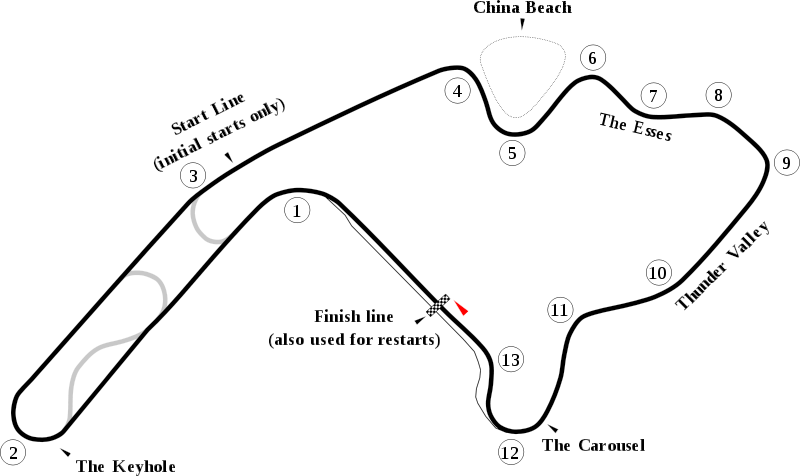
Mid-Ohio Sports Car Course
Every so often, a driver just runs away with a race. From the moment the green flag drops, those “in the zone” will either run off into the distance or simply control the race from the front – today polesitter Martin Plowman was that driver. The Briton led the Firestone Indy Lights Race of Mid-Ohio from start to finish and while he was stalked by James Hinchcliffe for much of the race, the truth is Hinchcliffe never really looked like getting by.
He wasn’t alone in getting good laps in as Gustav Yacaman showed; however sadly for Yacaman, his gearbox failed on the warm-up lap and it would be six laps before he finally hit the track. As the race started, Dan Clarke kept his third spot of the grid, but behind him 2009 Indy Lights title challenger Sebastian Saavedra stumbled as Stefan Wilson and Charlie Kimball both got by. By the third lap, Kimball had also passed Wilson in turn two to claim 4th place.
Nearer the rear of the field, David Martinez was clearly struggling and it would only be a matter of time before Juan Pablo Garcia passed Martinez for 11th spot, leaving Garcia to chase down Philip Major. Further back, a spin by Rodrigo Barbosa did little to damage either his car or race – Barbosa spent nearly the entire event mired down in 13th spot, a long way up on Indy Lights débutante Giancarlo Vilarinho.
As the race approached its three-quarter mark, Saavedra – seeing the possibility of extra points – locked onto the rear of Wilson; however the young Columbian ran wide off of the second corner, kicking up plumes of dirt and loosing bundles of time.
Things up front began to come to a head on the 36th lap when Championship challenger Hinchcliffe overcooked his car on the approach to turn four, running well into the dirt and nearly taking out his team mate Adrian Campos Jr, as he rejoined the track. Hinchcliffe slipped to seventh position, just ahead of Series leader JK Vernay, instantly nullifying any possible advantage he may have gained.
The chequered flag flew some four laps later with Plowman becoming the 5th race winner of the season, picking up two extra points for leading the most laps. Interestingly enough, it was his first race victory since he competed in go-karts.
Behind Plowman, Clarke, Kimball, Wilson, Saavedra and Campos Jr fill out the top 6, while Hinchcliffe, Vernay, James Winslow, Major, Garcia, Barbosa, Martinez, Vilarinho and Yacaman crossed the line in 7th-15th positions respectively – Martinez spun into the gravel on the final tour, loosing his 12th spot to Barbosa.
Realistically, this was a 40-lap procession through the Lexington hills. A tense race could have developed, but Hinchcliffe’s inability to move forward and seriously challenge Plowman negated any excitement.
Race Rating: 1.5 out of 5
Indy Lights Race of Mid-Ohio (Round 9)
1. Martin Plowman 40 laps
2. Dan Clarke 0.8443
3. Charlie Kimball 4.1734
4. Stefan Wilson 7.6215
5. Sebastian Saavedra 7.8045
6. Adrian Campos Jr 8.3180
7. James Hinchcliffe 11.6760
8. JK Vernay 16.4775
9. James Winslow 48.1677
10. Philip Major 50.3686
11. Juan Pablo Garcia 54.5980
12. Rodrigo Barbosa 1 lap
13. Giancarlo Vilarinho 1 lap
14. David Martinez 2 laps
15. Gustavo Yacaman 6 laps
2010 Indy Lights Championship Standings
1. Vernay 359 points
2. Hinchcliffe 306
3. Plowman 306
4. Kimball 287
5. Saavedra 269
6. Wilson 234

Mid Ohio Track Layout
At times, you wonder why other drivers bother going for pole position anymore – especially when it’s a road or street circuit and Will Power is sitting patiently in his Penske. Yet on Saturday at the Mid-Ohio Sports Car Course, there was an inclining that the Aussie might finally have been rumbled – the 29-year-old having smashed his primary car during the morning session. No matter – Power got into the back up car and put that on pole position instead. Simples.
It wasn’t completely clear cut. The Andretti Autosport man, Ryan Hunter-Reay and the Ganassi pair of Scott Dixon and Dario Franchitti frequently challenged for top spot, while Takuma Sato in his Lotus-coloured KV Racing machine set some ferocious times too. Eventually Franchitti did enough to secure the outside of turn 1 alongside Power, with Sato leading Hunter-Reay on the second row. Dixon lined-up behind the front four, as Helio Castroneves silently claimed sixth spot.
Disappointed to miss out were EJ Viso, Justin Wilson and Ryan Briscoe – all of whom were involved in incidents. After violently chopping off Helio Castroneves on the back stretch and spinning on his fast lap, Viso baulked Briscoe while recovering leading the Australian himself to spin. The Penske then appeared to be letting a fast approaching Justin Wilson through, when he drew across the track and sent both into the tyre barrier. A silly mistake by the 2009 title challenger led to briefly angry scenes, but more importantly it left him down in 7th place, alongside Viso (8th). Wilson starts from 11th.
There were high hopes that Simona de Silvestro might be able to make it through to the Firestone Fast Six, but a failure just prior to her final run left the ‘Swiss Miss’ all the way down in 10th position. Marco Andretti and Hideki Mutoh start from 9th and 12th respectively after fairly anonymous sessions. The Andretti name has has some interesting accidents in the past at Mid-Ohio, with Marco’s father (Michael) flipping violently in 1998 and Marco himself landing upside down at the race start in 2007.
The first qualifying sessions carried a few surprises – only naturally considering it knocks out half the field – and on this occasion Dan Wheldon (13th), Adam Carroll (17th) and Tony Kanaan (20th) failed to make it through to the initial stages. IndyCar débutantes JR Hildebrand and Francesco Dracone line up in 18th and 23rd respectively and despite upping her speed this weekend, Milka Duno was not allowed to qualify. The Dale Coyne driver will start 27th and last.
This was Power’s fifth pole of the season and was enough for him to clinch the Andretti Road Course Trophy and the extra point from pole allowed the Penske driver to extend his Championship lead to 51 points over Dario Franchitti. The IndyCar race will be broadcast live from 8pm on Sky Sports 4 at 8pm (BST) with the green flag about 15 minutes later. Both the IndyLights and IndyCar races will also be shown on indycar.com from 5.15pm (BST) onwards.
IZOD IndyCar Grand Prix of Mid-Ohio (Rd 12)
SP Car Driver Car Name Entrant Time Speed
1 12 Will Power Verizon Team Penske 1:07.1997 120.965
2 10 Dario Franchitti Target Chip Ganassi Racing 1:07.2846 120.812
3 5 Takuma Sato (R) Lotus-KV Racing Technology 1:07.4337 120.545
4 37 Ryan Hunter-Reay Andretti Autosport 1:07.4411 120.532
5 9 Scott Dixon Target Chip Ganassi Racing 1:07.4711 120.478
6 3 Helio Castroneves Team Penske 1:07.5370 120.361
7 6 Ryan Briscoe Team Penske 1:07.4687 120.483
8 8 E.J. Viso KV Racing Technology 1:07.4713 120.478
9 26 Marco Andretti Andretti Autosport 1:07.5436 120.349
10 78 Simona de Silvestro (R) HVM Racing 1:07.6190 120.215
11 22 Justin Wilson Dreyer & Reinbold Racing 1:07.6239 120.208
12 06 Hideki Mutoh Newman/Haas Racing 1:07.7491 119.984
13 4 Dan Wheldon Panther Racing 1:08.2415 119.118
14 77 Alex Tagliani FAZZT Race Team 1:07.7789 119.931
15 36 Bertrand Baguette (R) Conquest Racing 1:08.3069 119.004
16 32 Mario Moraes KV Racing Technology 1:07.7821 119.925
17 27 Adam Carroll (R) Andretti Autosport 1:08.4825 118.699
18 24 J.R. Hildebrand (R) Dreyer & Reinbold Racing 1:07.7943 119.904
19 2 Raphael Matos de Ferran/Dragon Racing 1:08.5386 118.602
20 11 Tony Kanaan Andretti Autosport 1:07.9321 119.661
21 19 Alex Lloyd (R) Dale Coyne Racing 1:08.7818 118.182
22 7 Danica Patrick Andretti Autosport 1:07.9780 119.580
23 34 Francesco Dracone (R) Conquest Racing 1:11.3968 113.854
24 14 Vitor Meira A.J. Foyt Racing 1:08.0414 119.468
25 02 Graham Rahal KV Racing Technology 1:08.0459 119.461
26 66 Jay Howard (R) Sarah Fisher Racing 1:09.5028 116.956
27 18 Milka Duno Dale Coyne Racing No time No Speed

 TheMotorsportArchive.com