
There have been many complaints from teams and drivers during the past few seasons regarding the lack of testing in Formula 1 – not just in consideration of whether or not the regulation truly reduces a team’s costs significantly when compared to the intense research and development that goes on in the sport, but also with regards to how young driver prepare for the highest level of motorsport.
One of the unintended consequences of the testing ban is a situation whereby young drivers are simply not getting the necessary miles in order to acclimatise to top level machinery and it is starting to catch them out. Indeed Romain Grosjean and Jaime Alguersuari are very recent examples of this rule going wrong – although Alguersuari has been resigned to the Toro Rosso team for the 2010; however his performances need to drastically improve if he is to keep his seat. Grosjean on the other hand may have seen his career grind to a permanent halt after just seven races as he struggled to make the transition from GP2 to Formula 1 during the middle of last season.
It is a catch-22 of sorts for the teams – they are looking for the new young driver that may reinvigorate a squad and deliver results; however with team bosses unwilling to risk untried youth, the average driver age in Formula 1 is rising as some pilots (not mentioning names) end up staying long past their sell by date.
In light of this, a very interesting little story cropped up on Thursday night. Anthony Hamilton – father and manager of 2008 World Champion, Lewis Hamilton – is putting plans in place to set up his own independent F1 Testing Academy. This new venture – called the GP Prep Drivers Academy – will lease out 2009-spec Formula 1 cars with crew and equipment; although costs are still being determined at this stage. It is believed a deal may already be in place for two McLaren Mercedes units and that talks are taking place with other teams, however this has yet to be officially confirmed. Discussions are also taking place with various circuits in the UK and the project may commence around March/April.
This project is hot on the heels of an announcement by McLaren that they have signed 14-year-old double German Junior Kart Champion Nyck de Vries; the youngster is to be personally managed Anthony Hamilton and the Hamilton Management Group.
If approved by the FIA, the GP Prep Drivers Academy may result in pilots gaining the necessary miles to obtain a superlicence and should hopefully remove the barrier that a lack of testing has brought in recent years. It has not gone unnoticed that Toro Rosso driver Jaime Alguersuari will be taking part in his first ever Formula 1 test on Wednesday, despite having made his Grand Prix début last August.
- Monaco Grand Prix (Circuit de Monaco, Monte Carlo)
- Belgian Grand Prix (Circuit de Spa-Francorchamps, Spa)
- Dutch Grand Prix (Circuit Park Zandvoort)
- Central European Grand Prix (Hockenheimring, Baden-Wurttemberg / A-1 Ring, Zeltweg)
- San Marino Grand Prix (Autódromo Enzo e Dino Ferrari, Imola)
- Canadian Grand Prix (Circuit Gilles Villeneuve, Montreal)
- US Grand Prix (Indianapolis Motor Speedway)
- Mexican Grand Prix (Autódromo Hermanos Rodriguez, Mexico City)
- ***The Race of Champions Non-Championship Event (Gesamtstrecke, Nurburg)***
- Britain Grand Prix (Silverstone Circuit, Northamptonshire)
- French Grand Prix (Circuit de la Sarthe, Le Mans)
- Spanish Grand Prix (Circuito de Jerez)
- Portuguese Grand Prix (Autódromo Internacional do Algarve, Portimao)
- Italian Grand Prix (Autodromo Nazionale, Monza)
- Bahrain Grand Prix (Bahrain International Circuit, Sakhir)
- Chinese Grand Prix (Guia Circuit, Macau)
- Japanese Grand Prix (Suzuka International Racing Course)
- Australia Grand Prix (Adelaide Street Circuit)
- Argentine Grand Prix (Autódromo Juan y Oscar Gálvez, Buenos Aires)
- Brazilian Grand Prix (Autódromo José Carlos Pace, Interlagos)
There are several things that need to be pointed out though:
- Hermanos Rodriguez Circuit, Adelaide and Buenos Aires (1970’s fast layout please) have been out of use for a very long time and would need to be reinstated to their former layout (with modern safety specs) to make the grade. The classic Zandvoort has long since been nullified – this too would have to be brought back to original specification to be deemed “worthy”.
- Could someone please reinstate Hockenheimring’s long straights please? They always provided the most overtaking for the entire season.
- No South African Grand Prix – to be honest, I was never a fan of Kyalami,but upon its Grand Prix return in 1992, it had truly been butchered. So, no thanks.
- No Hungarian Grand Prix – there’s never been a whole lot of love for the Hungaroring. It’s a tough, technical little circuit, but the racing there is for the most part drab and still born.
- No Turkish Grand Prix (or Abu Dhabi, or Malaysian for that matter) – simple really. One superb corner does not make a great race track and quite simply that’s what these tracks have got. For the other sections of the the respective tracks are just not good enough and have a habit of repeatedly producing processions.
- Considering the economic pressures of holding a Grand Prix, I would consider alternating the Central European Grand Prix between the Hockenheimring in Germany and Austria’s A-1 Ring.
- A three week holiday would commence after the Mexican event, that would be broken with a non-championship event at the old Nurburgring circuit. The World Championship would begin again a week later at Silverstone.
If I can think of anything else to add, then I will add it at a later date.
 With the resignation of Tony George as CEO of the Indy Racing League, the series was facing something of a peculiar future – with a title sponsor deal with IZOD signed late last year and with reportedly high investment coming from Apex Brazil as well as additional cars from Sarah Fisher Racing and Alex Tagliani’s FAZZT team, things were looking decidedly up.
George’s subsequent suspension of his Vision Racing team – through lack of sponsorship – was another dent that the IRL simply didn’t need. However, those that are proclaiming this to be the end of the road for the IRL my well be putting far too much emphasis on George himself. As influential as he was, Tony George was not the series.
Randy Bernard, 43 tomorrow, takes over the position of CEO that George left vacant. It has been cited over the last couple of days that he has never been to an Indycar race and a number of fans have thrown their typing hands in the air in disgust as a result.
However, there is more than enough scope to believe that this is an incredibly shrewd decision by the IRL. That Bernard has no previous attachments to the sport may be incredibly beneficial as he can (in theory) view the IRL in a very different light than Tony George. He will not be swayed by those that desperate to hold on to the 1960’s or 70’s, nor will he alienate them either – the truth is Bernard will need to shape the sport for the future and one cannot do that without recognising the achievements and mistakes of the past; however history should never steer the future with such vigour.
With the Professional Bull Riders Association, he has built a sport with a large following from essentially nothing, so he has nothing to prove when it comes to marketing and business acumen. He has proven that he knows how to grow niche sports and with that in mind, those inside the sport need to give him room to operate efficiently.
George’s deep relationship with the IRL, Vision Racing and the Indianapolis Motorspeedway itself often meant that decisions were not made in good light and with him being so entrenched in many different elements, it often appeared that couldn’t see the bigger picture. Let us not forget that Tony George did an awful lot for the sport that was positive – mainly with regards to safety; however there were a lot of negative aspects as well, yet while all of his achievements must be recognised, his errors must be sufficiently noted so that they are not repeated once again.
It has been stated here before that the last the last CART / IRL split lasted 14 years and it may take just that long for the rifts to fully heal. This series will not cure itself overnight and it would be a ridiculous notion to think that it ever could, but it is taking the right steps – even if they are just baby steps.
New car launches have a habit of being spectacles – albeit boring ones. Admittedly, I have never been to one, but I have sat through numerous films and clip reels of unveiling’s over the years and have often found the dry PR speeches deeply dull. Tales about a company’s past, present and future sitting idly alongside comments on marketing strategies all too often remind me of the university lectures that I slept through for years.
With this in mind, there is a level of intrigue with plans by both Ferrari and McLaren to stream their launches live via their website – not that I wish to sit through a marketing conference, but am curious as to how they intend to make these in any watchable. Toyota tried streaming their launch two or three seasons ago in all its uncut glory and……. it……. dragged……….. onnnnnnnnnn…….
Ten or fifteen years ago, the likes of McLaren and Jordan would organise massive stage shows with the Spice Girls or some other cultural act to unveil their charger – thankfully those days have passed for they reeked of old cheese, but if the teams really want to make streaming their launches work, they seriously need to cut the jabber and dead air that presides over these events.
Ferrari launch tomorrow morning at 9am with McLaren on Friday morning (at 11am, I think), with Renault and BMW Sauber unveiling on Sunday evening. Toro Rosso and Williams pull off the covers on Monday trackside at Valencia with the rest of the grid following in the weeks thereafter.
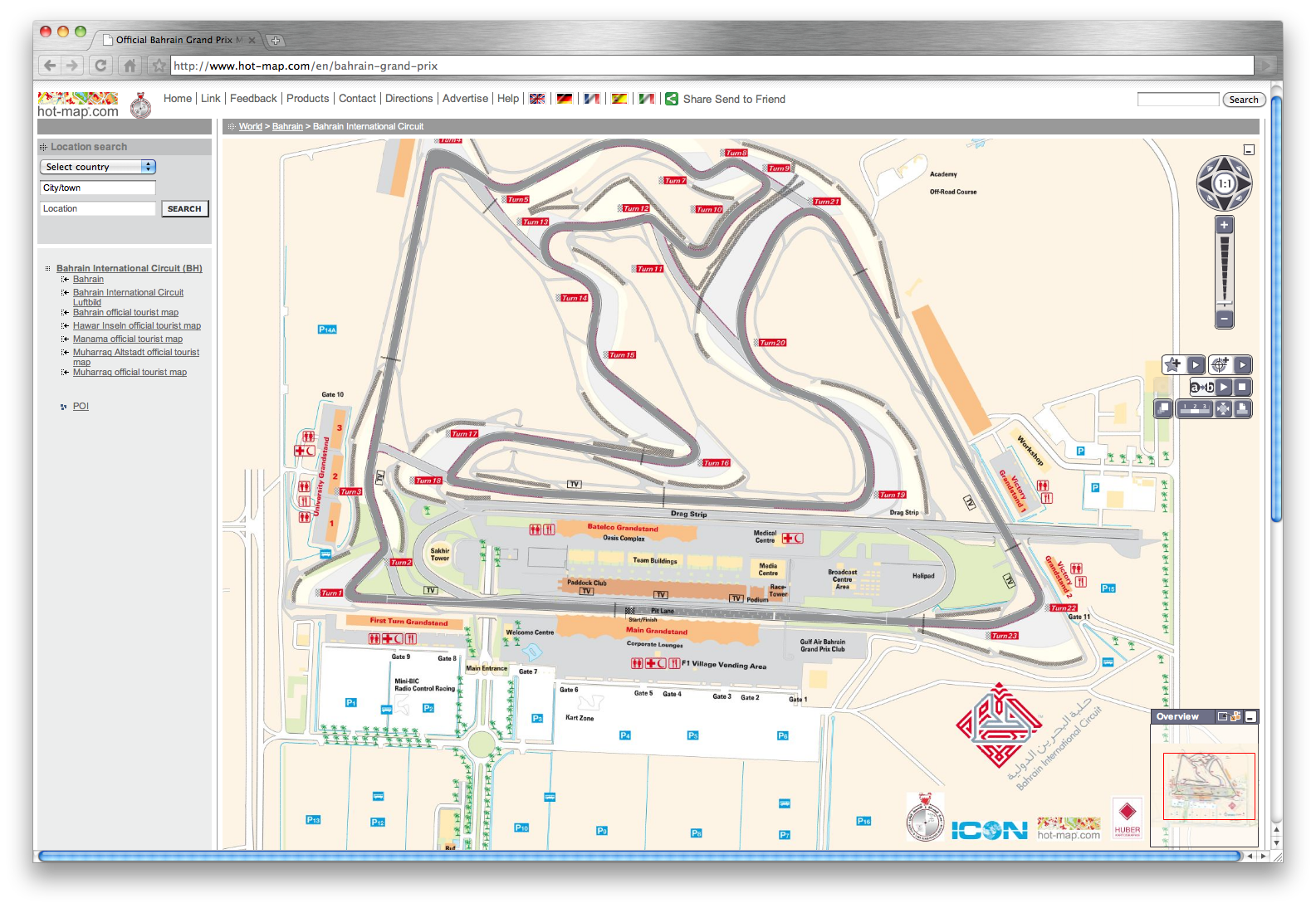 The 2010 Formula 1 Grand Prix season will kick off in March 14th in Bahrain; however it emerged today that there has been some significant changes to the layout for the Grand Prix in Sakhir.
Although no actual changes are taking place to the circuit itself, the Grand Prix will now utilise the endurance version of the track as opposed to its original Grand Prix layout – adding an extra 0.8km to the length of a lap for the Formula 1 cars.
The endurance circuit, which measures 6.3km and has 24 corners, should technically reduce the number of race laps from 57 to around 48 or 49 to make the race up to the required 190 mile distance.
Whereas the old Formula 1 layout turns veers to the right at turn six, the longer version continues to off to the left, leading to series of slow speed corners before rejoining the original Grand Prix circuit to finish the lap – this will make the middle sector about on-minute long in the current cars. It also makes Sakhir the second longest circuit on the calendar, with only Spa-Francorchamps having a higher round distance.
 Interestingly, with the rules stipulating that the cars cannot refuel mid-race next season, the extra distance and additional slow to medium speed turns may put extra pressure on the drivers to not use up too much fuel in the race – those that run higher revs on these added sections, may find themselves in difficulty near the end of a Grand Prix.
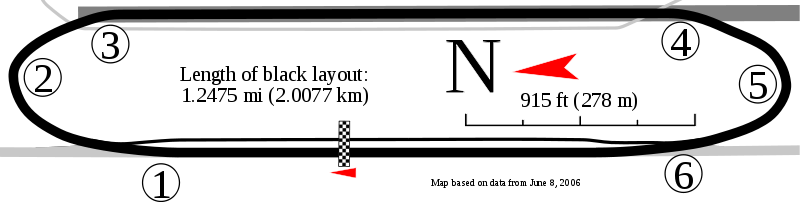
On a separate note, I did not realise until this evening that the Sakhir circuit also has a six turn oval – if you look in between the start/finish straight and the back straight (from the endurance layout), these sections are linked by long turns at either end making what is a 1.25 mile oval. It also contains a drag strip and according to some sources, at least one palm tree. So, there you go.
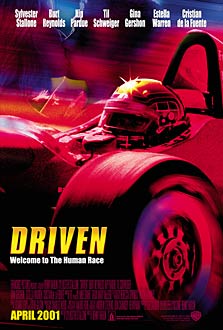 Throughout the latter half of the 1990’s, there had been lots of talk about a Formula 1 based film being made. This raised a number of eyebrows at the time, for it is well known that movies about sports tend to lack, well… everything.
Eventually word began to spill out that it was a Sylvester Stallone project and that Burt Reynolds might be involved and everyone in the Formula 1 world – whether that be fans or those in the sport – breathed a sigh of relief when word came out that it was not happening. However, those that were sanctioning the mainly US-based CART series at the time were not so quick to dismiss the idea.
Try to hype up the background and you may find yourself in an empty shell wrapped up in social tinsel – I know a lot of engineers and none of them do a good Hollywood strut!! Add to that, a growing number of sportspeople tend tend to be very, very dull following years of PR training that often excises personality in favour of clean-living sobriety. To try and make all these factors “sexy” often doesn’t work and the result are a bunch of characters that would never exist in real life.
Given some of the people involved in making the movie, it’s probably no surprise that Driven is a piece of fucking shit that should never have seen the light of day. For the casual film fan, the script and production is so incredibly shoddy that it makes watching the feature a laborious effort; for enthusiasts of motor-racing, the mechanics of the machines and the director’s quests for the most overblown, obscene and frankly impossible crashes make Driven a horrific and embarrassing experience.
The film goes one further by creating some of the most dreadful special effects anyone could possibly imagine; however even that foreknowledge doesn’t prepare the viewer for the way the director randomly appears to swap from bad CGI to real footage – it is made even more apparent due to the horribly cartoonish nature of the graphics. One only needs to see the truly awful street-chase scene to get a sense of just how awful this film actually is.
In short, this film is very bad, but to witness the “highlights” of Stallone’s epic misadventure, click on the You Tube link below and enjoy the horror of bad film making. It must also be remembered that for a number of the cast, this was a career killer.
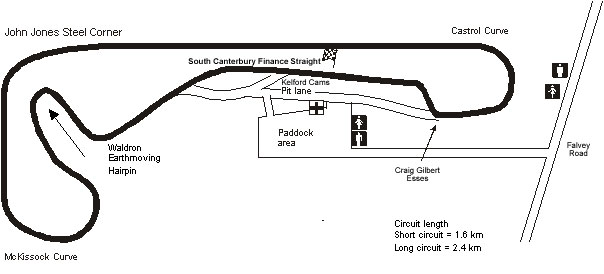
Timaru Raceway map
Race One
Following a wonderful opening round at Teretonga Park, 15 year-old Mitch Evans once again set a stunning pace at the head of the eleven car field at New Zealand’s Timaru International Raceway. So fast was Evans’ run in the opening 12 lap salvo, that the fastest lap was broken five times during the race. The Auckland youngster was not the only driver setting purple laps though as Sten Pentus, Daniel Jilesen and Lucas Foresti also registered laps under the previous lap record.
By the end of the the first race Evans had taken a seemingly easy run to the flag from pole, however a closer examination of the run would tell a story of constant rearward pressure from Pentus, the surefooted Estonian. Lucas Foresti was initially looking good for a solid run from his third place starting, but a swift move by Jilesen on the opening tour dropped the Brazilian to fourth place – a position he would be locked in until the chequered flag.
Although Foresti couldn’t pressurise a way passed Jilesen, he in turn was in no danger of action from behind as the mid pack busied themselves with their own battles. A rough early pass for 5th by Alastair Wootten on Andrew Waite led to Stefan Webling spinning his Triple X Motorsport car on to the grass; he recovered, but dropped to the rear of the field. More serious however, was a spin Jamie McNee on the seventh lap – the young Kiwi spun around completely and stalled the engine as his Neale Motorsport machine faced oncoming traffic. With McNee unable to move, the safety car emerged and neutralised the field while the on track recovery took place.
It remained static until the green flag dropped at the beginning of lap 10 and the pack get off without a hitch – all that is, except Waite who grasshopped over the turn 1 run off and falls to last. In the end, it was an easy win for Evans and one where the young man set a lap record that was nearly one second faster than the previous best; indeed Pentus, Foresti and Jilesen all recorded laps under the previous record. A ferocious pace and it should be interesting to see if that can be maintained.
Toyota Racing Series (Round 2, Race 1)
- Mitchell Evans 13:41.550
- Sten Pentus 0.697
- Daniel Jilesen 2.013
- Lucas Foresti 2.591
- Alastair Wootten 3.217
- Earl Bamber 3.500
- Andrew Waite 5.406
- Nathan Morcom 6.676
- Stefan Webling (R)
- Jamie McNee (R)
Evans would not be able to repeat his race 1 result for the following days feature. A damp track would see Evans and Foresti both wheelspinning off the line and down the order, while Pentus launched himself into a commanding lead. Earl Bamber had a great start too – after a rather anonymous opening event, the young Kiwi jumped from 7th to 3rd position by the first turn and had even stolen 2nd spot from Jilesen after one full lap.
An intense battle ensued between Jilesen and Alastair Wootten for third; a battle that would see both drivers go offroading on the entry into turn 2 twice during the event – although Jilesen held ground the first time over the grass, Wootten would eventually grab the position on the fifth lap. Bamber also took to the grass to try and find a way by the race leader – attempting move around the outside of the long Steel corner, Bamber’s right front tyre grabs a wet patch and is guided onto the grass; however he holds on and rejoins.
Further down the pack, Evans was also having a heated battle with Waite, McNee and Foresti and as McNee pushes hard on the exit of turn 1, he throws his Neale Motorsport car onto the grass, but manages to save it. He wasn’t quite so lucky a few laps later though – nearing the halfway point of the race, McNee goes wide chasing down the pack in Waldron Hairpin, touches the barrier and comes to a halt near the track verge. Safety car (again).
The safety car period is short and the race restarts on lap 11 and Bamber instantly reattaches himself to the tail of Pentus, eventually forcing a way passed him the next lap around. It soon becomes quite clear that Pentus is struggling on worn tyres, as his wet Michelin rubber overheats on the rapidly drying surface and soon his mirrors were being filled by the Wootten in his Dart International machine. Wootten, meanwhile had escaped the clutches of Jilesen following their earlier run-in; in fact, Jilesen had begun to fall backwards and was passed first by Webling and then Evans, before eventually finishing 8th. With five laps left, Webling unwilling to sit idly behind the 3rd placed driver, dived hard down the inside of Wootten – a risky manoeuvre that momentarily saw Webling sliding sideways out of control, yet he had just enough grip to spare to solidify the move. Webling would attempt a move on Pentus with two laps remaining; however the Estonian moved hard on the third place man, cutting across Webling’s front end – Pentus would hold onto the runner-up position, but in a manner that raised many eyebrows on the pitwall.
Andrew Waite was soon grabbing positions up the order – having held onto his tyres for most of the race, late race passes on Evans and Wootten. Sadly for Lucas Foresti, the Brazilian had an awful time – after an invisible race near the back end, Foresti clattered his front wing requiring a replacement on the penultimate lap.
There were no such worries for Earl Bamber though as he eventually took the feature race by five seconds ahead of Pentus and Webling. After a disappointing time at Teretonga Park in round 1, there is a real feeling the Bamber’s championship charge starts here.
Toyota Racing Series (Round 2, Race 2)
- Earl Bamber 24:20.872
- Sten Pentus 5.679
- Stefan Webling 5.960
- Andrew Waite 6.919
- Alastair Wootten 9.464
- Mitchell Evans 14.663
- Nathan Morcom 16.346
- Daniel Jilesen 22.288
- Lucas Foresti (R)
- Jamie McNee (R)
As the the final race of the weekend got under way, more rain arrived making already difficult conditions even harder to deal with; however with Evans on pole for the third race (the top 6 of race two are reversed), this race should have been his – and it almost was. A poor start from the young Kiwi saw him passed by Alastair Wootten approaching the first breaking point, but it was an off at the long McKissock Curve that dropped Evans into the pack. Championship challenger Earl Bamber couldn’t have had a more different start to race – getting off the line from 6th spot, the 19-year-old had climbed to second place most of the way through the lap, before taking the lead exiting the final corner.
From here, Bamber was a distant shadow for much off the race, especially after Wootten himself slid off the road at turn 4; however the battle behind him for 2nd to 6th places was quite immense. As the slick Michelin’s struggled on the damn surface, Jilesen, Webling and Webling regularly swap positions – each of them getting out of shape at some stage or other. The battle between the trio slowed them considerably and let Evans back into the party.
As one driver began to struggle following a short burst of speed, another would pass before inevitable suffering the same issues – first second placed Waite, then Jilesen, before Webling fell back. Evans on a charge takes them all one by one and with only three laps remaining, moves in on Bamber; the battling trio are left to fight amongst themselves, while also keeping an eye of Pentus in 6th position.
Crossing the start/finish line, the gaps dropped considerably; first it was 2.7 seconds (lap 8), then 2 seconds (lap 9), before it was torn down to 0.2 second (lap 10). Both Bamber and Evans lead the way in the final couple of laps with the later constantly on the race leader’s tail – across the line to start the final lap, the gap was 0.1; this was Evans’ last chance.
Bamber defended for all his worth as Evans could not take the lead through turns 1 and 2, but as the young man tries around the outside of left leaning John Jones corner, his car snaps right, skates across the damn grass and slams hard into the tyre barrier ripping off two wheels. Evans, disconsolate, climbed out of his broken car unhurt as the red flag flew bringing the race to a premature end. With the race stopped early, the order across the line at the penultimate lap is classified as the result, ensuring Evans still claimed second place.
- Earl Bamber 12:24.299
- Mitch Evans 0.157
- Andrew Waite 1.949
- Daniel Jilesen 2.185
- Sten Pentus 4.000
- Alastair Wootten 4.848
- Lucas Foresti 8.339
- Jamie McNee 10.221
- Stefan Webling 2 laps
- Nathan Morcom (R)
Difficult conditions made the races very good races Timaru Park, especially the drivers struggled to figure out the longer, curving sections with next to no grip; however it is just unfortunate that the weekend finished under the shroud of a red flag. In the Championship, Evans closed in on Pentus with a gap of just five points and with the series heading towards Hampton Downs in two weeks, the young man needs to take advantage. Bamber, however, has laid down a marker for both Evans and Pentus to be wary of, having jumped from 5th to 3rd in the standings.
Toyota Racing Series (Round 2)
- Sten Pentus 379 points
- Mitch Evans 374
- Earl Bamber 352
- Daniel Jilesen 333
- Lucas Foresti 310
- Andrew Waite 301
- Alastair Wootten 254
- Stefan Webling 237
- Nathan Morcom 219
- Jamie McNee 169
- Chris Wootten 66
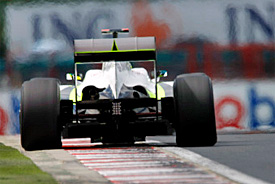 I have always been a firm believer that there is scientific equation that should technically calculate the amount of aerodynamic downforce necessary when taking into account things like speed, mechanical downforce and so forth and for all intents and purposes, the answer to that equation should be “1“. In other words the aerodynamic grip required should not outstrip what is necessary for the cars to corner.
It is also possible that what I just spewed is total bollocks.
One thing is absolutely certain though and that is the Formula 1 cars have far, far too much aerodynamic downforce on their cars right now, but thankfully they will lose at least some of that for next season. Although proposed some weeks ago, the banning of the controversial double-diffuser by the FIA for 2011 onwards was officially passed today and while that is excellent news, it is – of course – far too late for the cars to be redesigned to accommodate the restructured rules; all of which begs the question, why wasn’t this decided upon months ago?
When one considers that original set of regulations suggested by the Overtaking Working Group in 2008, nothing referenced the possibility of the double-diffuser. After all, it was all just a known loop hole that Brawn, Williams and Toyota exploited and as such the original technical regulations minus the double-diffuser already existed. Of course, all of this has been complicated with the banning of mid-race refuelling and the introduction of narrow tyres; however these are also factors that were decided upon a very long time ago.
The moment the double-diffuser was deemed legal by the FIA, all the other teams started bolting it on – some with better results than others – and the status quo was once again reached whereby cars could not get close to eachother in turbulent air and also had so much downforce that they rarely veered off of the clean racing line – they simply had too much grip for the speed they were travelling.
Sadly what this does mean is that fans of the sport must now endure another season whether overtaking is at a minimum, which is an absolute shame considering the 2011 contains possibly the strongest driving and team field in the history of Grand Prix racing.
On the other hand, it’s not like fans actually matter, now is it?
But surely, this is obvious bullshit..? In reality, does anyone really believe that shortcuts would ever be introduced into Formula 1. Quite apart from it being one of the most ridiculous suggestions to have ever dropped from Bernie’s mouth, it would go a hell of a long way to appease fair weather fans while killing the enthusiasm for “proper” motor-racing fanatics. So, would it happen?The chances are… no.
Quite simply, there is next to nothing happening in Formula 1 at the moment. For all intents and purposes, Bernie put out a press release (any quote – it really doesn’t matter what) that got newspapers and other other media talking about the sport again. Come the end of January, cars start to get unveiled (McLaren is the first up on January 25th) and the initial shakedown tests will begin and this piece of “news” will quickly sink away like it was always meant to.
By the way for 2011, the cars will be getting eight tyres and the year after that fuel will be replaced by the leftover fumes of Welsh dragons as Michael Schumacher prepares to run for the presidency of Germany. I could be bullshitting you though…
Race One
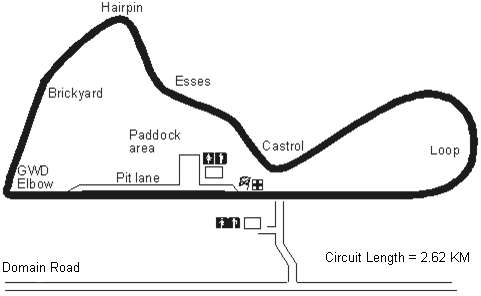
Teretonga Park is apparently the southern most racing circuit in the world. The circuit, primarily used for tin-tops and junior formula races, can be found in the south-west regions of New Zealand and it is at this circuit that the Toyota Racing Series begins its 2010 campaign.These 1.8 litre 200BHP machines just fall short of Formula 3 in terms of power output; however any drive stability gained by lesser power is lost thanks to less efficient aerodynamics, thereby making these cars slide a little more through corners.
Since the end of the 2008-09 season, the reigning champion Mitch Cunningham (brother of IndyLights pilot, Wade) has found things a little tough going in the New Zealand Porsche GT3 Cup and although there were rumours that the former IndyLights driver may return to the series, it has yet to come to fruition. Another exponent of the Toyota Racing Series is Australian driver Brendon Hartley, who is now the reserve driver for the F1 Red Bull Racing Team.
With Cunningham absent, the series welcomes three drivers that may become contenders for the title – 2009 Australian Formula Ford Runner-up, Mitch Evans; Formula Renault 3.5 pilot, Sten Pentus and Formula 3 driver Lucas Foresti – the latter is managed by former Formula 1 and CART legend, Roberto Moreno – who is taking part in the series in order to keep himself “race-fit” for the upcoming season.
An odd inclusion on the grid is the former A1GP driver, Earl Bamber, whose career appears to have ground somewhat to a halt since the collapse of the World Cup of Racing in 2009. Rejoining the Toyota Racing Series may be seen as a step backwards for the experienced racer.For the first of the three races of weekend, 15-year-old Evans lines up on pole in a field of just 11 cars; although the field is only separated by just over a second. The Estonian Pentus sits in second place, with Daniel Jilesen and Andrew Waite just behind, while Bamber and Foresti occupy the third row of the grid.
The cars form up on the grid, but when the lights go out it is Pentus who jumps ahead of the pack following a poor getaway by the young Evans – there are no changes behind the front two though, as the pack fall into a single-file formation around the very fast first corner. It’s not all easy going though as Bamber begins to push the Brazilian Foresti hard for 5th place – Bamber isn’t the only former-A1GP man on his team, as a number of Team New Zealand mechanics have also dropped back to work on his Triple X Motorsport car.
The race at the front changes dramatically on the sixth lap as Pentus overcooks his number 20 Giles Motorsports machine in the last corner and goes far too wide – Evans sees an opportunity to grab the lead and he takes it with an assured dive.
As the first race wears on, Foresti pulls away from Bamber and latches on to the back of Waite; however while Foresti is easily the more stable of the two cars through the corners, Waite continuously pulls away on the start/finish straight. Not far ahead of them, another battle is developing between Jilesen and Pentus – Jilesen has had a very quiet event up on to this point, too far ahead of Waite to be worried by him, but not close enough to Pentus to properly challenge; however the New Zealand driver has only a couple of laps to challenge the second-place driver.Just as the last lap gets under way, the car driven by Stefan Webling begins to wobble violently on the straight as his right-rear tyres shreds up. Webling, who was in 9th position, pulls off to the left and vacates his stricken machine.
While the race ends poorly for Webling, Evans gets his dream start to the 2010 Toyota Racing Series campaign with an easy win – once the youngster has passed Pentus, there were no challenges to worry him. Pentus and Jilesen file home in 2nd and 3rd places, completing a 1-2-3 finish for the Giles Motorsports team – an absolutely dominant performance during which no other team owner got even close.
This was very far from the most exciting race I had ever seen. Although Teretonga Park is wonderful circuit, the racing on this occasion was somewhat flat – hopefully the second and third races will provide more action.
- Mitchell Evans 14:56.786
- Sten Pentus 5.682
- Daniel Jilesen 6.238
- Andrew Waite 7.130
- Lucas Foresti 7.799
- Earl Bamber 9.288
- Alastair Wootten 10.398
- Jamie McNee 12.869
- Nathan Morcom 19.384
- Stefan Webling +1 lap
Race Two
After picking up a solid victory in the opening race of the season, 15-year-old Mitch Evans looks to notch up a second success and is helped greatly by starting on pole. Once again Sten Pentus starts from 2nd place with Daniel Jilesen, Earl Bamber, Andrew Waite and Lucas Foresti occupying the positions behind.
As the lights go out Evans begins the 16 lap race well and quickly pulls out a gap on Pentus who maintains his second position. The action takes place behind the leaders though as a three way battle for third place sees the experienced Bamber drop behind Waite, who looks to pressure for the next position. It doesn’t last long for Waite as Bamber forces his way through and retakes his 4th place – behind these three, Foresti sits patiently as Waite begins to fall in his clutches. Unfortunately it looks as if Foresti once again has his car set up for the turns as every time he gets onto the start/finish straight, Waite pulls away from the Brazilian.
Nathan Morcom in the ETEC Motorsport machine spins it a lap later and loses the engine momentarily. It takes a moment for nerves to gather themselves and the New Zealand driver turns his car around and gets back on track. It is odd that there have been three spins in two laps – despite that trickiness of the cars, the conditions are absolutely perfect with dry, hot conditions for the whole weekend therefore making these errors stand out a little more.
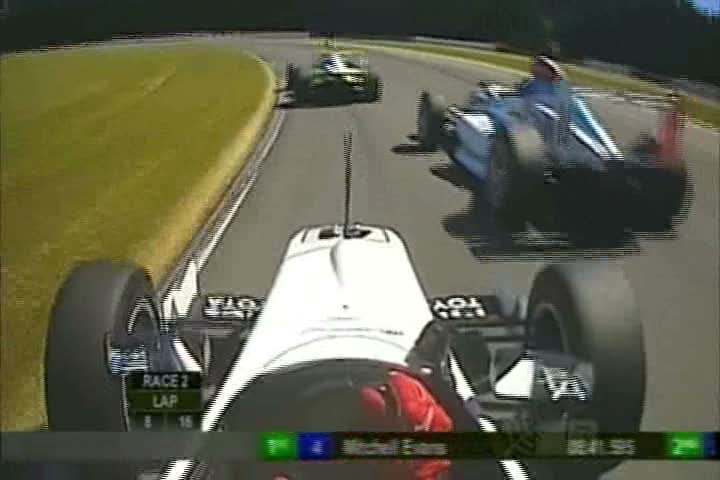 Half way through the race and down near the back Jamie McNee goes around the outside of Webling through turn 1 – an excellent move for 9th place, but he’s not the only one to try as Bamber attempts a similar move on Waite. A determined effort, but it is not enough and Waite holds station for the moment.
As the race tails off into its final laps, gaps appear between the cars as drivers between to settle into a steady pace, but on the twelfth lap, Evans appears to concentration again as for the second time in the race he goes wide and puts wheels on the grass – luckily Pentus is again not close enough to take the lead.
However, Evans luck runs out at the end of lap 15 as his engine cuts out on the exit of the final corner and this time Pentus does take the lead. Evans gets back up to speed, but Pentus has too much of an advantage and Evans too little time to make a difference.
The victory goes to the Estonian driver in a race that started well, but dried up in the second half of the even; however even Pentus must realise that he lucked into this victory following a number of errors by the young Evans. For the next event, the top six finishers in this race swap around giving 6th place Bamber the pole position and Pentus 6th place on the grid.
Toyota Racing Series (Round 1, Race 2)
- Sten Pentus 15:07.630
- Mitchell Evans 0.508
- Daniel Jilesen 3.110
- Lucas Foresti 3.540
- Andrew Waite 4.474
- Earl Bamber 4.650
- Jamie McNee 9.598
- Alastair Wootten 11.052
- Stefan Webling 15.041
- Nathan Morcom +1 lap
Like many other junior formula’s that exist currently in motor racing, the Toyota Racing Series employs a Sprint race to follow its earlier feature event and like many other sprint races, the grid line-up in their finishing positions from the previous run, but with the top six reversed. With that in mind Earl Bamber and Andrew Waite lead the field ahead of Lucas Foresti, Daniel Jilesen, Mitch Evans and feature race victor Sten Pentus.
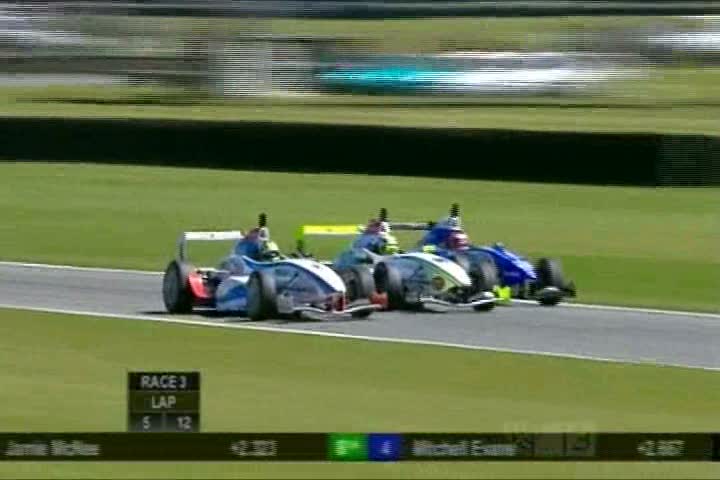 As the laps tick by, challenges are offered, by all asunder, but it is not until the 5th tour that a move is completed as Evans, Jamie McNee and Alastair Wootten go three-wide into the first corner – the de facto overtaking place for the weekend at Teretonga Park. Evans goes down the inside of Wootten and makes the pass stick, but in a brilliant piece of opportunistic racing McNee gets by both of them and into 6th. By the start of lap 8, McNee has already set his sights on Sten Pentus, but cannot get a move on the Estonian, who is now determined to finish the weekend with the Championship lead.
This race definitely had a lot less going on than the previous event, as it consisted of a number of challenges, but little actual passing. Not the finest victory Foresti will ever take – he had to just sit behind Waite, while Bamber never looked like challenging him at any stage. Following Andrew Waite’s 5 second penalty for a jump start, the young New Zealand driver falls down to seventh place, thereby promoting everyone from Foresti to Evans up one position. So after Round 1, Sten Pentus leaves Teretonga Park with the series lead ahead of Evans and Jilesen, but can the Estonian maintain his run of results for the rest of the season.
Behind this group, Wootten falls into the clutches of Stefan Webling, who once again is trundling around in 9th place. A quick battle between the two leaves Wootten with a broken front wing, thereby compounding a poor weekend for the Dart International driver. He trails around for a lap, but is black flagged and made to retire.
Up front and nearing the end of the race, Waite still leads, but the all the cars down to seventh place are within 4 seconds of him – his inability to pull out a lead could see him fall well back in the final standings. As the cars cross the line, second place Foresti celebrates the victory despite being second on the road – he knows he has done enough.
Toyota Racing Series (Round 1, Race 3)
- Andrew Waite 11:24.160
- Lucas Foresti 0.414
- Earl Bamber 0.614
- Daniel Jilesen 1.271
- Sten Pentus 2.030
- Jamie McNee 2.482
- Mitchell Evans 2.733
- Stefan Webling 7.818
- Nathan Morcom 9.032
- Chris Wootton 10.909
Toyota Racing Series (Round 1)
- Sten Pentus 196 points
- Mitchell Evans 187
- Daniel Jilesen 180
- Lucas Foresti 178
- Earl Bamber 157
- Andrew Waite 145
Race Quality: 3 out of 5
Source Quality: B+ (TV Rip, but lots of compression)
(February 2010)
 A long time ago (the late-90’s I think), I frequented an IRC site for a short period where all sorts of bored computer nerds pretended to be all sorts of real-life “interesting” people.
…is without doubt the great Michael Schumacher’s appearance as “The Stig” on BBC’s Top Gear show earlier on this year. Filmed in June, this of course all happened prior to Felipe Massa’s injury which has since gone on to reignite Michael Schumacher’s return to Formula 1 for the 2010 season with Mercedes.
For those that don’t know, Top Gear is a motoring show that is shown in the UK and the Stig is an anonymous driver (thought often to be an ex-F1 driver) that tests many of the car on the show. For this episode, only Schumacher was allowed to publicly test the Ferrari FXX and so took up the character for the show. Once unveiled, Schumacher gives a brief interview as well as a plug for Bacardi’s anti-drink and drive campaign.
(*Update – here’s the actual lap from the Ferrari FXX as driven by Michael Schumacher)
Unfortunately the first half of this jaunt isn’t online yet and it isn’t in English, but you don’t need to understand it – you just need to watch it.
This has been an interesting week for not just Formula 1, but Motorsports to an extent with a raft of changes being either announced or proposed; however out of all of the changes, the most visible and immediate is the complete restructuring of the rewards in Formula 1. The new points system, which now ranges from 1st down to 10th place was devised to accommodate the fact that the grid will be at 26 cars again from next year – as has been revealed in many other places, the new scheme will follow a path of 25-20-15-10-8-7-6-5-4-3-2-1.
This is the first change in the system since 2003 when the points for a win were squeezed to accommodate rewards for 7th and 8th place – something that was shoehorned into the sport following Michael Schumacher’s total domination in 2002 (he won the title that year by July at the French Grand Prix in Magny Cours). This kneejerk reaction didn’t stop the German maestro taking two further titles and an even more dominant championship in 2004. Prior to that the points had gone down to 6th place with multiple variations over the years; however this particular adaptation of the points is the most radical and far reaching yet, with the main reasoning behind it to aid new teams that are entering the sport now.
 While the new scoring scheme may not be popular with everyone, it is quite forward thinking to a degree. The expansion of rewards will potentially ensure the survival of a number of the newer squads in the sport – something that was drastically overlooked during the last days of full grids in the late 80’s and early 90’s. Admittedly, a vast majority of the smaller teams in F1 during those years were truly woeful and slow, with some absolutely dire squads running at a snails pace compared to even them!!
A common thread from the Formula 1 of those years ago was that many teams barely lasted eighteen months and when they were on track, they were dreadfully slow and it is a trap that the series cannot fall into once again. For a form of racing that is considered the pinnacle, it was utterly embarrassing to watch a number of cars slogging it around at the back of the field piloted by less than mediocre drivers with more money than talent – often getting lapped by the eighth or ninth tour around. However, the chances of seeing a repeat of the likes of Andrea Moda Motorsport (pictured left) or Life Racing are extremely limited.
Although there has been very little news from USGPE, they are apparently well on target to be ready for the group launch at the end of January. As for the other new teams, Virgin and Campos Meta are supposedly quite far into their projects, with Lotus not far behind them. While not suggesting that an extra hand should be given to the new entrants, more should be done to stop them from falling into a downward spiral, from which they may never emerge – the expanded points system may go so way to stop to that. However, if a team deserves to survive, then they probably will… probably.
I often find interviews (and the organising thereof) to be rather frustrating at times. Some potential interviewees don’t have the time; some have PA’s that restrict a line of questions so severely that render interviews dull and irrelevant; a majority just don’t even respond. And then there are those that are happy to give you a little of their time to answer some questions – thankfully 2009 Indy Lights Champion, JR Hildebrand falls into the latter category.
At the age of 21 California native, Hildebrand, has secured titles in the SCCA Formula Russell Championship and the US Formula Ford 2000 Championship as well as the aforementioned Indy Lights tournament. In 2005, Hildebrand was awarded a Team USA Racing Scholarship followed by a drive at Brands Hatch for the now sadly (temporarily?) defunct A1GP Series with the Team USA squad. More recently he tested for Force India at Jerez during the Formula 1 rookie week.
However, rather than just throw myself in at the deep end with what JR is doing right now, I figured that I might as well start at the beginning and discover how he got to where he is now…
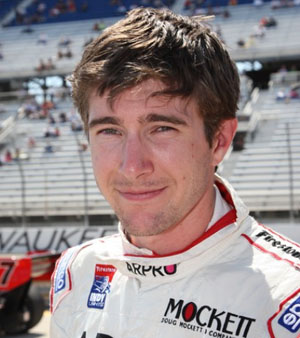
You started racing karts at the age of 14 at the Jim Russell Arrive and Drive Championship – tell me about your journey into motor racing from that point on. Having started karting somewhat later than most, did you find yourself having to play catch-up with more experienced competitors or was racing something that came very naturally to you?
I was definitely up against more experienced guys for the first few years that I was racing, but never really looked at it like that I don’t think. Especially when you get into a racecar, it’s such a mixed bag of experience and talent to start with that I just focused on trying to be competitive no matter who I was racing against. I had always played competitive sports and had an acute desire to do things that involved going fast, so in a basic sense, there was nothing about combining the two of those things that seemed unnatural when I first got going.
While you were on the karting circuit, you also scored some impressive results when at school – how did you balance your eduction with a fledgling racing career?
I was actually well into my racing career when I finally finished high school, so that was a serious challenge. Being that I didn’t start racing karts until I was already in high school, by the time things really got going I was right in the thick of the toughest part of my education and was heavily committed to it. I remember when I was a senior I decided that I would graduate a semester early so that I would be done with school by the Spring of that year so that I could move if I needed to for racing.
That Fall, however, I ended up heading off to Europe for the Team USA Racing Scholarship Program and missed the last three weeks of school before finals. I think I can definitively say that I’m the only guy whose had to sit in a pitlane doing differential equations to keep up with their Calc class! That was tough, and I made the decision after that semester that I needed some time away from school to really pursue my career.
I’m also led to believe that when you were younger, you were a very impressive baseball player too – was a choice between the race track and batting fields a tough decision or was breaking into cars always a priority?
In terms of playing baseball, I guess I never considered that to be a career path for myself, but it was also something that I had been doing and had been good at since I was five years old. I always loved playing ball, and enjoyed all the guys that I was playing with in high school. Racing was my priority, so that made it an easy decision in the sense that I knew I had to make it and never had a problem with the fact that I had to choose between the two, but it was not an easy decision for me to deal with right away. Even now I take my glove with me a lot of the time just in case I have a few minutes to throw the ball around.
Although the Indy Car Series has a relatively small (but hardcore) following here in Europe, the Indy Lights Series has completely flown under the radar. Could you tell us about the series, what the competition is like and what its links to the Indy Car series are?
Indy Lights really is exactly that. The Lights cars a very similar in their general characteristics to the Indy Car, run on similar tires, and run at all the same circuits. Much like the IndyCar Series car, the Lights car has to be capable of running on both road courses and ovals so it’s not specifically designed for maximum performance on either one, but is a quite capable package – the main chassis is the same as the WSR (World Series by Renault) car, and it utilizes a de-tuned version of a previous IndyCar engine.
The competition on road courses is quite good as it’s now the premiere feeder series to IndyCar in the states and over the last few years has attracted strong challengers from both North and South America, and the competition on ovals is usually even more intense than it is for the IndyCar guys because everything is so evenly matched. Because it has such a mixture of circuits and disciplines, it’s actually quite a good series because drivers and teams alike have to adapt to a variety of different situations. Some of the IndyCar teams have Indy Lights teams that they either run or are affiliated with, and the two series are run very closely together.
One of the more quirky features of the recent years was the emergence of the “Captain America” nickname – how did it come about? I even hear there was a Captain America doll present at a few of events this season…
Yeah, that all got started when I did the Brands Hatch A1GP race for Team USA. All of the crew for the A1 team were Andretti Green guys that I worked with during the season either in Lights or when I did my IndyCar tests, so when I emerged in my American flag suit for the race I became an easy target for a goofy nickname! I wouldn’t consider myself to be the flag-waving patriot type, but I was certainly proud to be a homegrown American guy that have a real shot at the Lights championship so it stuck.
In the current economic climate, a common complaint from many experienced Indy Car drivers is that funding and sponsorship is proving very difficult to secure – from your perspective as a driver on the cusp of the Indy Car series, how hard is it to secure a good budget right now to go racing?
I think it’s tough to secure sponsorship in general in all fairness, only because there’s no strategy that’s guaranteed to work. A lot of things have changed in the states over the last few years and as you said, the current economic climate isn’t doing anybody any favors. I’ve found it difficult, but have also gotten some traction in recent months, so I’m optimistic about my chances of making it work.
Last week, you completed a three day test with the Force India Formula 1 squad at the Jerez circuit in Spain – how did the test come about and how do you feel you performed?
The test came about through a sort of shootout on the team’s simulator in the UK a couple of months back. Paul di Resta and I apparently had the best performances and so we were selected for the test. I had a great time driving the car and working with the team, and while it wasn’t easy to adapt to such a different environment in so many different areas, I was extremely happy with how the test went. On both the second and third days my best runs were hampered by some accidental engine settings and then a red flag, so although the sheets didn’t say it, we were actually quite fast, and particularly fast in the high speed sections of the track. At the end of the day I was very comfortable driving the car and felt like I was able to push it’s limits while also giving useful feedback to the engineers, so I was very satisfied.
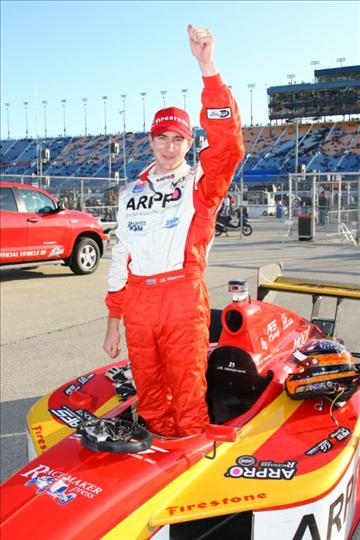
Naturally there must be massive differences between an Indy Lights machine and a Formula 1 car – what was your preparation for the test and did you ready yourself for the potential performance gap between the two types of machinery?
The Lights car and the Formula 1 car are different in more areas than just outright performance. In the states, most of the formulas run on lower profile and stiffer sidewall tires, whereas in Europe, the tires have large, softer sidewalls. That just by itself changes the entire behavior of the car and the way it’s set up. Knowing that it was going to be a lot different, I tried to not have too many preconceived ideas about what to expect. I changed my physical training to cater more towards my neck and shoulders while studying the track and cars as much as I could, but other than that I figured a lot of it was going to be down to how well I could adapt on the fly.
There were a number of other rookies at the Jerez test that have been in the European fold for a number of years – did this increase the pressure on you to register a good laptime or was the test purely about gaining information and experience? How did you find the conditions at the circuit?
I didn’t feel like there was a lot of pressure on me, and when it came down to it, I didn’t really care because I was going to do the best job I could do either way. I went in with the goal of getting comfortable with how fast the car was capable of going, especially in high speed cornering as I figured that would be a pretty limiting factor if I couldn’t sort it out, and of learning as much as I could as quickly as possible.
The laptime wasn’t really there in the end, but the fact that it was because of some unfortunate circumstances rather than because I was just off the pace makes that an easy pill to swallow for me personally. I found the conditions at the circuit to be more or less what I would expect, so I just tried to focus on what I was doing, focus on what the team was doing, and put it all together as best as I could.
How important was the Jerez test with regards to being seen by certain members of the Formula 1 paddock as well as all of the connected formulae? Is F1 something that you would like to try to attempt at some stage in the future?
I think anyone in open-wheel racing aspires to be in Formula One, I felt very lucky to have the chance to do the test and get involved. It gave me a great appreciation for what the series is like, and also gave me the chance to get introduced to a different crowd, as you said. I’ll definitely be looking into how I can stay connected and what opportunities I might have down the road. As you know, I’ve also been preparing myself for racing in the IndyCar Series for the last bunch of years and have a special appreciation for the racing on this side of the Atlantic as well. I plan to look at everything.
Now that we are in the off-season, what are your plans?
My plans for right now are to get a firmer grasp on where things stand stateside and go from there. I was working on sponsorship before getting involved in the F1 test and that sponsorship could be key regardless of what I’m doing, so I intend on focusing heavily on that in the short term and hopefully having the chance to make something of it soon.
Having just won the 2009 Indy Lights title, what can we expect to see from JR Hildebrand in 2010?
Well I can’t say for sure, but regardless of the car or series you can be certain that you’ll see him trying like hell to make the absolute most of it!
Thanks to JR Hildebrand and all the best for the next season.
JR Hildebrand Racing
 One of the great consistencies of Formula 1 in recent years has been the abandonment of well known traditional venues for territories that have more money than sense; however if someone were to hand you a blank cheque to race there, I’m sure many would happily oblige.
Admittedly I still believe in the ten-year-test (i.e. – give a Grand Prix at least ten years to generate some sort of youthful interest or national business interest in motorsport) and as such am not willing to condemn the likes of Bahrain, Turkey or Singapore yet, but it really is not looking positive.
What is positive however is the confirmation of both the Canadian and British Grand Prix from 2010 onwards – two races that deserve to be on the calendar, not just because they have produced championship winning drivers and stars, but because they are always absolutely jammed packed with people. Both races regularly vie with Monza with highest attendances over the course of a Grand Prix season and produce some very good racing too – something that may never apply to Singapore.
Of course vast amounts of money are involved and naturally that is controversial, but at times when economies are struggling in these times of recession, the cash injection from tourists into the local businesses cannot be ignored.
This is what generates love and support for Formula 1 and motor racing – rarely are long lasting and fruitful relationships built on flashing lights and glitzy happenings. Such gifts and flash turn out to be fake or cheap knock-offs on closer inspection and that sounds a little too much like Vegas for my liking – there’s a reason why Formula 1 never went back to Caesars Palace after 1982.
The fight is not over yet though. Both the French and American Grand Prix are still not on the calendar, while Belgium and Germany are under threat from slumping economies and licensing issues. If these events are lost to Formula 1, then the sport will be all the poorer for it and if it keeps on alienating its hardcore audience while trying to sell itself to uninterested patrons, then the downward spiral could eventually become terminal.
 Economies do strange things to motor racing.
It is very sad when teams depart; whether they be large behemoths or small outfits, but the truth is they will not be missed – instead their identities will etched into the sports history books and confined to comments along the lines of “do you remember when..?”
Although Grand Prix racing has existed since 1906, Formula 1 was born into a post-World War 2 in 1947 and commenced in 1950 with such exotic marquees as Alfa Romeo, Ferrari, Maseratti and Talbot. All but Ferrari disappeared by the likes of BRM, Cooper and ERA emerged and when the small teams left, a different set of manufacturers descended upon the sport.
It is a cycle that has repeated a couple of times since then and is happening once more. While this decade has removed Ford (in the guise of Jaguar), Honda (again) and this year alone BMW and Toyota, with Renault teetering (also again); it has also borne witness to the birth of USGPE, Manor and Campos-Meta. Lotus returns also, but it is arguable as to whether that is just a name disguising the entry.
Away from the cars themselves, hosting countries are also having problems with the economics of Formula 1 – mainly due to a couple of insane deals signed away during the boom times by the mysterious CVC; like a large number of mortgage arrangements from the last five years, when they are examined with revised attitude to economics, they simply don’t make sense.
Given the current climate, the traditional circuits do not seem to be able to able to afford the races, with a number of promoters seeking public reimbursement – thus pressures rise, arguments start and negative feelings take hold and germinate, spreading into the public consciousness. Let it be known now that I do not wish Silverstone to look like the Abu Dhabi circuit – ever!!
However, the saving grace for a number of Grand Prix is the return on investment for many of the minor local economics; whereas some of the promoters are left counting their losses, many of the nearby towns and cities are reaping the benefits – with that in mind, there is a drive to get local governments and communities to invest in these events, if only to help boost local businesses.
It would appear that it is something the has been soaked up by the city of Montreal. There have been quotes that minus the Grand Prix, Montreal has apparently reported a shortfall of something in the range of $85 million Canadian Dollars and in tough economic times, it’s a large sum of money to not have in the banks. The old adage “you need to spend money to make money” reared its head once again and as of yesterday, the Canadian Grand Prix has returned for 2010, but this is only the first step.
Long before they withdrew from the sport, the manufacturers – and in particular BMW – were making rather loud noises about the lack of an American Grand Prix and they have a point. Whereas the likes of Williams, Force India and other new teams are there mainly for the racing aspect of the sport, the manufacturers are there to sell their cars and sell their brands and for them to be absent from one of the largest free markets in the world bordered on absurdity; but where in the US can Formula 1 go to?
Apart from Indianapolis, there’s pretty much no circuits in the US that possess a high enough licence to hold a Grand Prix and there is supposedly a large amount of ill-feeling between the Hulman family and the FOM; which only really leaves the city streets to speed around on. When F1 left Watkins Glen in 1980, the series wandered the US looking for a new home and for the following decade, it travelled from city to city to city to find a permanent locale, but it was in vain. After a couple of years racing on the streets of Phoenix, F1 left the United States in 1991. One wonders if the series may once again confined to the travelling circus act of the past.
There is little doubt though that beginning of the USGPE team may reinvigorate Formula 1 as a popular form of motor racing in the US, but is hiring the Argentine driver Jose-Maria Lopez the way that the American squad need to go? While there is little doubt that every team needs (a lot of) money to racing, the advent of pay drivers in top level motorsports has often created a catch-22 situation for many outfits and while the large sums of money and sponsorship are welcomed with open arms, they are regularly partnered with technical incompetence and an inability to match speed with consistency. Without a driver to truly lead a team, they will no doubt fall backwards before hitting the wall hard – sponsors don’t like it when their chosen cars are coming last.
This is not a slur against Lopez, but the rather an acknowledgement of what pay drivers achieve compared to what the top drivers can do. It is long since realised that during economic boom times, teams are much more able to field higher quality drivers, yet during recessions, sponsors and backers will run for the hills just as ride buyers decide to invite themselves in.
From here, the spindle can only go upwards – we hope.
 Often when things heat up in the world of Formula 1 and the IRL, a tendency to just sit back, relax and watch what happens sets in as I am very well aware that things move very fast – often too fast to assert any sort of reliable thought or opinion.
Admittedly, I don’t believe for a moment that the McLaren will instantly side with Lewis, but they may do so if Button is not up to speed quickly and that is the factor that may become an uphill battle for the reigning champion. Hamilton’s knowledge and experience with the McLaren group – which goes back long before the start of his F1 career will mean he will have a psychological head start, irregardless of Button’s current World Champion status.
Another issue the team must face is the driving styles of the two drivers is utterly different and this could have a negative impact on how the team approach car design and set-up status. It is well known that while Hamilton favours a car with light rear-end and that Button loves a car that pushes up front and McLaren may find it difficult to find useful dual set-ups at certain tracks next season.
However, Button can at least lay claim to the fact that he has a drive for 2010 season; something that Kimi Raikkonen cannot say. The Finnish 2007 World Champion has found himself locked out of a drive after being dropped by Ferrari in favour of Fernando Alonso and unable to secure a seat back at McLaren – even Brawn-Mercedes have passed on the subdued Finn.
Unfortunately for Raikkonen, since winning the title in 2007, he has had two seasons during which he has showcased flashes of brilliance (especially in the latter half of 2009), but has switched off if the car and team hasn’t been geared towards him and it nails his attitude in one foul swoop. The inability that he has displayed to guide a team to victory if the team is not 100% behind him has made many other teams wary of him and as fast and as skilled as Raikkonen is, none of the top teams are likely to build a squad around him when the Constructor’s battle is looking to get fierce between four outfits.
In the meantime, it appears as if Nico Rosberg is going to have one seat the Mercedes team; however if it is not Raikkonen in the second car, then who will it be? Since the announcement of the Brawn-Mercedes deal, rumours have been bouncing round regarding an all-German team for 2010, with a keen eye for Sebastian Vettel to be with the team in 2011; but who would possible go to a team like Mercedes for one year only?
Initially, there were whispers of Nick Heidfeld, but as good as the BMW Sauber driver actually is, it must be remembered that neither he nor Rosberg after yet to win a Grand Prix – despite having 237 starts between them and that is a number that will not sound appetising to either Ross Brawn or Mercedes team.
Since then, rumours of a Heidfeld have fallen away and talk of a Michael Schumacher return have come about again. Schumacher was initially thought to be replacing the injured Felipe Massa at Ferrari earlier this year – a return made impossible following an unhealed neck injury sustained in a German Superbike race in February.
The possibility of a Schumacher return raises one or two questions; such as “why bother?” The legacy of the 7-times world champion is currently intact; however he runs the risk of damaging his stellar reputation if his comeback is a failure. Not only is three years out of the car is a very long, but the Formula has moved on with giant steps since then – never mind the fact that Schumacher has not raced cars competitively for over three years and has only had marginal testing time.
Yet he may be the most sensible option available – his ties with Mercedes are well known and he has the comfort of not having to worry about a contract for 2011 which is the one thing that other drivers would naturally fear and brings me back to the question “who would possible go to a team like Mercedes for one year only?”
It is rather unlikely than an experienced driver would jump to Mercedes in the middle of career for one year as come July, he will be back in the situation of having to search long for a drive again – with few other top seats available for 2011, anyone that drives for Mercedes next year might find themselves on the scrapheap or with a minnow for the following year. It is also a questionable move for a new driver to the sport and could lend itself to the Verstappen / Button factor; whereas a driver starts with a big team for one season before spending years mired at the back of the grid trying to rebuild their career.
However, there is a huge potential for Schumacher to not be the final option and it all boils down to whether or not Renault will be on the grid next year. Toyota’s number 2 driver, Timo Glock, had been rumoured to partner Robert Kubica with the French team, but has instead signed for the new Manor Grand Prix team amid nervousness regarding the ongoing uncertainty as to whether Renault will be in F1 next year. Should Renault jump ship, Mercedes may indeed be the perfect spot for Kubica to kick-start his career following a disappointing final year with BMW.
Indeed Robert Kubica is not the only driver looking to restart his F1 career now that Heikki Kovalainen has been expectantly ejected from the McLaren team. Following two rather poor seasons that granted him one very fortunate Grand Prix victory in Hungary 2008 (Massa led every lap until the car broke two laps from the end), Kovalainen has been removed from the Woking squad and word has been very quite regarding his next move. What must worry Formula 1’s second Finn is that many of the top and mid-field slots have been taken up and unless he takes a step backwards, he career could be finished after only three years – Mercedes could halt that slide backwards, but will the German manufacturer want to take on Kovalainen after having dealt with him at McLaren?
There is still a seat available at Force India, but it is questionable as to whether they can maintain the good form that they produced in the latter half of 2009; however as it stands, the lamentable Nelson Piquet Jr is one of the favourite for that drive – pending on whether he delivers ample sponsorship or not.
For a moment I am not going to refer to Piquet Jr’s antics at Singapore in 2008; however I will point to his substandard performances with Renault during the eighteen months he was with the squad. There were far too many accidents and races where he was near the back and as sad as it may appear, the quality was simply not there.
This is the time that Force India need to produce results to follow on from 2009 and they may not find that with Piquet Jr. Adrian Sutil is still with the team for 2010, but he needs to crash less – when he was on it, he was very good, but he now finds himself in a very different position than in previous seasons as this is the first year that he will lead a squad.
As you can probably tell from the above, this has indeed been a very big week with regards to the movers and shakers of Formula 1, but I will finish this with one quick paragraph from the IZOD IndyCar Series – the Australian driver, Will Power, will be driving the number 12 car for Penske Racing next season and for that, the series can only benefit as I believe that Power can challenge for the title.
Interestingly enough, I couldn’t help but wonder if the Penske squad is grooming the Australian as a permanent replacement for Helio Castroneves when he contract is up. Admittedly, Castroneves may get a year’s extension on his contract, but following that, the Brazilian will be 36 years old and both Power and other team-mate Ryan Briscoe will be at the peak of their abilities. Power was initially brought in to cover races missed by Castroneves last year following his tax evasion trial, but it is questionable as to whether anyone believed he would be as good as he was and although Power’s oval skills need to be finetuned somewhat, Penske team president Tim Cindric may have just stumbled on of the finest drivers to have entered the IRL in its short history.
At 28, Power has both time and ability on his side to become champion of a series that is looking to become more and competitive as it rebuilds itself following the merge of the IRL and Champ Car in 2008. Next year is looking to be something special indeed.

 TheMotorsportArchive.com
